




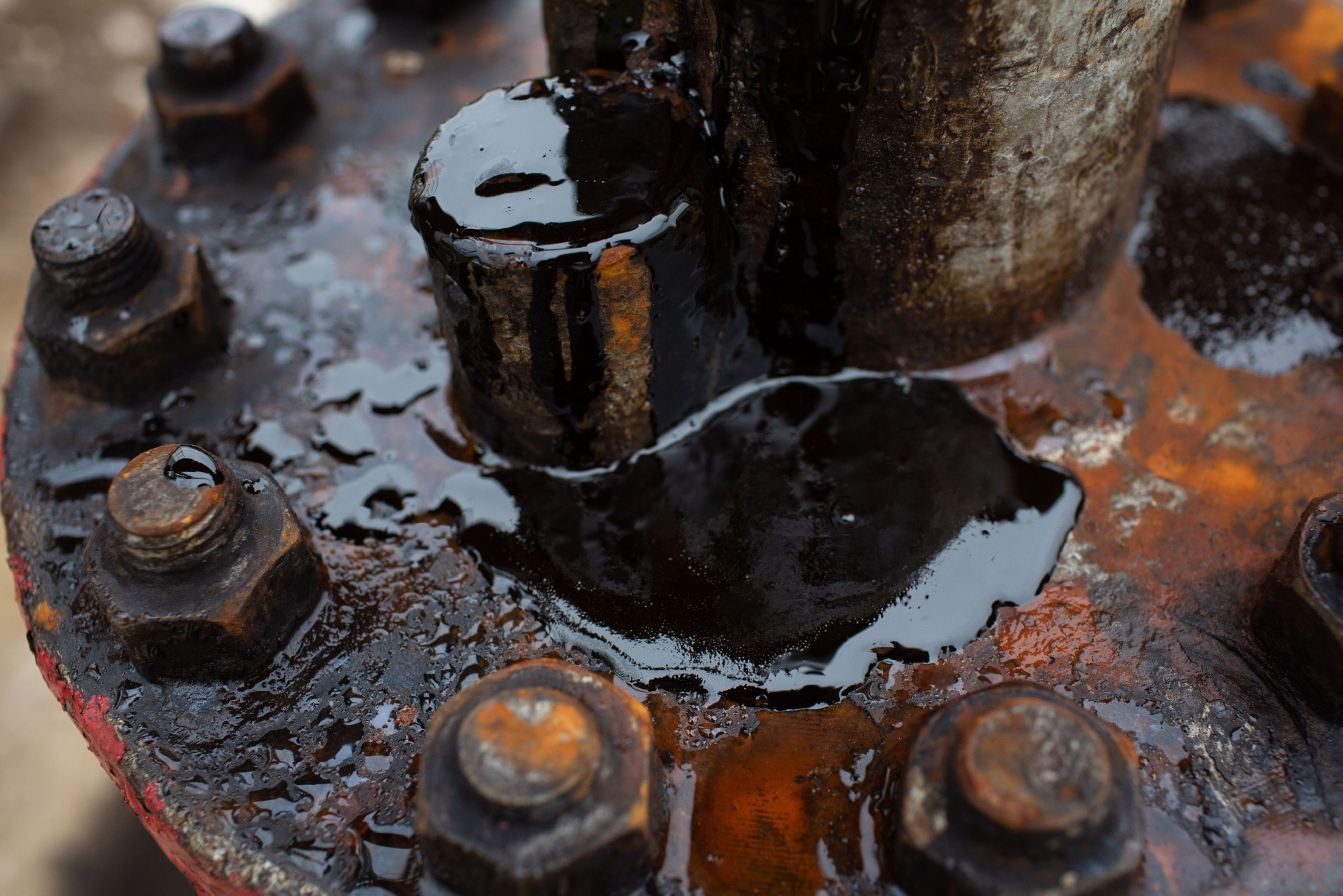
 Thick black oil sits on the pipe work fitting of an oil pumping jack, also known as "nodding donkey" in an oilfield near Almetyevsk, Russia, on Sunday, 16 August 2020. (Photo: Andrey Rudakov/Bloomberg)
 But Poland continues to push to harden the sanctions package before signing off on the price cap, and talks will continue tomorrow, the people said. Warsaw wants new sanctions linked to the cap plan.
EU talks have been dragging on since last week as Poland and the Baltic nations demanded measures that put more pressure on Moscow’s revenues. Even after their efforts, the cap that looks set to be agreed is above the prices most Russian crude already trades at.
As a deal looks within reach, the bloc is set to create a mechanism that would allow for revisions of the price every two months, according to a draft document. There’s also a plan to make sure any resetting of the cap should leave it at least 5% below average market rates.
One official from a coalition country said late on Thursday that each review of the cap price will take into consideration a variety of factors, including changes to market prices, as well as fiscal and economic conditions inside Russia.
The person added that they were encouraged that the price cap project had come this far. At its outset, the person said, the plan was judged to have little chance of success. They said the approach of the cap’s imposition had already forced Russia to discount its prices on crude sales more than the coalition had anticipated.
It’s still not clear how the Kremlin will react to the $60 cap, but Foreign Minister Sergei Lavrov indicated on Thursday that he thought the price cap level was irrelevant. Given the cap is above market rates, Moscow may be able to claim it can just keep selling oil as usual.
The intention of the price cap – first proposed by the US amid concern EU sanctions were too strict – is to keep Russian oil flowing to avoid a global price surge, while also limiting Moscow’s revenue. For the price cap plan to accomplish its goal, the level has to be attractive enough to the Kremlin.
The risk for oil markets is that if the cap is seen as too low, Moscow may make good on a threat to shut down production – sending global crude prices higher.
The country’s flagship Urals grade traded as low as $45.31 a barrel this week at the Baltic Sea port of Primorsk, according to data from Argus Media, a publisher of commodity benchmarks. It rose to $48.04 on Wednesday.
Deputy US Treasury Secretary Wally Adeyemo signalled on Thursday that $60 would be acceptable to Washington, saying it was “in the range” G7 countries have discussed.
Poland and the Baltic countries have in parallel asked for firmer progress on a new package of EU sanctions. Clarity on those measures is expected over the next few days and the EU’s executive arm this week also presented proposals to tackle the circumvention of sanctions, use frozen assets and hold Russia accountable for its war of aggression against Ukraine.
Greece and other shipping nations had pushed for a higher price, to keep Russian oil trading. They had separately been seeking guarantees that the shipping industry won’t be discriminated against by international competitors as a result of the cap.
G7 countries are aiming to put the price cap in place before Monday, when wider EU sanctions on oil are due to come into force. The cap plan would ban shipping and services needed to transport Russian oil, such as brokering, financial assistance and insurance, unless the cargoes are purchased below the cap.
Meanwhile, shipping costs for Russian crude are skyrocketing as more tanker owners shun the trade days before stricter European Union sanctions take effect.
Owners who are still willing to load Russian crude are attempting to charge more for the risk. Baltic Sea-to-India rates are being discussed at about $15 million – or $20 a barrel – for loadings after 5 December when new EU restrictions kick in, said shipbrokers. That’s a sharp increase from $9-million to $11.5-million before.
The surge in costs reflects the challenges faced by suppliers of Russian crude ahead of the deadline when the EU, including some of the world’s top tanker owners in Greece, will stop extending shipping and other services for oil produced by the OPEC+ nation. Fewer available ships and the need for Russian oil to be diverted from traditional buyers in Europe to new ones in Asia and the Middle East are also contributing to higher rates.
The exorbitant freight is in turn eroding the value of Russian crudes, such as the flagship Urals grade, at their load port as sellers ensure that the final price of delivered oil remains competitive against alternatives. Exports from the Baltic Sea, where Urals loads, rely on small to mid-size vessels such as Aframax and Suezmax tankers.
Participants in the global shipping market are also waiting for details on an oil cap proposed by the Group of Seven countries that could exempt shipments from EU sanctions as long as they trade below the price limit. Members of the 27-nation bloc are closing in on a deal to cap the price at $60 a barrel this week. Russia earlier said that it won’t sell oil and gas to nations that join the cap.
The lack of clarity surrounding exemptions is paving the way for a shift to the so-called dark fleet, or tankers held by undisclosed owners who are willing to continue handling Russian oil despite the threat of sanctions. These ships mostly comprise older vessels and many with a track record of dealing with sanctioned regimes such as Iran.
It’s unclear if Baltic-to-India freight rates will hold at around $15-million should Urals crude fall under the price cap, nor is it clear if any bookings have been fully concluded at that level.
Some mid-sized tankers typically used to haul cleaner refined fuels are considering a switch to crude to tap the strengthening rates. The EU is set to roll out sanctions targeting logistical, banking and insurance services for Russian oil-product trades in February. BM/DM