




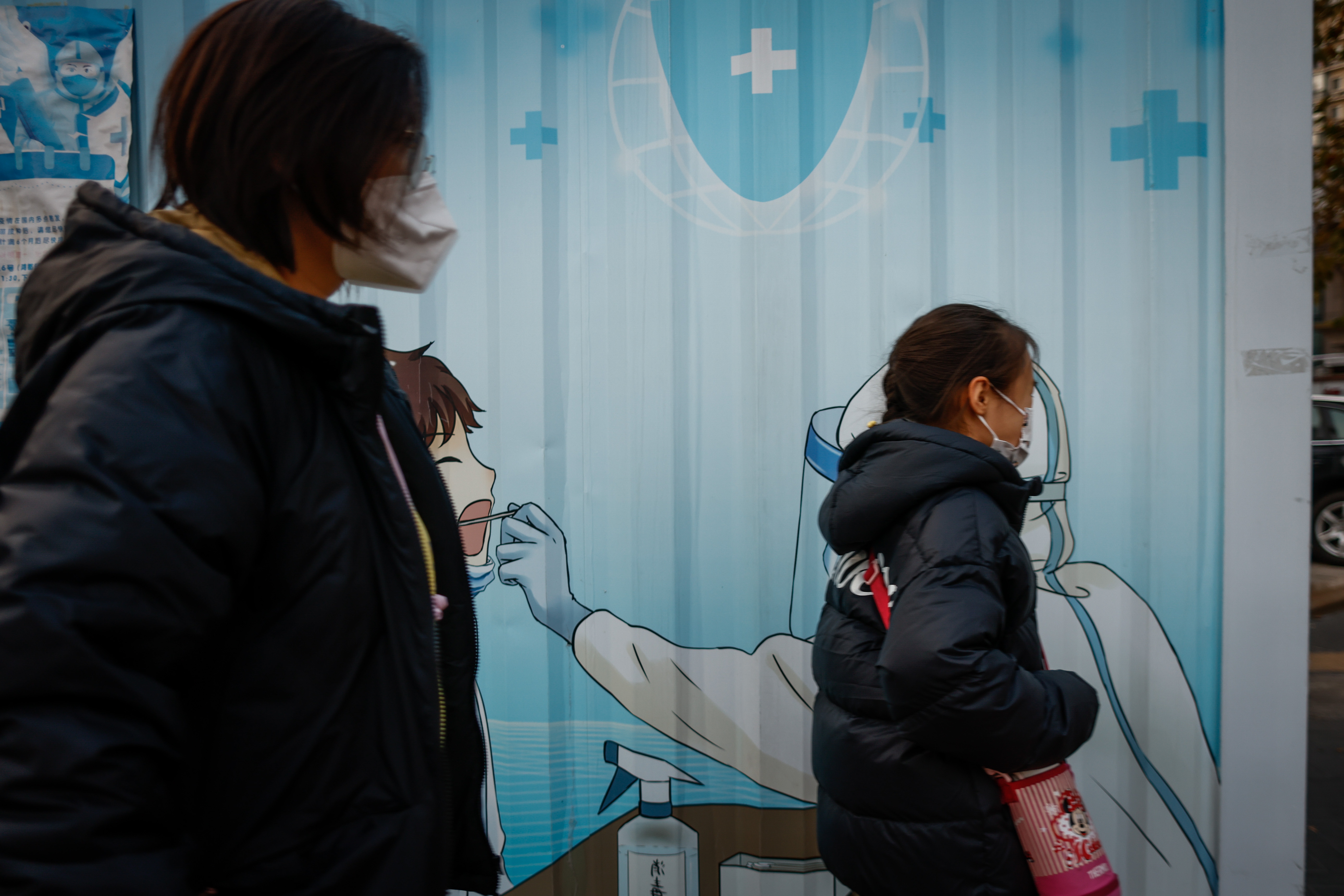
 A mother and child walk along a COVID-19 test site in Beijing, China, 22 November 2022. (Photo: EPA-EFE/MARK R. CRISTINO)
 Japan’s Honda Motor Co suspended its operations in Wuhan, the virus epicentre in early 2020, because of limitations around movement introduced in the area. Whether the plant will remain closed through to Wednesday hasn’t been decided, a spokesperson said on Tuesday. Honda also extended the suspension of operations at another plant producing engines for lawn mowers in Chongqing.
Motorcycle producer Yamaha Motor Co is also partially suspending production at its motorcycle plant in Chongqing, where 8,721 new Covid cases were reported on 28 November. Other Japanese carmakers including Nissan, Mazda and Mitsubishi told Bloomberg their China operations haven’t been affected yet.
Toyota, the world’s No 1 car manufacturer, is adjusting production at parts of its Chinese factories due to multiple factors, spokeswoman Shino Yamada said, declining to elaborate.
On Monday, German giant Volkswagen AG blamed a component shortage as the main factor behind the decision to halt production at a joint venture plant that it has with China FAW Group in Chengdu and two of five production lines at its factory in Changchun. There are currently no estimated dates for resumption and no plans to move to so-called closed-loop operations, a spokesperson said.
First used during the Beijing Winter Olympics as a way of keeping athletes and support staff separate from the wider population, closed-loop systems, or factory bubbles, are a Chinese initiative used to keep businesses running amid punishing efforts to stamp out Covid’s spread. They typically require workers to travel from on-site accommodation to a factory and back, strictly avoiding contacts with outsiders.
Several car manufacturers, including VW and Tesla, used them earlier this year, with the US electric vehicle manufacturer making headlines for even insisting workers sleep on the floor during the months-long Shanghai lockdown. But the system has faced challenges recently, with workers at the world’s biggest iPhone factory in Zhengzhou pushing back at restrictions, affecting plant production.
Public anger over China’s draconian approach to stamping out infections however has risen in recent weeks, with authorities deploying a heavy police presence in the capital Beijing and other major cities to deter a repeat of demonstrations that broke out over the weekend. That may make companies less willing to keep employees effectively locked up on site for extended periods.
The demonstrations were sparked after 10 people were killed in an apartment block fire in Urumqi, the capital of the far western Xinjiang region, a city that has been under lockdown for more than three months. Some citizens have questioned whether Covid controls hampered rescue efforts, and protesters have also been expressing opposition to the wider Covid policy. BM/DM