




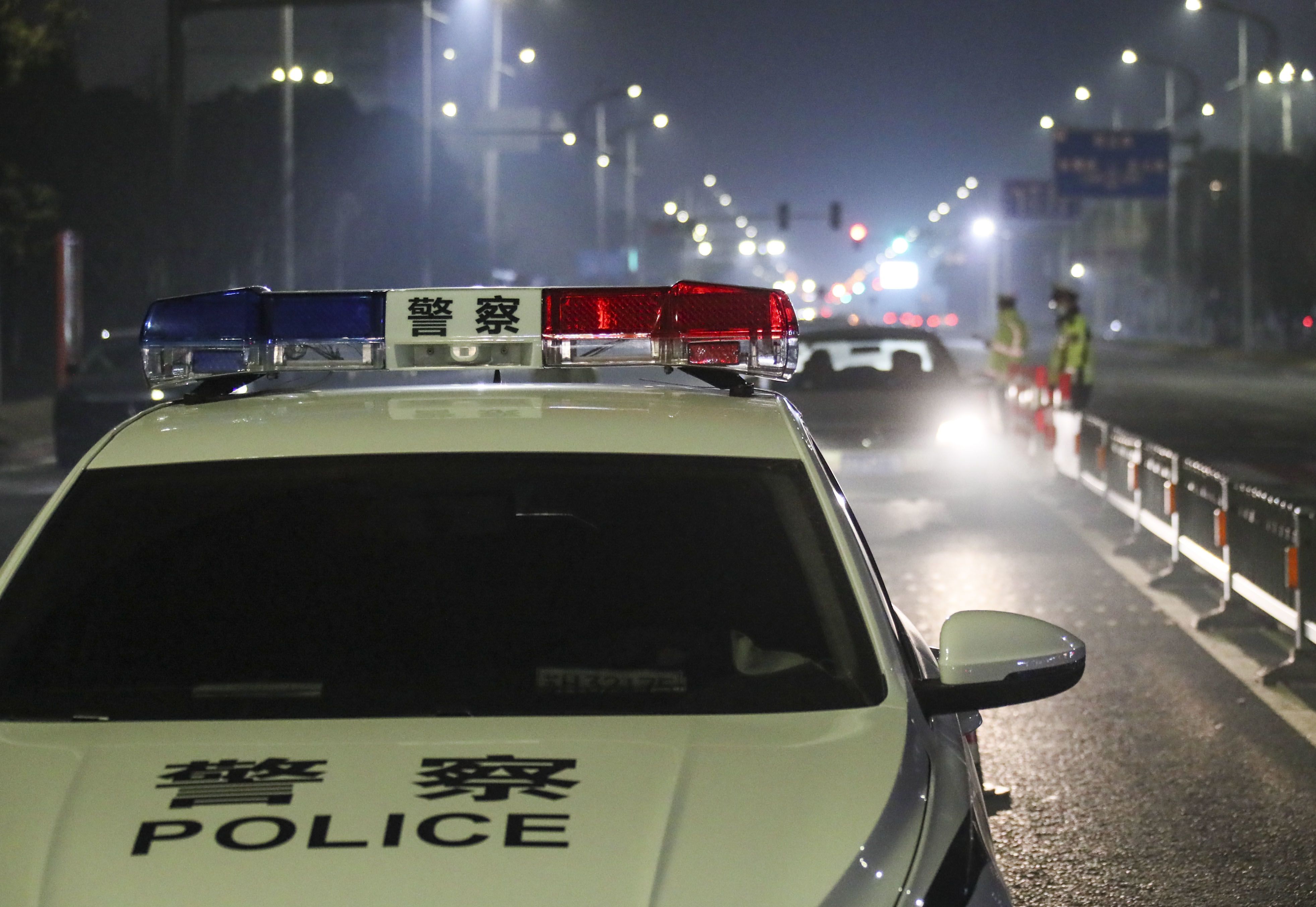
 Traffic policemen check passing cars for drunk driving in Huai 'an city, East China's Jiangsu Province, 10 January 2022. (Photo: Zhao Qirui/Costfoto/Future Publishing/Getty Images)
Hong Kong’s benchmark share index rose more than 3% and its mainland counterpart advanced about 2% after a heavy police presence in major cities deterred a repeat of the weekend’s demonstrations. Some investors speculated that the protests may hasten a shift away from Covid-Zero policies while others took heart from the lifting of a multi-year ban on share sales by builders.
Stocks remained lower in Japan while those in Australia eked out small gains. US futures rose slightly after the S&P 500 pared its monthly gain during the Wall Street session.
Fed Bank of St Louis president James Bullard said markets may be underestimating the chances of higher rates. His New York counterpart John Williams noted policymakers have more work to do to curb inflation. Fed vice chair Lael Brainard said the string of supply shocks is keeping inflation risks elevated.
A gauge of the dollar fell following two days of gains. The Japanese yen rose, as did an index of emerging-markets currencies.
Treasuries were little changed. Benchmark government yields made small gains in Australia and New Zealand.
Elsewhere in markets, oil and gold both steadied.
Investors remained focused on developments in China on Tuesday, and further ahead to Fed chief Jerome Powell’s speech on Wednesday. Many economists expect he’ll cement bets that the Fed will slow its pace of rate increases next month – while reminding Americans that its fight against inflation will run into 2023.
“It’s a decent time to start considering sharpening your pencil and think about what is a good buy right now,” Terri Spath, founder and chief investment officer of Zuma Wealth Management, said on Bloomberg Television. She said that the coming slowdown in the US economy would be mild and that if there’s a shallow recession “we can actually see some bottoms in stocks”. BM/DM
Comments
Scroll down to load comments...