




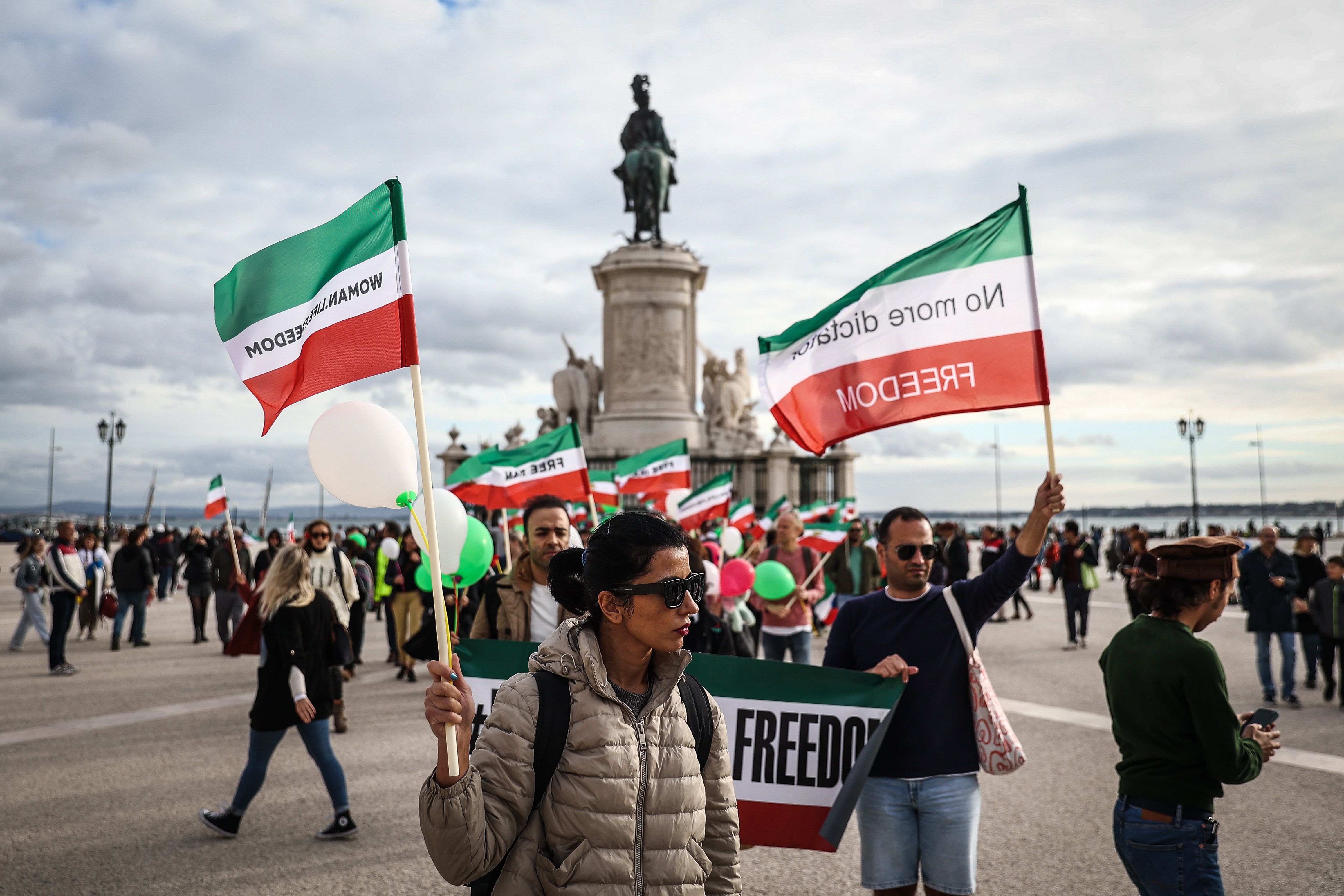
 People take part in the demonstration in support of the revolution in Iran, in Lisbon, Portugal, 19 November 2022. In memory of the over 3,000 Islamic Republic victims who were killed during the 2019 protests in Iran and as a show of support for the current revolution in that country, a global day of action took place in 25 countries, including the US, UK, Spain, Germany, France, Japan, Australia, among others. EPA-EFE/RODRIGO ANTUNES
 "The rising number of deaths from protests in Iran, including those of two children at the weekend, and the hardening of the response by security forces, underline the critical situation in the country," said a spokesperson for U.N human rights chief Volker Turk at a Geneva press briefing.
The Islamic Republic has been gripped by nationwide protests since the death of 22-year-old Kurdish woman Mahsa Amini in morality police custody on Sept. 16 after she was arrested for wearing clothes deemed "inappropriate".
Tehran has blamed foreign enemies and their agents for orchestrating the protests, which have turned into a popular revolt by Iranians from all layers of society, posing one of the boldest challenges to the clerical rulers since the 1979 revolution.
Iran's World Cup team declined to sing their anthem before their opening World Cup match on Monday in a sign of support for the protests.
The Office of the High Commissioner for Human Rights (OHCHR) said that more than 300 people had been killed so far, including more than 40 children. These deaths occurred across the country, with deaths reported in 25 of 31 provinces.
In the same briefing, OHCHR spokesperson Jeremy Laurence also voiced concern about the situation in mainly Kurdish cities where it has reports of over 40 people killed by security forces over the past week.
(Reporting by Emma Farge, Editing by Miranda Murray and Frank Jack Daniel)