




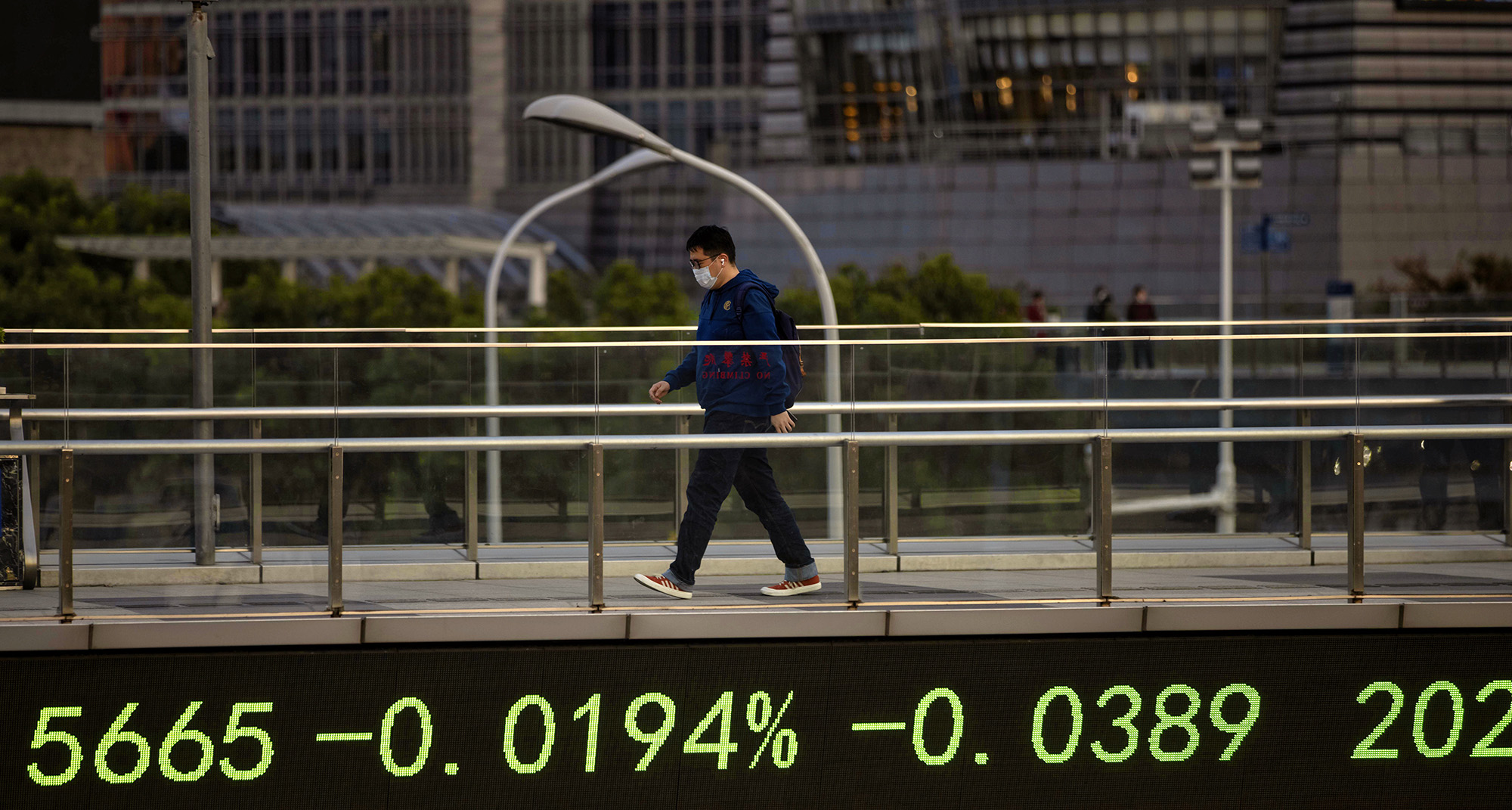
 A man walks over the pedestrian bridge with a screen showing the latest stock and currency exchange data in Shanghai, China, 9 November 2020. (Photo: EPA-EFE/ALEX PLAVEVSKI)
 Tech shares led a rebound in Hong Kong equities, which on Monday slumped to the lowest since 2009. Japanese shares climbed as the yen’s weakness supported sentiment for the nation’s exporters. Technology and EV battery companies pushed South Korea’s benchmark index higher.
US equity futures rose after the S&P 500 declined, weighed down by big tech. US Energy shares had whipsawed on news that President Joe Biden would call on Congress to consider tax penalties for producers accruing record profits.
Australian bond yields advanced ahead of a projected 25-basis-points rate hike by the central bank later on Tuesday. The likely small increase in the policy rate contrasts with expectations for another jumbo hike from the Federal Reserve on Wednesday.
Treasury yields were little changed after increases in rates across the curve on Monday saw two-year US yields climb to around 4.5%. Swap markets are pricing in a 75-basis-point hike this week amid the Fed’s most-aggressive tightening campaign in four decades.
Still, strategists including JPMorgan Chase & Co’s Marko Kolanovic believe the Fed’s aggressive hiking is nearing an end, providing the prospect of relief for markets. The US will likely raise rates by 50 basis points in December and pause after one more 25-basis-point hike in the first quarter, he said.
Indicators such as the inversion of the yield curve between 10-year and three-month Treasuries “all support a Fed pivot sooner rather than later”, wrote Morgan Stanley’s Michael Wilson.
Looking ahead, Bespoke Investment Group said November has historically been one of the strongest months of the year for US stocks. The S&P 500 has experienced an average gain of 0.82% with positive returns 69% of the time, according to data going back to 1983. Over the last 10 years, the gauge saw a median advance of 1.26% and gained nine out of 10 times.
Traders in Asia will be watching Caixin China PMI figures after a separate data release on Monday showed the nation’s factory and services activity contracted in October, sending ripples through global markets.
In currency markets, the yen is back within reach of the 150 level versus the dollar. Japan spent a record 6.3-trillion yen ($42 billion) in October to counter the yen’s sharp slide against the dollar, as it tried to limit speculative moves adding to pressure on the currency.
The offshore yuan declined, edging closer to its weakest on record, as China signalled a looser grip on the currency by weakening the fixing.
“We expect that strong dollar trend will continue at least into mid to early 2023,” Todd Jablonski, chief investment officer of asset allocation at Principal Asset Management, said on Bloomberg Television. “The strong US dollar likely correlates with peak US policy rates in early 2023.”
Elsewhere, oil held losses before interest-rate decisions by central banks and gold slightly rose. BM/DM
Comments
Scroll down to load comments...