




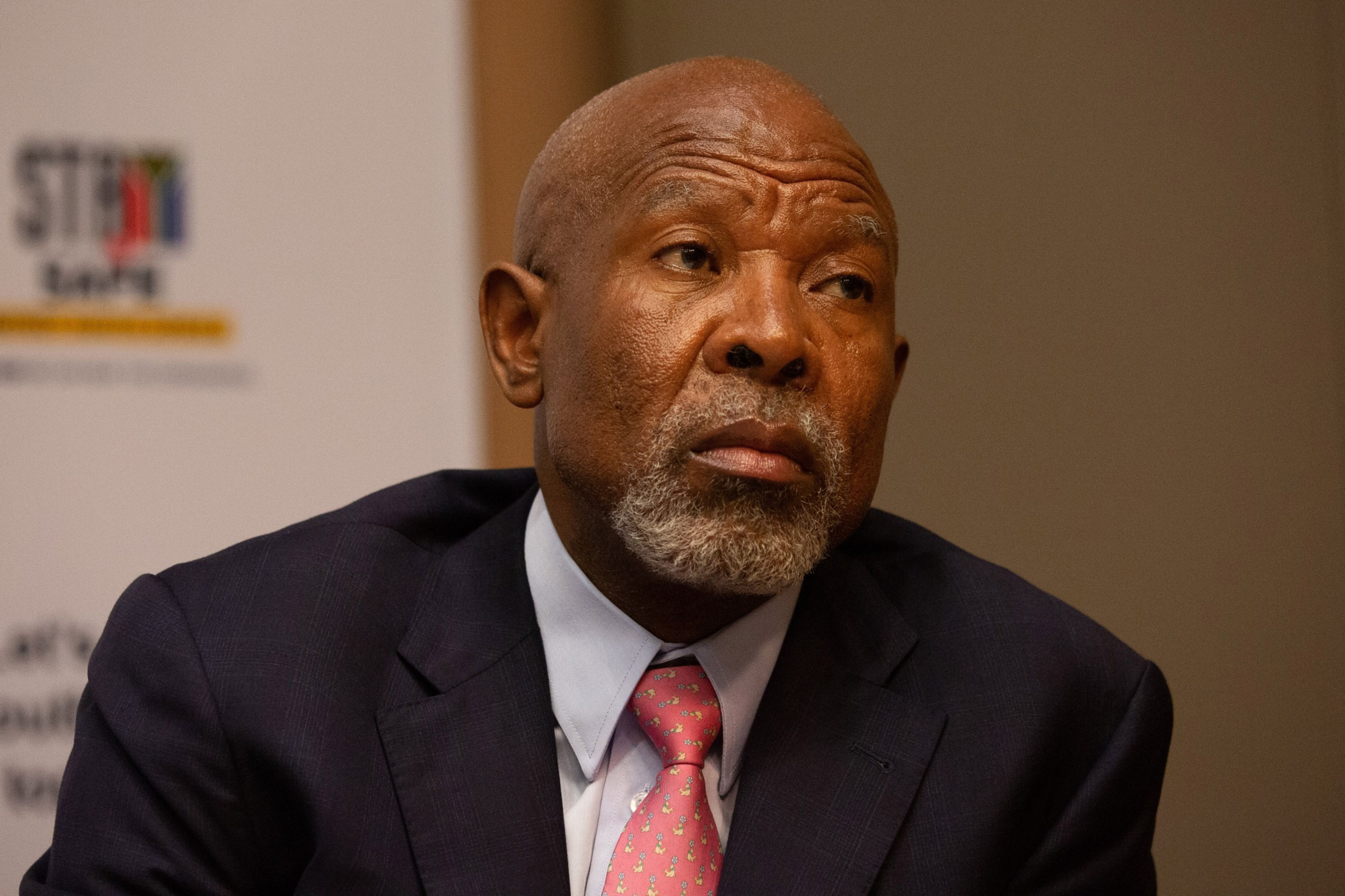
 Lesetja Kganyago, governor of South Africa's reserve bank, during a news conference ahead of the mid-term budget presentation in Cape Town, South Africa, on Wednesday, Oct. 26, 2022. Persistent rolling blackouts are clouding prospects for a recovery in Africas most-industrialized economy.
 The Reserve Bank’s price-stability mandate, which is prescribed by the constitution, has been a contentious issue for the governing African National Congress for years. With the unemployment rate at 34.5% and the ANC heading into a five-yearly elective conference, where it also decides on policies, next month, calls to widen the central bank’s policy focus have resurfaced.
| Read more: |
|---|
|
South Africa has an unemployment problem that needs more credible solutions, Kganyago said. Job creation and growth are both limited by factors that are beyond the reach of the central bank’s tool set, he said.
Kganyago, who has been in his role for eight years, is a staunch proponent of inflation targeting. Under his leadership the central bank started to manage price growth to be close to the mid-point of its target range of 3% to 6%.
“Inflation erodes the buying power of the population,” Kganyago said. “If the authorities do not step in a deal with inflation, we are selling our people short.”
South Africa’s inflation rate declined for a second straight month to 7.5% in September. However, central bank forecasts show that it will only return to the 4.5% mid-point of the target range by the fourth quarter of 2024.
The central bank’s critics say its focus on inflation, which has meant higher interest rates over the past year, increases poverty and only hurts consumers. But Kganyago said high inflation affects poorer and less-skilled South Africans more than the wealthy, and exacerbates inequality.
“We hear your cries when you say inflation is eroding your income, whether a salary or a grant from government,” Kganyago said. “Erosion of that income by inflation is what the central bank should deal with. But in dealing with your cries there will be short-term pain and that comes in the form of medication that is interest rates.”
Comments
Scroll down to load comments...