




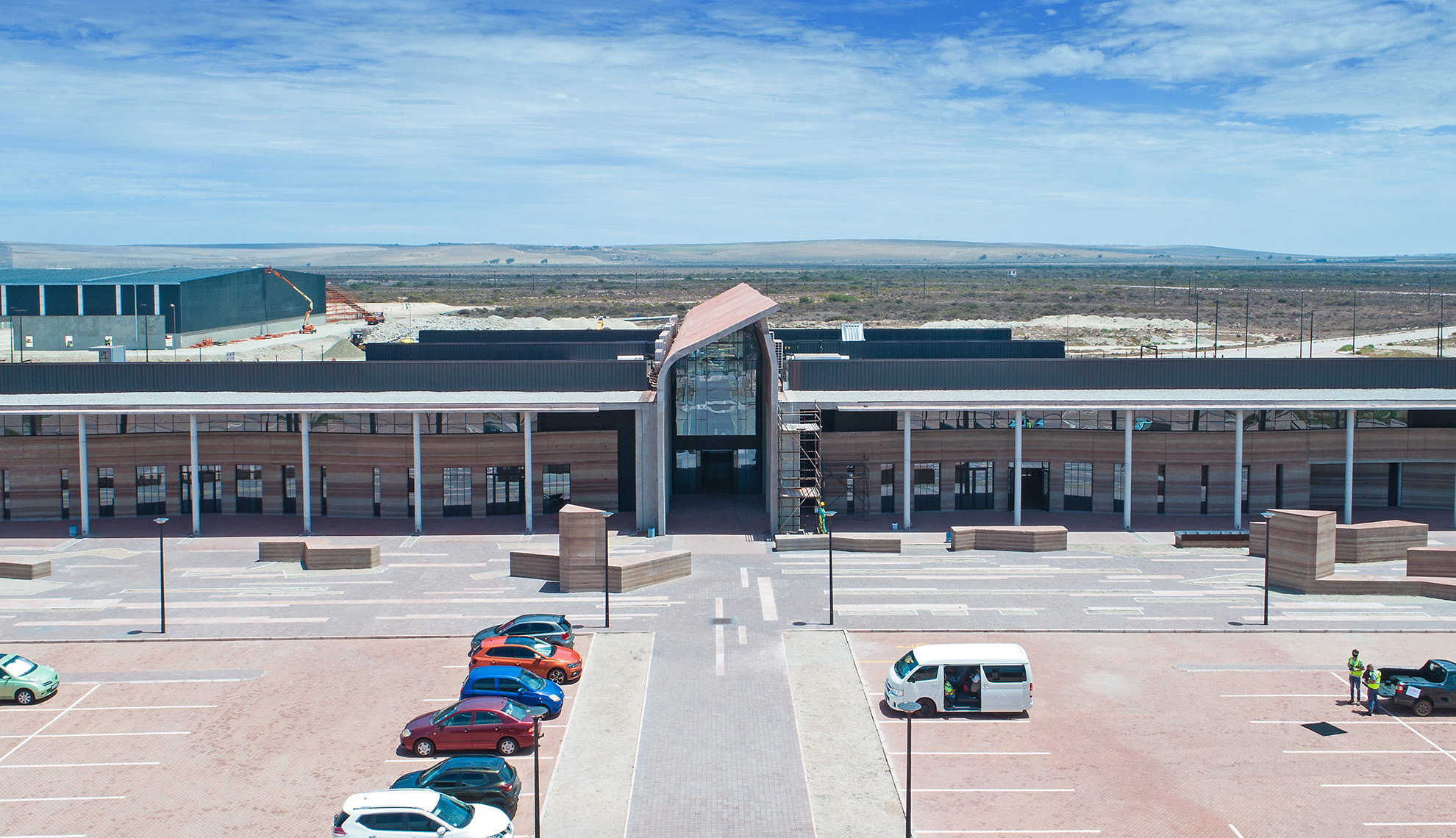
Organisations like Freeport Saldanha are paving the way to support investors to setup manufacturing facilities in energy transition technologies and further attract energy investments to the Western Cape region.
So says Brent Townes, Commercial Property Chief Operating Officer for Lew Geffen Sotheby’s International Realty in Cape Town, adding: “It’s become imperative that consumers have alternative options which, albeit at a higher cost initially, assures them not only of a reliable energy supply but also a much-reduced carbon footprint.
“And, with building owners facing an Eskom application at NERSA for a 32% price escalation for 2022/23, alternative energy sources are likely become cost-efficient sooner rather than later – especially as the increase in the cost per kilowatt during the winter months will result in a double whammy as municipalities pass their inefficiencies on as well.”
He adds that landlords can mitigate this risk by installing separate meters or even installing solar systems, but ultimately that in itself won’t halt the rapidly increasing cost spiral in the overall business environment.
“At the end of the day, the government’s change of heart from their deep reluctance to move away from coal-fired power has almost come too late as the transition is a lengthy process.

“The planning cycle of any such project takes up to 24 months in consultation with all role players before the tender process can begin and then follows the design process, the construction phase, the commissioning phase and so on.
“For example, the disastrous Medupi project which was commissioned in 2007 and initially expected to take six years to complete but Unit 1’s completion was then extended to 2017 and, to date, it’s already R11 billion over budget and far from finished and Kusile has a similar timeline.
“Over and above the fact that these stations would be fed coal from surrounding mines and thereby deepening the carbon footprint, both still require considerable corrective work on design faults which are estimated at R28bn.”
Margeaux Dawe, Commerical Property Practitioner for the group says: “What’s become patently clear is that, with bureaucracy further hampering efforts on government’s part to introduce new energy sources and technologies, assistance from outside sources is essential to getting alternative and cleaner energy up and running.
“And it’s been heartening to see that this has been forthcoming from a number of countries, including Germany, Japan, China and the US, all of whom are keen not only to invest, but also to share their knowledge and experience.
“They are all becoming aware of the multitude of benefits that South Africa offers, including all our natural resources, the ability to compete in hydrogen economy, a climate and available land conducive to solar and wind energy and an abundance of mineral reserves, not to mention labour, skills and experience.”
Dawe adds that the timeline for these investors to secure land, erect solar and wind power generation systems and then commission them would be considerably shorter than if initiated by the local government.
“Their only potential hurdle would be establishing and securing connections to private consumers and the City of Cape Town – although they are far more proactive than Eskom.”
Freeport Saldanha is the first South African Freeport which is a special economic zone and customs-controlled area within a port, dedicated to the Energy and Maritime sector.
And, via the creation of the IDZ, Freeport Saldanha has been positioned as an energy hub through which to enable the energy transition as well as initiate the unlocking of the ocean economy.
Situated just 170km from Cape Town and 137km from Koeberg, Freeport Saldanha is a deep-water port with shipping lane capacity and a well laid out bonded development node with a good road infrastructure.

Operating as a Freeport with streamlined investor procedures supported by Ease of Doing Business model within the largest deep-water Port in the Southern Hemisphere, it’s ideally placed to service East and West African sea traffic, providing a linkage point for both African and international market.
“With the IDZ being perfectly positioned to be leveraged to deliver, they are now actively seeking suppliers of alternative energy and for their supply chains to reside within the IDZ and its surrounding areas,” says Townes.
“Their turnkey approach underpinned by a funding mechanism will hopefully attract both local and international investment and expertise in this sector and we are excited to be working with them to bring this critical project to fruition.
“And, with 356ha of open space for energy transition supply chains such as cleaner fuels, gas, green hydrogen and renewables and marine repair, fabrication, logistics and related servicing, the opportunities are endless.”
According to Dawe, construction of one warehouse unit has already been completed with multiple smaller units in the pipeline and there are numerous tracts of vacant land available for tenants wanting spec builds.
“The completed 5 954 m² AAA Grade warehouse is currently available for rent and it’s perfectly suited to tenants in the oil, gas, maritime and energy sectors.
“The unit includes an office block with 10 offices, a lab facility and server room, a transformer room, a pump room and a sprinkler room and it’s equipped with a HVAC system, a 250kva backup generator, a fire protection system and is accessed by seven roller shutter doors including one elevated loading bay.
“The office block also has kitchenettes on both floors and there are ablution facilities throughout including factory employee bathrooms with showers.”
Experts agree that the transition to renewable energy is well underway and cannot be stopped so it’s critical that developing countries get on board sooner rather than later.
“The European Union is setting up Border Carbon Tax so vital that South Africa is on board, fully committed to the transformation and willing to go big if we hope to compete in this arena,” concludes Dawe.
For further information, contact Margeaux Dawe (084 941 0043) or Carolyn Thorne (071 994 8348). DM/BM
Comments
Scroll down to load comments...