




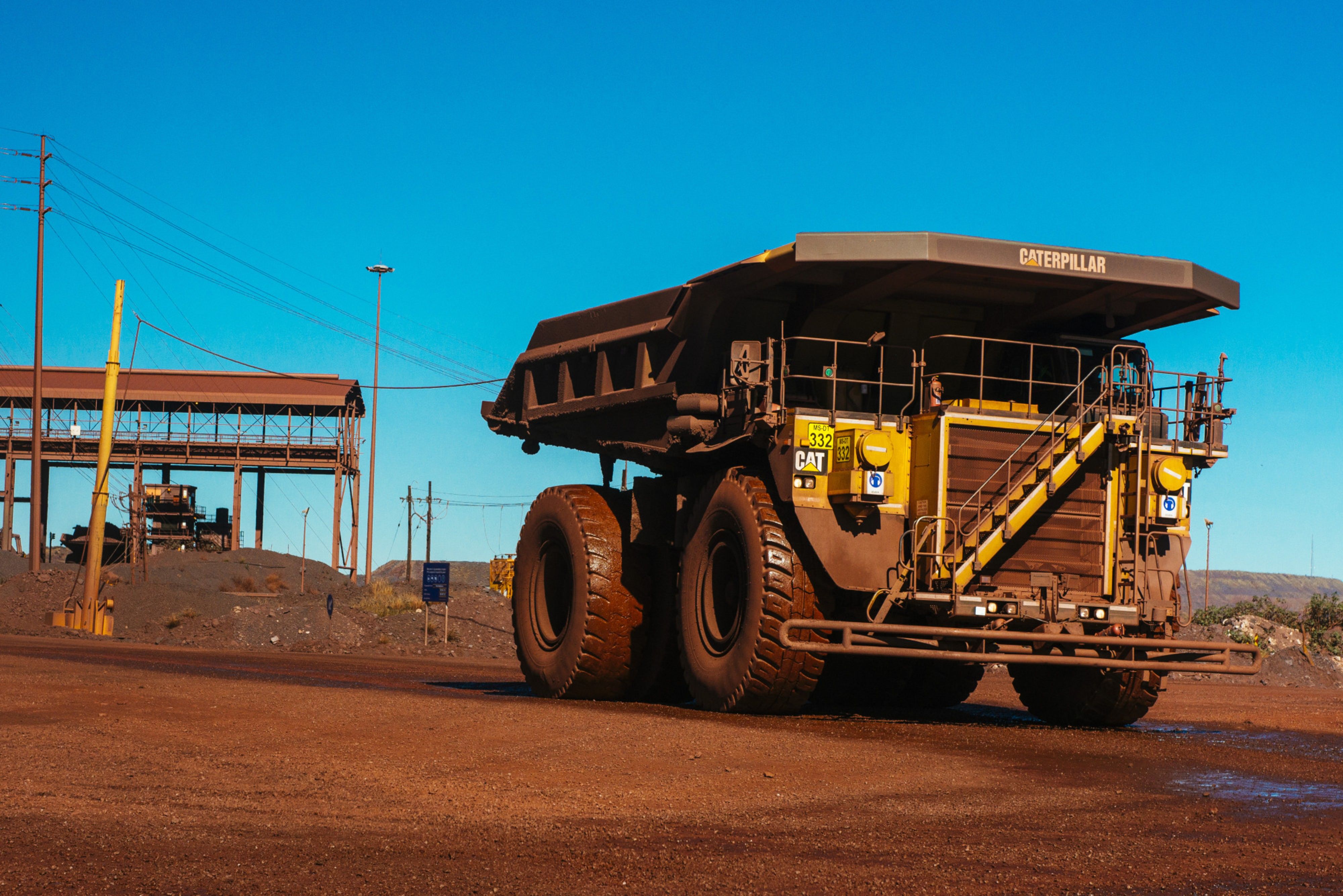
 A Caterpillar Inc. dumper truck drives in the iron ore excavation pit at the Sishen open cast mine, operated by Kumba Iron Ore Ltd., an iron ore-producing unit of Anglo American Plc, in Sishen, South Africa, on Tuesday, May 22, 2018. (Photo: Waldo Swiegers/Bloomberg)
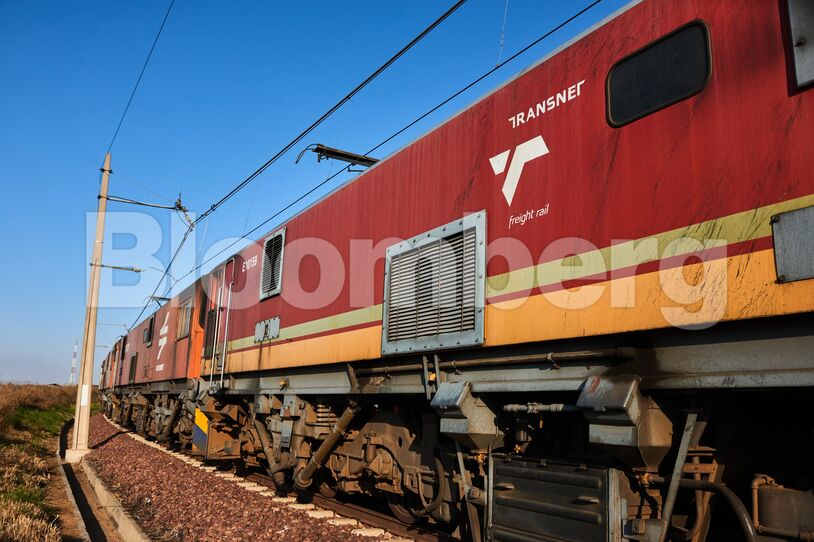
 Transnet, which operates the nation’s industrial ports and freight rail network and fuel pipelines, has declared force majeure on shipments because of the labor action.
“Today all ports and freight rail are not expected to operate,” Busi Mavuso, the chief executive officer of lobby group Business Leadership South Africa, said in a note on Monday. “This is disastrous not only to obvious sectors linked to direct imports like the medical sector, and exports, like the mining sector, but to the entire, interconnected economy.”
Read: South African Ports Operator Declares Force Majeure Over Strike
Protesters staged a march near Transnet’s facilities at the Cape Town port as police observed from a distance. Cranes appeared to be at a standstill at the container terminal while few trucks entered or exited the vicinity.
Kumba Iron Ore Ltd. said the disruption will impact its 120,000 tons a day of export sales. Output will be hobbled by 50,000 tons a day for the first week of the strike and jump to 90,000 tons after that, according to a company statement.
Thungela Resources Ltd., South Africa’s biggest shipper of thermal coal, has said a prolonged strike of two weeks would curtail as much as 300,000 tons of export production. The movement of chrome, manganese and other bulk commodities will also be impacted.
Shares of Kumba fell as much as 3.9%, the most in a week, on the Johannesburg Stock Exchange on Monday, while those of Thungela dropped as much as 4.1%.
Food Industry
The labor dispute also poses a risk to South Africa’s food and beverages industry, said Wandile Sihlobo, chief economist at the Agricultural Business Chamber of South Africa.
“The fourth quarter of the year is as busy as any other quarter in terms of trade,” he said in a note. “Stoppages would negatively affect both imports and export activities. The actual costs of it, however, will depend on the duration of the strike.”
Transnet and the unions held talks facilitated by the Commission for Conciliation, Mediation and Arbitration on Monday, and they were still under way by late afternoon, according to the company. It has urged workers to accept its wage offer of as much as 4%. Workers are demanding increases of 13.5%.
Transnet’s deteriorating performance was curtailing shipments even before the strike, costing the state money that could fund programs to help the poor, BLSA’s Mavuso said.
The mining industry estimates that “it could have generated another 100 billion rand ($5.5 billion) in revenue were it not for capacity constraints on Transnet rail and ports,” she said. “That money would have generated another 27 billion rand in tax revenue.”