




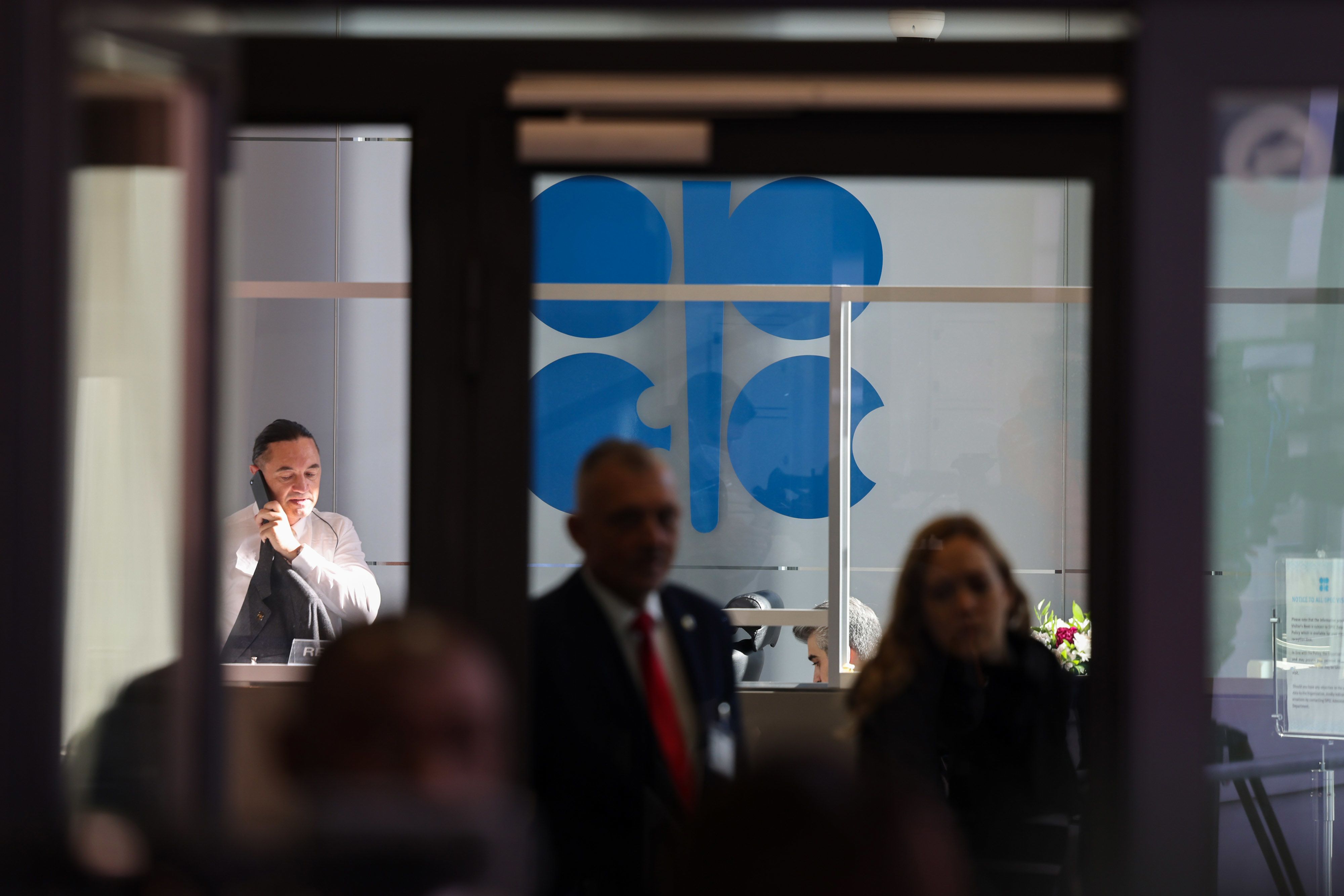
 Visitors arrive at the OPEC Secretariat building ahead of the 33rd meeting of the Organization of Petroleum Exporting Countries (OPEC) and non-OPEC countries in Vienna, Austria, on Wednesday, 5 October 2022. OPEC+ is considering its biggest production cut since 2020 as it tries to stabilize oil prices, a move that risks cranking up tensions with Washington.
Even so, the decision risks adding another shock to a global economy that is already battling inflation driven by high energy costs. The cartel extended its cooperation agreement until the end of 2023, and the new production limits agreed on Wednesday will remain in place until then unless the market changes, said a delegate.
“OPEC wants prices around $90,” Nigerian Minister of State for Petroleum Resources Timipre Sylva said after the meeting. Many member countries have based their 2023 budgets on that price and “it would destabilize some economies” if that weren’t to happen, he said.
The move irked the US, with President Joe Biden saying he was concerned by the “unnecessary” cut, according to CNN. He visited Saudi Arabia earlier this year in search of higher production and lower pump prices for Americans ahead of midterm elections in November.
The cut of 2 million barrels a day will be measured against the same baseline as the previous OPEC+ agreements, Amir Hossein Zamaninia, OPEC governor for Iran, told reporters in Vienna after the meeting. Shared pro rata between members, that would require just eight countries to curb actual production and deliver a real reduction of about 900,000 barrels a day, according to Bloomberg calculations based on September output figures.
Oil rose as much as 2.2% to $93.80 a barrel in London, the highest in three weeks.
Earlier on Wednesday, US officials were making calls to counterparts in the Gulf trying to push back against the move to cut production, according to people familiar with the situation. Already, the White House had asked the US Energy Department to analyze whether a ban on exports of gasoline, diesel and other refined petroleum products would lower prices, Bloomberg reported on Tuesday. It’s a controversial idea but one that’s gaining traction in some corners of the Biden administration.
In Vienna, there was little sign before the meeting that the US pressure was working. United Arab Emirates Energy Minister Suhail Al Mazrouei insisted the decision was “technical.”
“It’s very important that it remains as a technical decision and it’s not political,” he told reporters. “That’s why it’s important to look at technical side of the equation and look at any concerns regarding the economy and the status of the economy.”
OPEC+ will no longer hold monthly meetings, Zamaninia said. The group’s Joint Ministerial Monitoring Committee, which oversees implementation of production cuts, will meet every two months, he said.
Comments
Scroll down to load comments...