




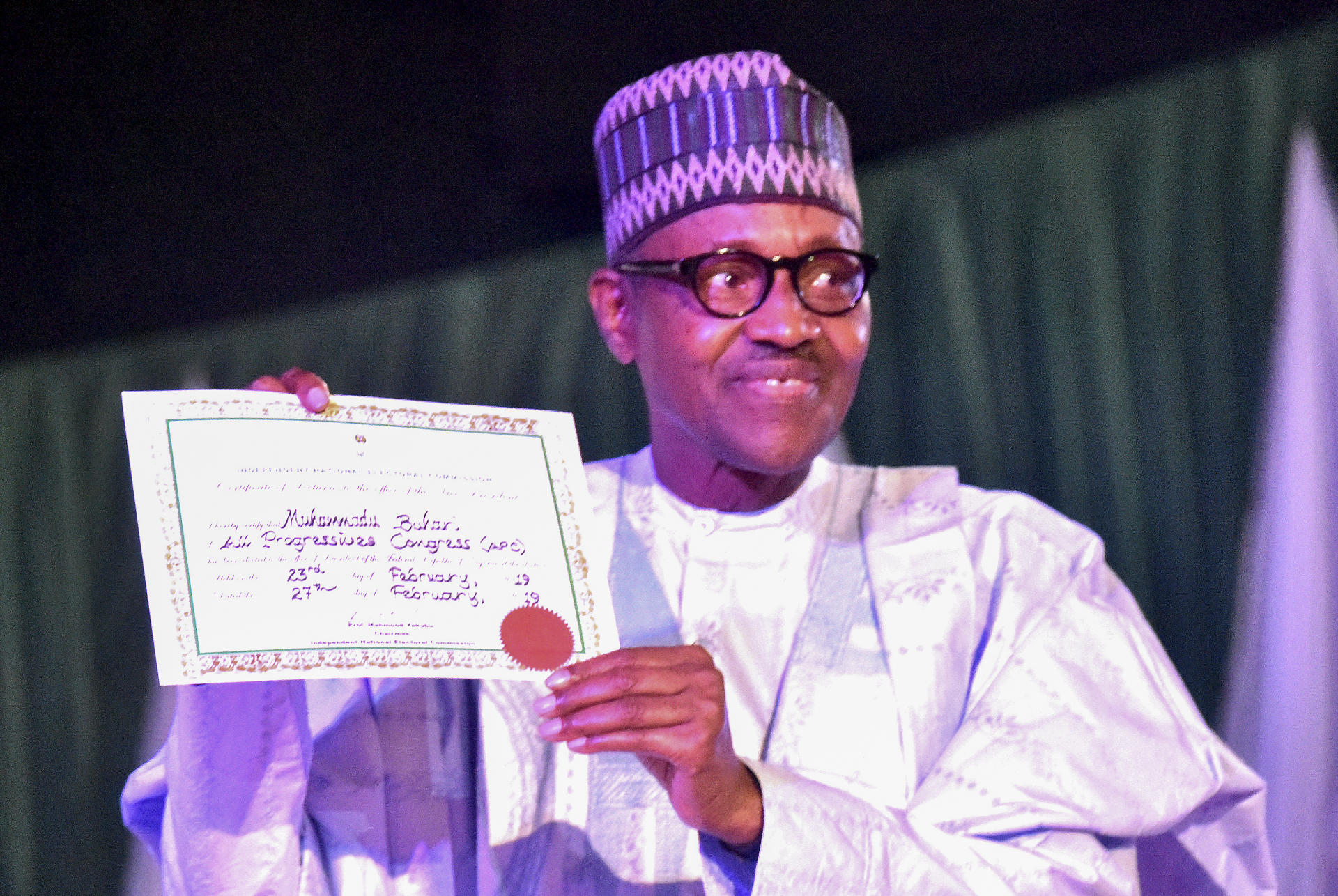
 Nigerian President Muhammadu Buhari holds his certificate of return after receiving it from the Chairman of the Independent National Electoral Commission Prof. Mahmood Yakubu, in Abuja, Nigeria, 27 February 2019. Nigeria's President Muhammadu Buhari has been announced the winner of Nigeria's elections with 56 per cent of votes. The All Progressives Congress (APC) party of Buhari won 15.2 million votes in the ballot, compared with 11.3 million votes of People's Democratic party of his rival Atiku Abubakar. EPA-EFE/STR
 While his administration would allow the central bank to “pursue its mandate,” Atiku said it will “ensure that such policies are not detrimental to Nigeria’s quest for foreign direct investment and to Nigeria’s long-term growth.”
“We will push for a foreign exchange policy that encourages capital inflows and makes capital outflows less attractive to the investors,” he said in a speech to the Lagos Chamber of Commerce and Industry and emailed by his campaign office on Tuesday.
Read: Nigeria Inflation at 17-Year High as Bread, Gas Costs Soar
The exit of foreign investors from Nigeria and plummeting crude production are slowing the recovery of Africa’s biggest economy, which is also confronting high unemployment. Inflation quickened to 19.6% in July, the highest in about 17 years, owing partly to the high cost of accessing dollars to import raw materials.
Abubakar, the candidate for the Peoples Democratic Party, is bidding to succeed President Muhammadu Buhari, who will complete his second and final term in May 2023.
Comments
Scroll down to load comments...