



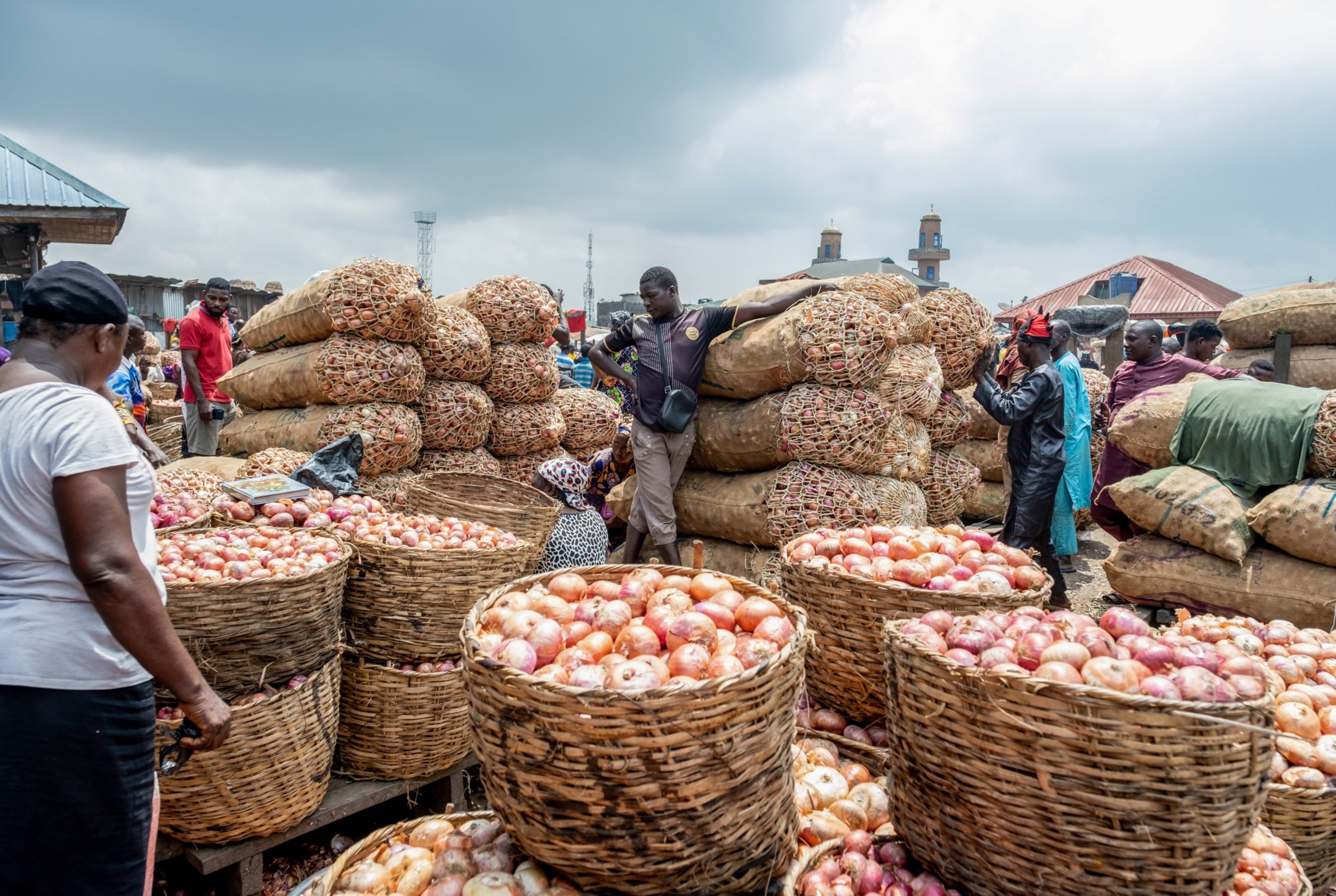
 A trader alongside sacks and baskets of onions for sale at the Mile 12 food market in Lagos, Nigeria, on Thursday, July 7, 2022. Soaring inflation could push 15 million more Nigerians into extreme poverty by the end of this year, the World Bank said in its Nigeria Development Update report published this month.
The MPC “expressed concern about the continued aggressive movement in inflation,” even after it increased rates by 150 basis points at the previous meeting, Emefiele said. The committee expressed its resolve to “restore price stability, while providing the necessary support to strengthen our fragile economy,” he said.
Inflation quickened to a five-and-a-half-year high of 18.6% in June and has exceeded the 9% ceiling of the central bank’s target band for seven years.
“If inflation continues at this particularly aggressive rate, we will continue to tighten,” Emefiele said.
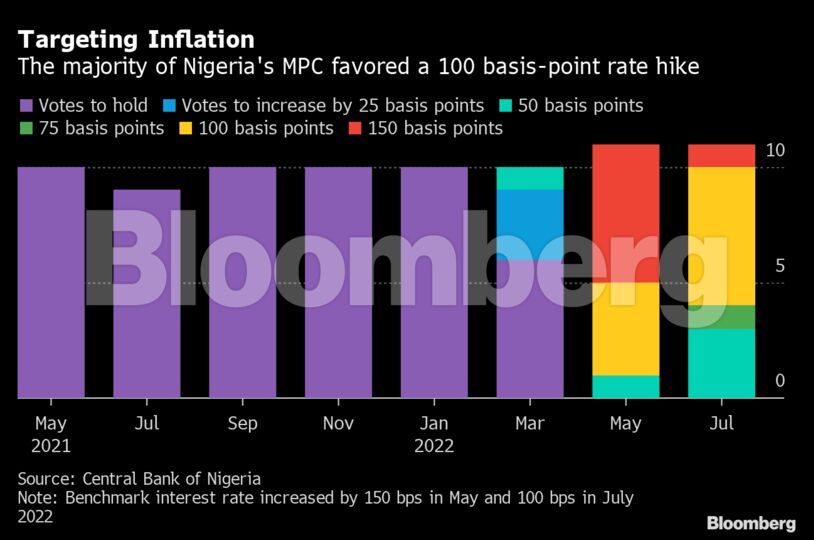
The MPC’s decision to hike was unanimous, with six members voting to raise by 100 basis points, three by 50 basis points and one each calling for increases of 75 and 150 basis points.
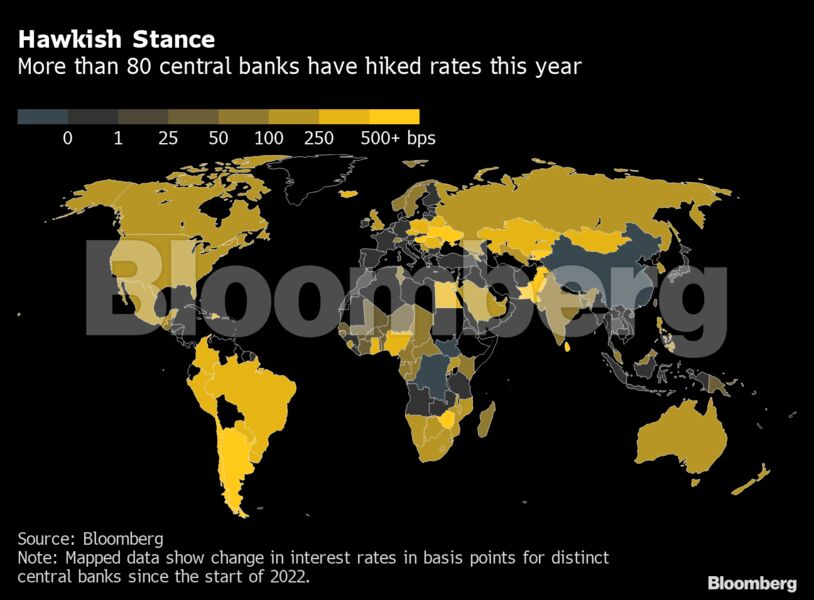
Africa’s largest economy was a late mover globally in lifting rates in an effort to temper inflation and capital outflows. It has now raised borrowing costs by 250 basis points, making it one of seven central banks on the continent that have hiked by 200 basis points or more this year.
While the rate increase may help prop up the naira and anchor inflation expectations, it’s likely to draw criticism from some politicians as the nation prepares for presidential elections next year and as the economy recovers from two contractions since 2016. The central bank sees the economy expanding 3.3% this year, compared with 3.24% forecast in May.
The naira gained 0.3%, to 422.30 per dollar -- its strongest level in almost two weeks by 2:18 p.m. in Abuja.
Comments
Scroll down to load comments...