




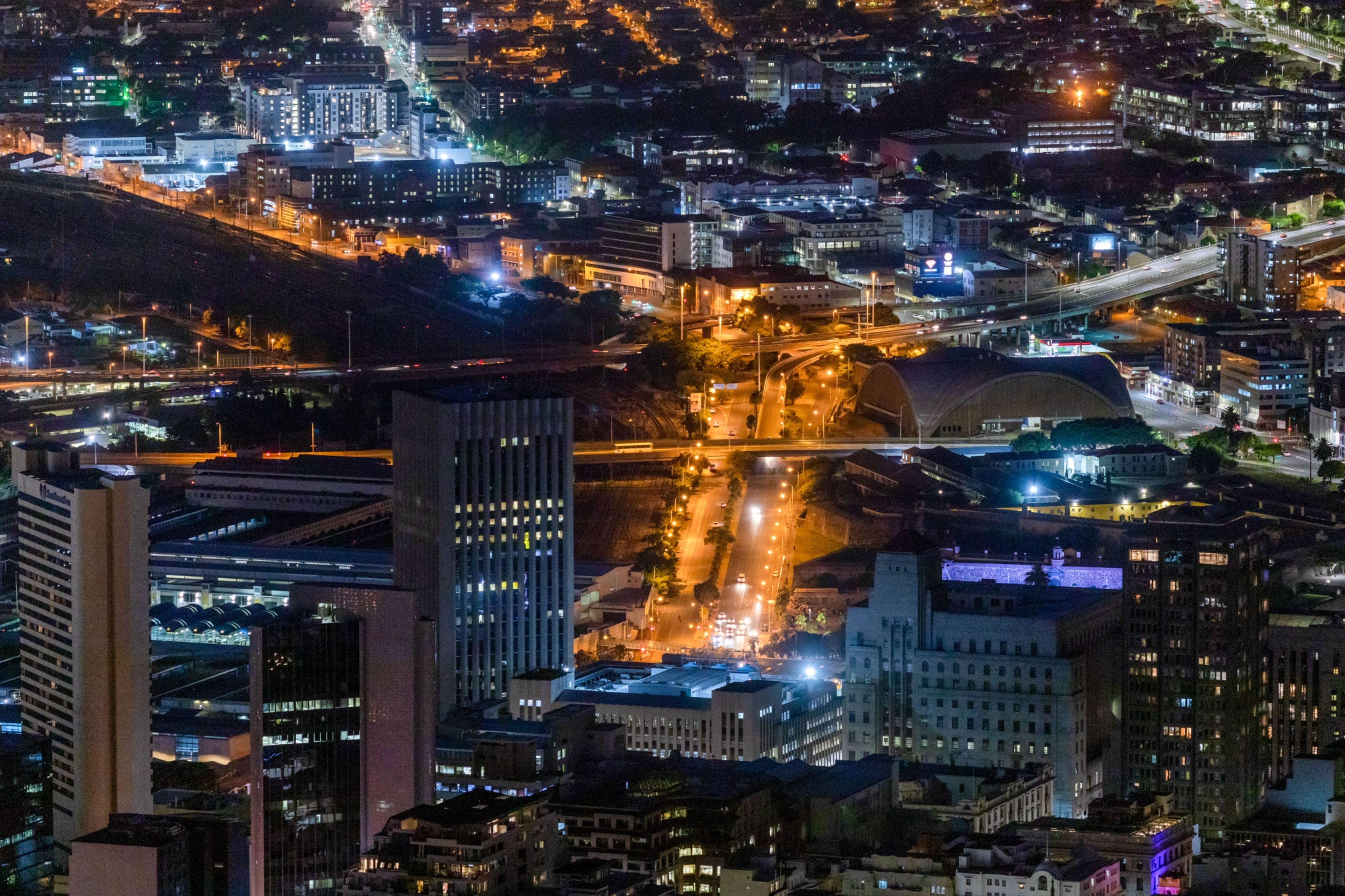
 Lights on in buildings in central Cape Town, South Africa. Photographer: Dwayne Senior/Bloomberg
 Steps include lifting the cap above which a private project must apply for a generation license to 100 megawatts, and making land available alongside existing power plants for private investment in renewable energy. While those measures will bear fruit over coming months, they aren’t enough to fully address the crisis, Ramaphosa said.
“The message is clear: this is no time for business a usual,” he said. “We need to act boldly to make loadshedding a thing of the past,” he said, using the local term for planned outages.
South Africa’s National Planning Commission, a department of the presidency, recommended in a report last week that the government should remove the limit above which a private power project must apply for a generation license, simplify the registration process and streamline environmental and water-use approvals.
The nation’s main labor-union federation has also backed proposals by the main business-lobby groups that the government fast-track the procurement of electricity from private providers, to enable more generating capacity to be brought online quicker.
“They really do have to move with speed because this crisis is suffocating the economy,” said Mathew Parks, parliamentary coordinator for the Congress of South African Trade Unions, said by phone on Monday. “We are in a crisis and we simply do not have the luxury of time. Jobs are dependent on this.”