




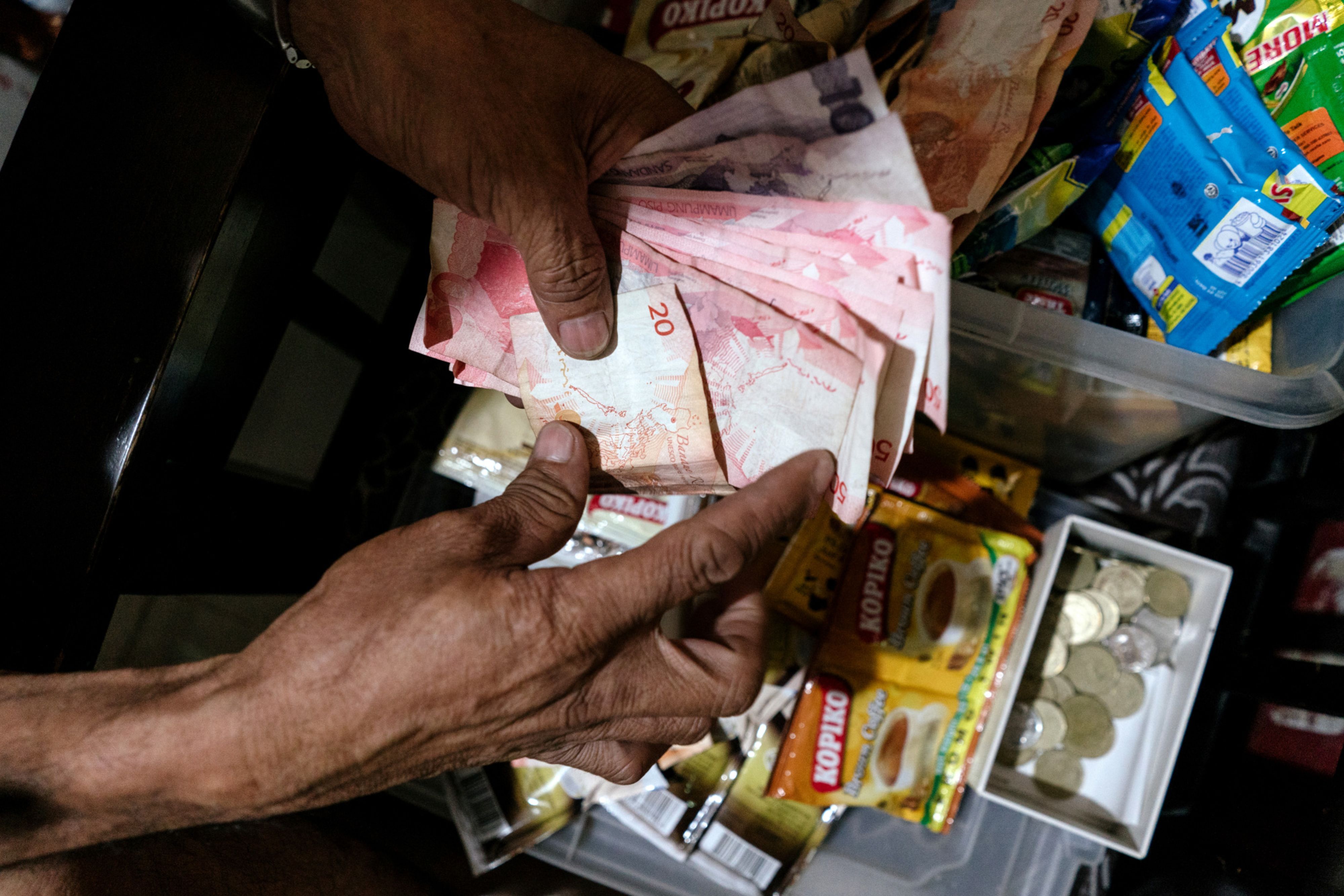
 A man counts Philippine Peso bills inside a store in Manila, Philippines. Photographer: Hannah Reyes Morales/Bloomberg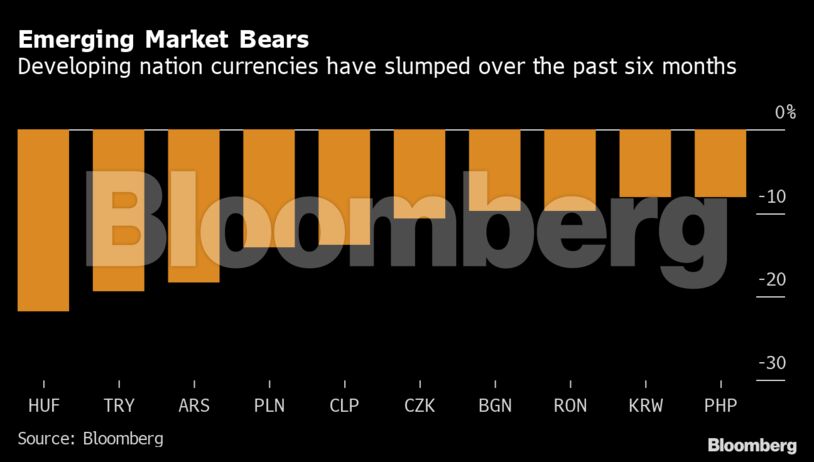
Read More: Every Emerging Currency Slumps Amid a Stronger Dollar
All of the 23 major emerging-market currencies tracked by Bloomberg have weakened over the past month as the Federal Reserve has raised its benchmark rate by a combined 125 basis points at its latest two meetings. Chair Jerome Powell has said the central bank may hike by either 50 basis points or 75 basis points at its July gathering.
Heightened Uncertainty
Asian currencies remain vulnerable even if regional central banks were to step up the pace of tightening, unless they are willing to contemplate positive real interest rates, Wee Khoon Chong, senior market strategist at Bank of New York Mellon in Hong Kong, wrote in a research note Wednesday.
Deteriorating consumer sentiment and rising interest rates have increased the odds of a US recession in the next year to 38%, according to the latest forecasts from Bloomberg Economics.
“The environment is not very forgiving for EMs,” said Eugenia Victorino, head of Asia strategy at Skandinaviska Enskilda Banken AB in Singapore. “An improvement in the global-growth outlook will be required to turn the sentiment on the dollar, which may only come next year.”