



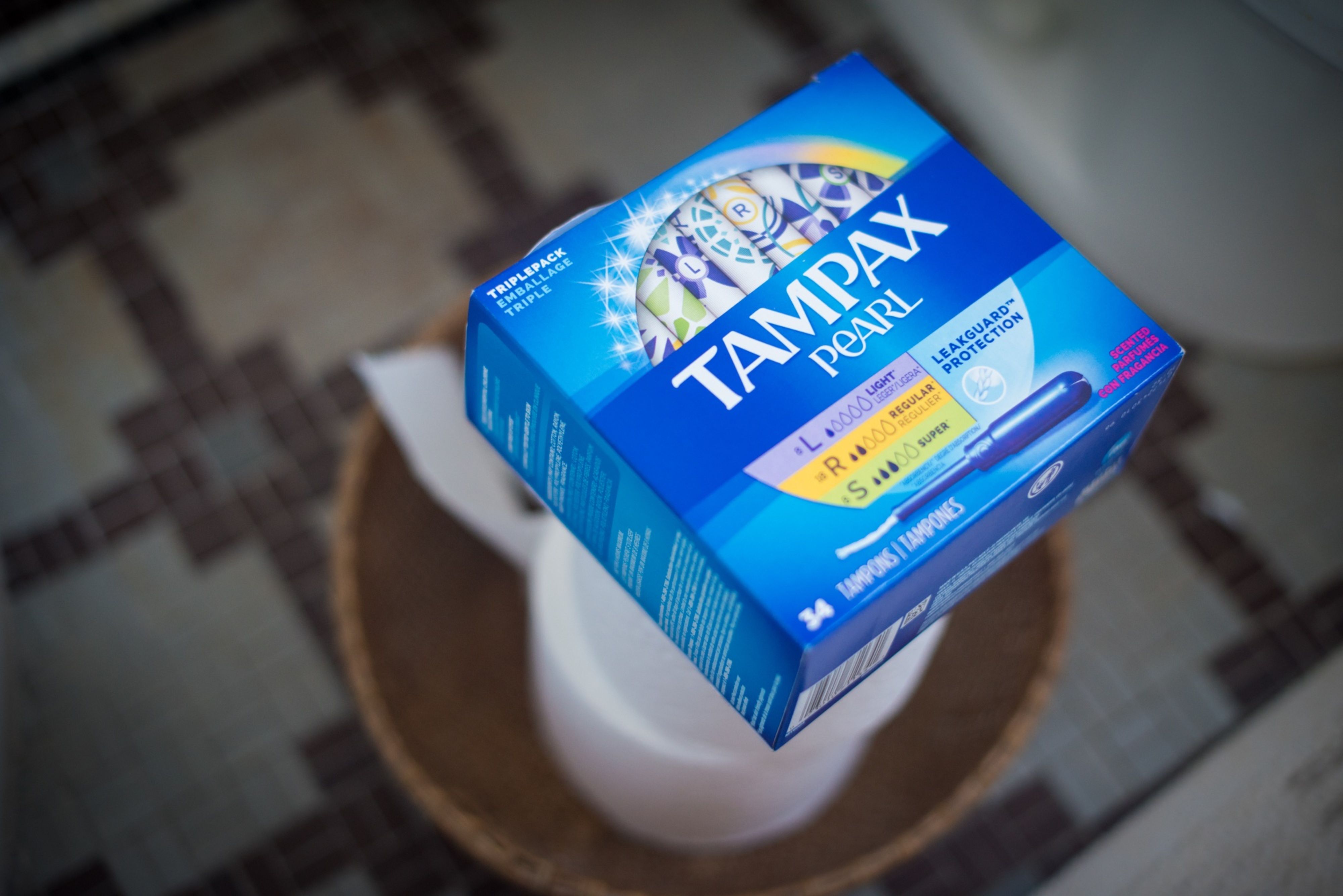
 Procter and Gamble Tampax brand tampons are arranged for a photograph taken in Hastings on Hudson, New York, U.S., on Saturday, 17 October 2020. (Photo: Tiffany Hagler-Geard/Bloomberg)
On Monday, US Senator Maggie Hassan sent a letter to Procter & Gamble, Edgewell Personal Care, Johnson & Johnson and Kimberly-Clark asking what they plan to do to address reports of diminished supply and price gouging by third-party sellers.
The Democrat from New Hampshire cited several news reports chronicling a shortage. It comes on the heels of a baby-formula shortage and rising prices on everything from food to clothes to gas – to menstrual products.
Read More: It's getting more expensive to have your period, thanks to inflation
The companies should “take immediate action to increase the tampon supply and end unnecessary price increases,” Hassan said in the letter. “Access to menstrual products should be treated like every other essential good.”
Tampons are a basic necessity. https://t.co/xkyWAsUhly
— Sen. Maggie Hassan (@SenatorHassan) June 13, 2022
In-stock levels for feminine products hovered around 92% for the week ended May 29, according to IRI data, around normal levels. The data doesn’t isolate for tampons alone.
P&G, which makes brands including Tampax and Always, has a near-50% market share in menstrual-care supplies in the US. The company is “working hard to ramp up production to meet the increased demand for our products”, a spokesperson said in an emailed statement on Friday. Edgewell, the company behind brands like Playtex and o.b., cited surges of the Covid-19 omicron variant as a cause for any diminished inventory.
“We have been operating our manufacturing facilities around the clock to build back inventory and anticipate returning to normal levels in the coming weeks,” a spokesperson for Edgewell said in an email.
The reported shortages are the latest blow for consumers for whom the products are essential: The average cost of a box of tampons rose 9.8% in the year through May 28, according to NielsenIQ, and 8.3% for a box of pads. Such increases can be especially difficult for poor or low-income consumers, many of whom already struggled to afford such products. Federal programs such as the Supplemental Nutrition Assistance Program do not cover menstrual products, and 26 states charge tax on menstrual products.
An April 2021 survey by Kimberly-Clark found that two in five people in the US struggled to afford menstrual products every month, a condition known as period poverty. As a result, 38% of low-income women said they missed days of work, school or another event because they didn’t have the products they needed. BM
Comments
Scroll down to load comments...