




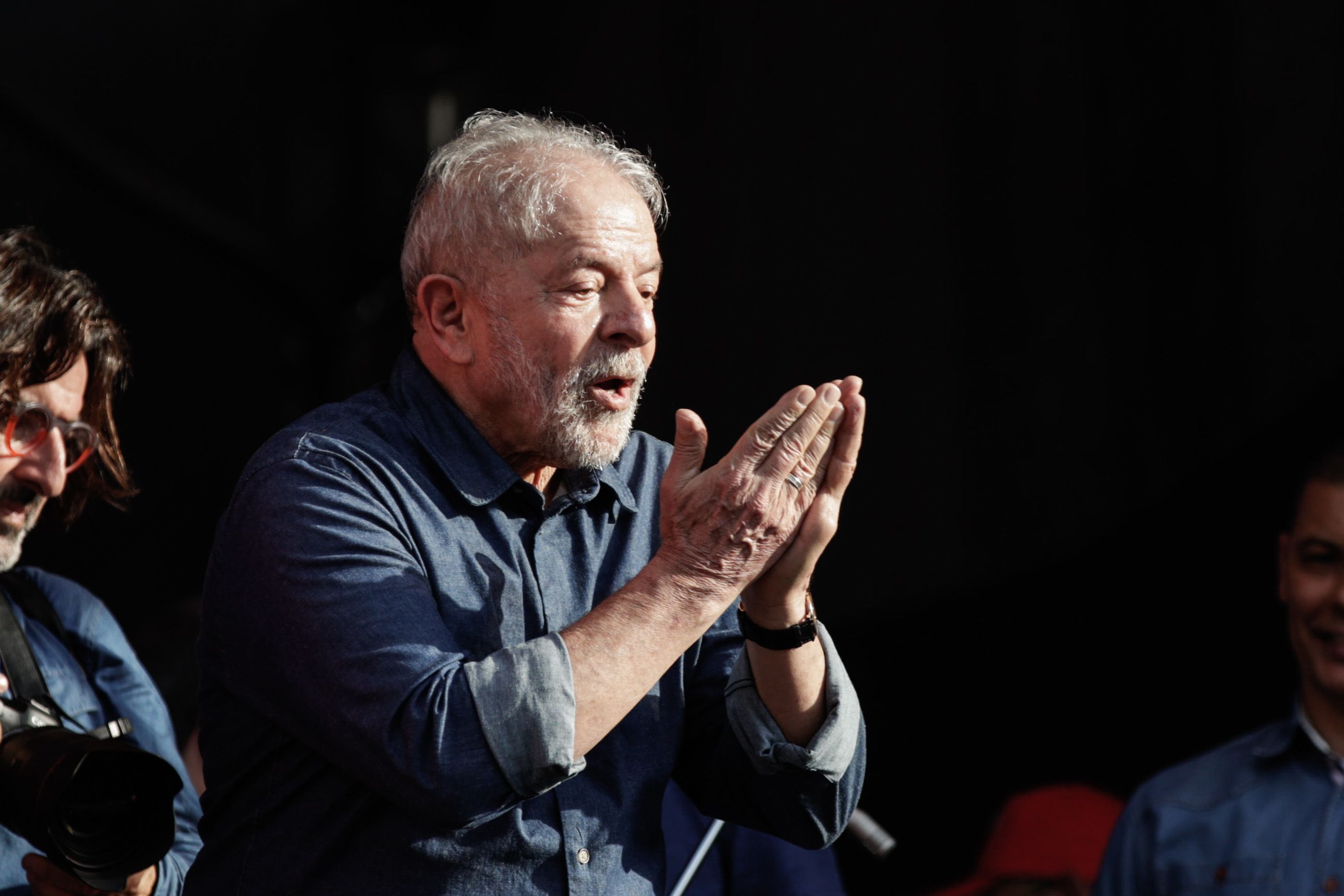
 Luiz Inacio Lula da Silva, Brazil's former president, gestures before speaking during an event organized by workers' unions on International Workers' Day in Sao Paulo, Brazil, on Sunday, May 1, 2022. According to latest polling, Lula has 41% of voting intentions in the first round of presidential elections to be held later this year, against 36% for President Jair Bolsonaro.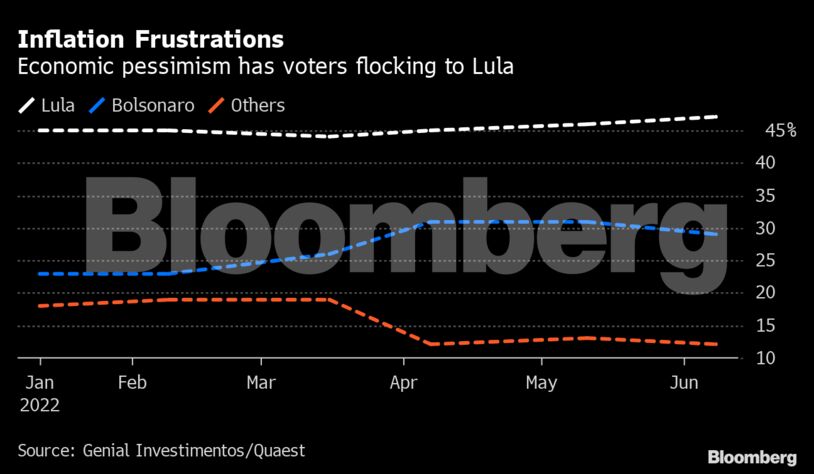
The movements, while within the survey’s margin of error, follow a trend captured by major pollster in recent weeks: Lula is pulling far ahead as the presidential field thins and Brazilians fume over the state of the economy. Double-digit inflation is sapping spending power and a disappointing first quarter growth has economists worrying the nation could dip back into recession by the end of the year.
It’s a combo that bodes terribly for Bolsonaro, a former army captain who presents himself as the pro-business candidate. According to Quaest, 56% of Brazilians say the economy “influences a lot” who they’ll vote for, and 62% say their salary went further under Lula.
“On Bolsonaro’s side, there is a perception of disappointment. On Lula’s side, a good memory,” Felipe Nunes, head of Quaest, said in statement.
Lula left office in 2010 as one of the nation’s most popular presidents ever, following a commodities boom that produced rapid economic growth and pulled millions out of poverty.
The conservative president is currently pursing a variety of initiatives to remedy inflation pain and lower the price of fuel. These include providing subsidies and capping state taxes on gasoline, but many will unlikely be able to provide relief in the short term.
Read More: Brazil’s Real Tumbles on Bolsonaro’s Plan to Cut Fuel Prices
In a second round of the election, Lula would win 54% of votes, while Bolsonaro would get 32%, the poll found.
Quaest interviewed 2,000 people June 2-5 in 123 cities across Brazil. The poll has a margin of error of plus or minus 2 percentage points.