




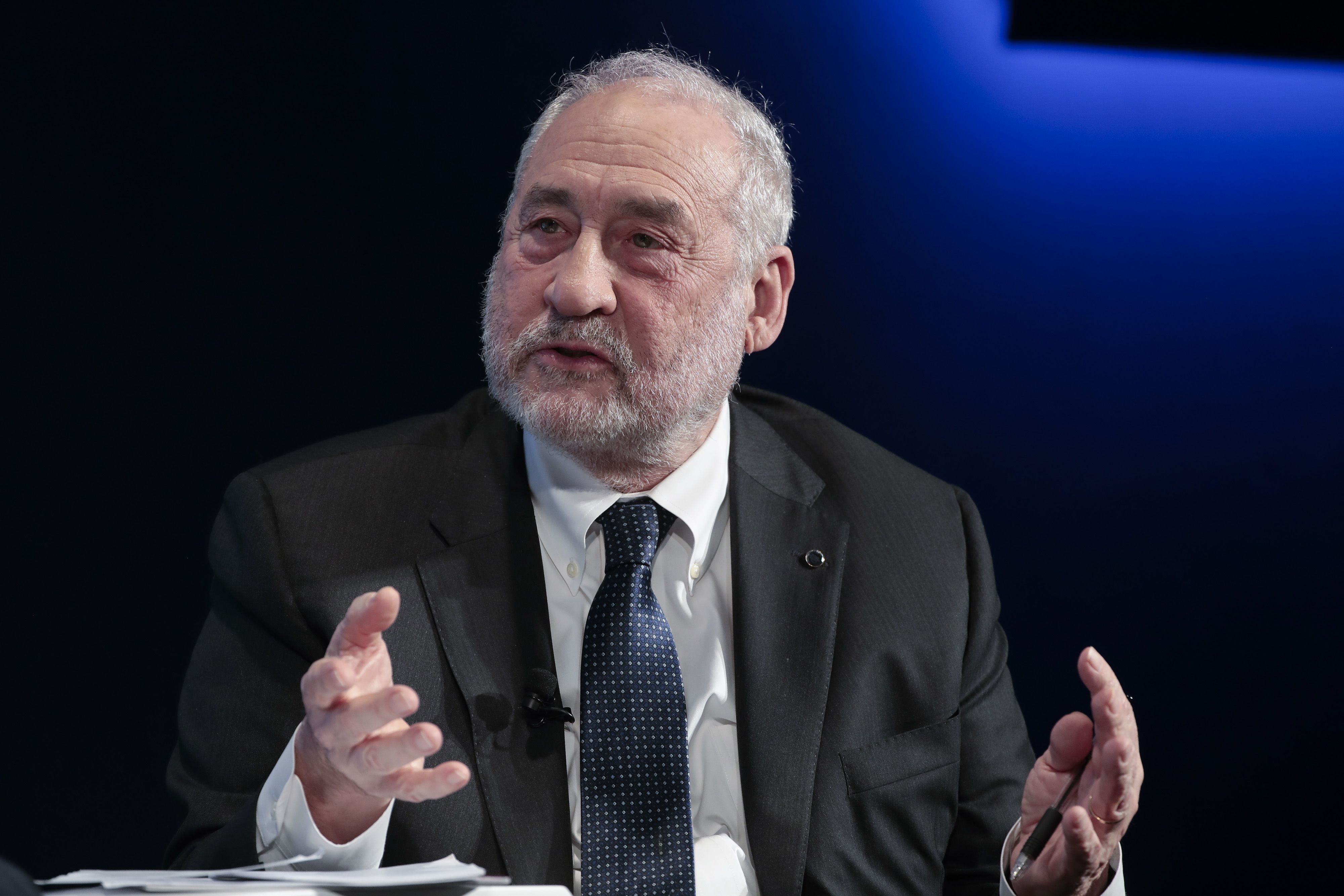
 Joseph Stiglitz, economics professor at Columbia University, gestures as he speaks during a panel session on day three of the World Economic Forum (WEF) in Davos, Switzerland, on Thursday, Jan. 25, 2018. World leaders, influential executives, bankers and policy makers attend the 48th annual meeting of the World Economic Forum in Davos from Jan. 23 - 26. Photographer: Jason Alden/Bloomberg
 The remarks will be followed within days by the Fed’s release of minutes of its latest monetary policy deliberations, potentially shedding more light on increasingly aggressive tightening that included a half-point rate increase earlier this month. Stiglitz offered an alternative approach.
“What you do is you have supply-side interventions,” he said. “One of the things that President Biden tried to do is to have more care for children and that would mean more women into the labor force, that releases one of the constraints -- labor supply.”
The economist insisted that food production should be a priority too, both in the US and globally.
“We used to have surpluses in food in the United States -- we can get those back,” he said. “At least trying to do everything we can globally to increase the supply is going to do more in dealing with the problem than causing a depression.”
He added that “killing the economy through raising interest rates is not going to solve inflation in any timeframe.”