




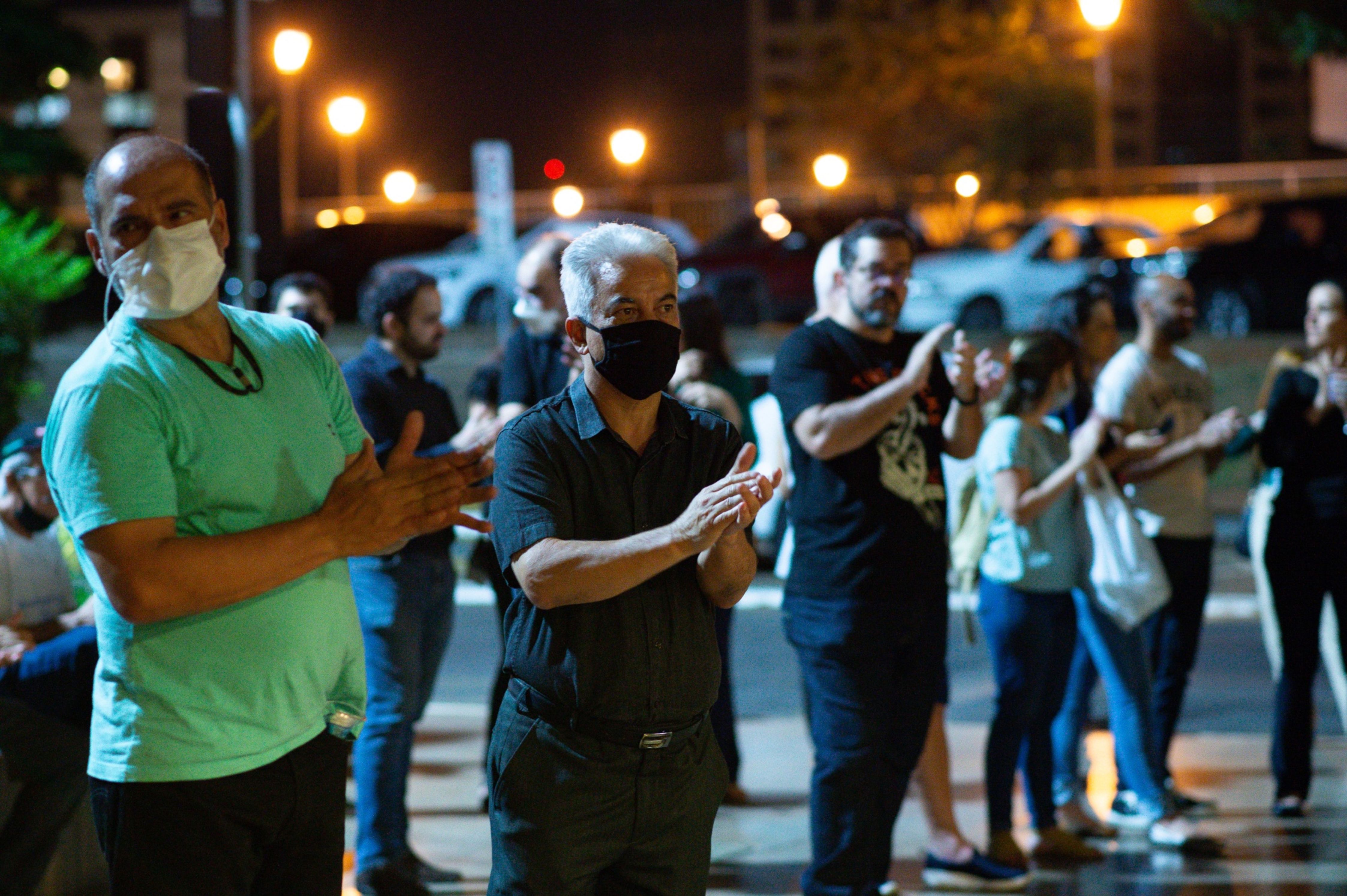
 Workers listen to speakers during a protest outside of the Central Bank of Brazil in Brasilia, Brazil, on Wednesday, May 4, 2022. Inflation is so rampant in Brazil, having surpassed 12% a year in early April, that workers at the institution in charge of taming prices are themselves on strike, demanding wage raises to recover lost purchasing power. Photographer: Andressa Anholete/Bloomberg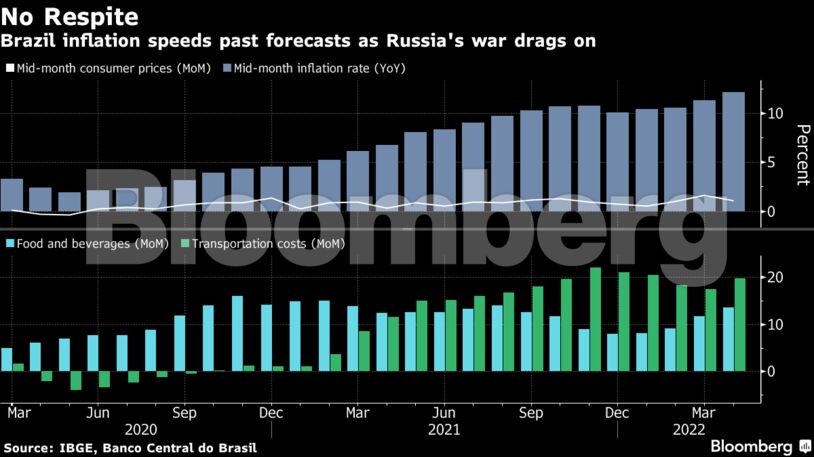
The central bank is nearing the end to one of world’s most aggressive monetary tightening cycles since the pandemic, with hikes that have added 10.75 percentage points to the Selic in just over a year. Yet inflation remains stuck in the double-digits, grating on Brazilians and presenting a major challenge to President Jair Bolsonaro’s efforts to win a second term.
What Bloomberg Economics Says
“While the bulk of pressure again came from food and transportation costs, there are signs inflation remains widespread. The outsize gain may fuel further increases in inflation expectations -- certainly for 2022, and possibly for 2023 due to inertia.”
-- Adriana Dupita, Latin America economist
-- Click here to read the full report
Contracts on interest-rate swaps due in January 2023, which indicate investor sentiment about monetary policy at year-end, rose 11 basis points in morning trading as traders mulled the probability of additional borrowing cost increases.
Monthly inflation was driven by rising costs of food and beverages, which rose 2.06%, as well as transportation that increased 1.91%. It was the biggest consumer price jump for the month of April since 1996, the statistics agency said.
Top Concern
Last week, policy makers led by Roberto Campos Neto raised the key rate to 12.75% and signaled an additional, albeit smaller, increase was likely on tap before they stop hiking. In the rate-decision minutes, central bankers wrote that the effects of higher borrowing costs on inflation was “still to be seen.”
Read more: Brazil Central Bank Says Intense Rate Hikes to Impact Prices
Commodity prices continue to be pushed up by Russia’s invasion of Ukraine, reverberating across the Brazilian economy. State-controlled oil company Petroleo Brasileiro S.A. raised diesel prices by 8.9% this week.
The surging cost of living has become a top concern for voters ahead of October’s general elections, with polls widely showing Bolsonaro shouldering the blame.
While Campos Neto has previously said inflation should peak in April, major Wall Street banks now see inflation at more than 9% at year’s end, well above the 2022 target of 3.5%.
Comments
Scroll down to load comments...