 (Image: Suzuki / Vecteezy)
 Suzuki’s cars have famously attained a dismal zero New Car Assessment Programme (NCAP) rating in crash tests in both India and Latin America, highlighting the different safety standards in different markets.
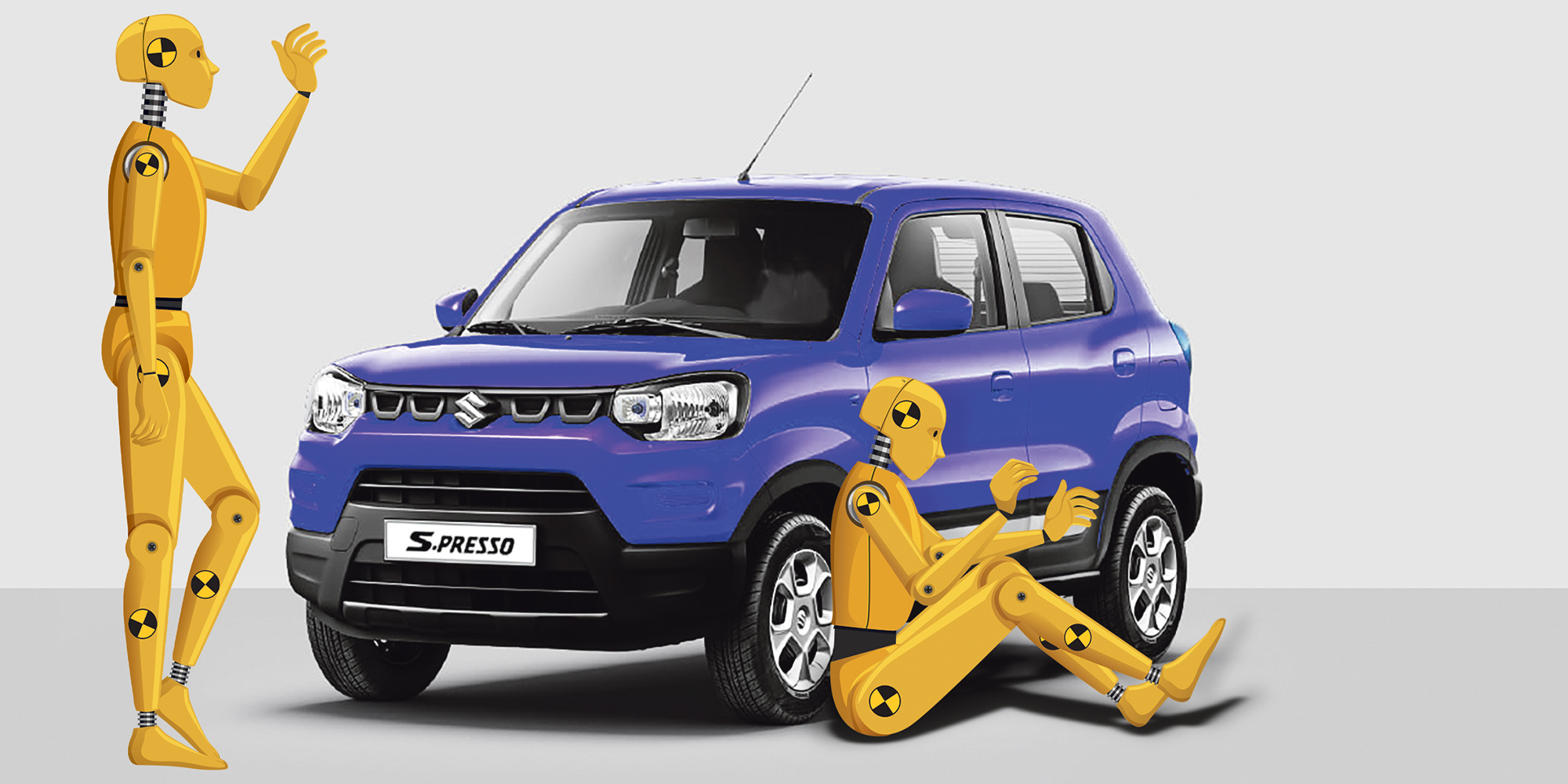
For Suzuki’s Maruti S-Presso, Swift and “supermini” Baleno – “made in India, for India” – suggested a death trap, with crash tests in that country once again highlighting the perils of differing safety standards in different markets.
On a par with the tinny Datsun Go and Renault Kwid, which also scored zeroes in previous tests, the S-Presso’s body shell was rated as “unstable” and incapable of withstanding further loadings – in other words, more than the weight the crash test dummies could offer.
Six years ago, Euro NCAP tested the Suzuki Baleno, which attained four stars with an optional safety pack, and three stars without, in Europe – but the version destined for the South American market scored zero stars – with no ABS braking or electronic stability control, just two air bags fitted as standard. The European equivalent, though, had side head air bags both front and rear, plus side chest air bags in the front, which were optional on the car tested.
Manufacturers amend safety standards over time, and a big reason is consumer pressure, which is why the NCAP’s work is so critical for driving safety.
But in a recent case, South Africa’s ARB dismissed a complaint against Suzuki’s S-Presso – because the cars produced for this market are not the same as those destined for the Indian market.
Carl Reiche had taken the advertiser to the regulator for its television and print ads for the vehicle. In the TV commercial, a man is seen wrapped in bubble wrap, inside an S-Presso. He breathes loudly, a sigh of relief, as the voiceover states: “With ABS, EBD and dual air bags, the safest place to do you is in the all-new Suzuki S-Presso.”
The brochure lists various safety features. The complainant explains: “This car is manufactured in India. It has a ZERO NCAP rating. I had bought one of these last year and after a three-month battle with Suzuki got them to buy the car back. It is UNSAFE. Period. I have a whole article and email communication I can share with you. The ad is totally misleading.” In response, Suzuki Auto SA averred that the car is indeed manufactured in India, which produces more than 40% of vehicles sold in the SA market. But it’s not horses (or horsepower) for courses, as the zero NCAP rating in the crash test that Reiche referred to is specific to the Indian domestic market and not relevant to the local market.
It said that the advertising is not misleading, as it refers to the safety features, “with which the vehicle is in fact equipped”. Suzuki further argued that repurchasing Reiche’s vehicle was done on a “without prejudice” basis, and was not relevant to the complaint.
“ABS, EBD and dual front air bags are all proven life-saving features,” the board said. “The respondent also states that the addition of seatbelt pretensioners and load limiters is not mentioned in the advertising, but quoted and explained in the product brochure, to which the complainant had also referred.”
Citing the Code of Advertising Practice, the board considered whether the claim was misleading by focusing on the actual claim made in the advertising. It said there are no references to NCAP ratings in the advertising, so these were not considered in detail. The television advertising states: “With ABS, EBD and dual air bags, the safest place to do you is in the all-new Suzuki S-Presso.”
“The claim, made in the context of the advertising, is clear – the car is safe because it has the features mentioned, namely ABS,
EBD and dual air bags. We know that the car does have all these safety features [whereas the Indian version does not]. The focus of the complaint appears to be the zero NCAP rating. The respondent made the directorate aware, and the directorate accepts, that the car sold in South Africa is a different version to the one that underwent the NCAP testing in India. The South African version has more safety features than the one tested in India.”
In any event, it noted, the advertising makes no claims about the NCAP rating. “The television commercial is clear on the safety features available and does not claim an NCAP rating.
“In fact, there are more safety features in the car than those mentioned in the television commercial so, if anything, the safety features are understated.”
Suzuki SA might be delighted that its bubble wrap advertising campaign can proceed, but it’s a poor reflection on the global manufacturer to admit that some lives deserve more protection. DM168
This story first appeared in our weekly Daily Maverick 168 newspaper which is available for R25 at Pick n Pay, Exclusive Books and airport bookstores. For your nearest stockist, please click here.