




 China Customs officers raise a Chinese flag during a rehearsal for a flag-raising ceremony along the Bund past buildings in the Lujiazui Financial District at sunrise in Shanghai, China, on Tuesday, Jan. 4, 2022. (Photo: Qilai Shen/Bloomberg)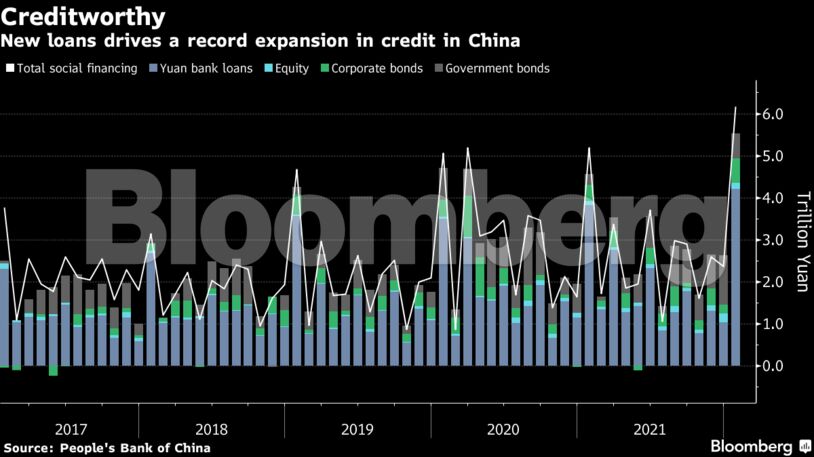
Authorities have pivoted toward stabilizing the economy after growth took a sharp downturn in the latter part of last year as a result of a property market slump and sporadic virus outbreaks. Local governments have started to speed up bond sales to boost infrastructure spending, while the PBOC has cut interest rates and pushed banks to extend more loans.
“Banks have increased their credit allocation under a proactive monetary policy, and a more stable credit growth will provide ample liquidity for the economy to stabilize,” said Bruce Pang, head of macro and strategy research at China Renaissance Securities Hong Kong Ltd.
Borrowing is usually strong in January as banks tend to step up lending at the beginning of the year to make use of the new quota. Credit growth is being keenly watched by the market this year as a sign of the effectiveness of the central bank’s efforts to encourage faster lending to counter a slowing economy.
China’s 10-year government bond futures dropped on Friday by as much as 0.47%, the most since Oct. 18. Benchmark yields extended a rise by 1 basis points to 2.78%, the highest since mid January.
What Bloomberg Economics Says ...
“A pickup in year-on-year credit growth reflected stimulus from the central bank and fiscal front-loading to counter downward pressure on growth. This is all part of a concerted push to counter the economy’s slowdown.”
-- Eric Zhu, China economist
Click here to read the full report
The PBOC vowed last month to open its monetary policy tool box wider and avoid a “collapse in credit,” sending its clearest signal yet of an easing bias after cutting policy interest rates. Deputy Governor Liu Guoqiang urged banks to be proactive and extend loans to good projects.
“The authorities are desperate to stabilize growth and encourage banks to extend credit,” said Raymond Yeung, chief economist for Greater China at Australia & New Zealand Banking Group Ltd.
| Key Highlights of the Credit Data |
|---|
|
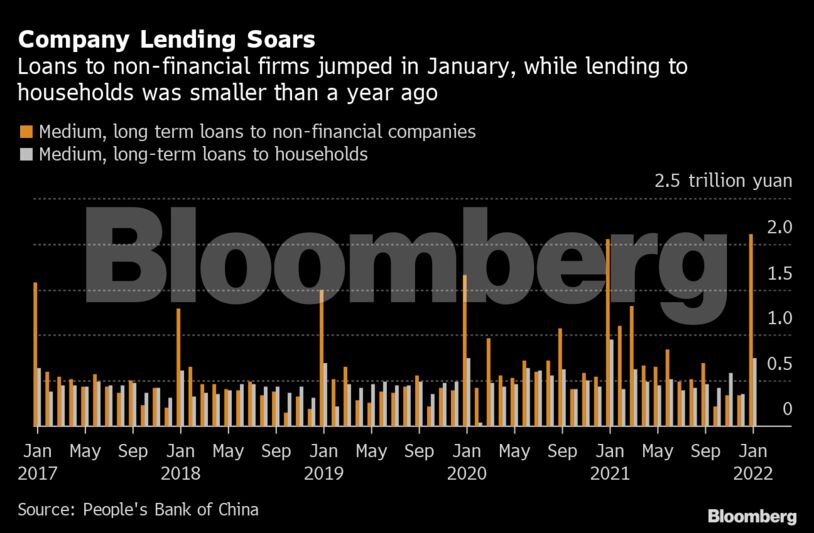
The record loan figures weren’t all good news though, masking weakness in the economy, especially among consumers. Short-term household loans recorded a drop from a year ago for the third straight month, reflecting sluggish consumption demand. Medium and long-term loans to households, a proxy for mortgages, also declined for the second month from a year earlier, a sign of ongoing pain in the property market.
Read More: Record Loans Mask Bleak Economic Outlook: What to Watch in China
There are also concerns over companies’ real borrowing demand, with the surge in corporate loans mainly coming from short-term borrowing. Short-term loans to non-financial companies soared to 1 trillion yuan, the highest in data going back to 2006. Corporate bill financing, also a form of short-term credit, continued to rise from a year ago.
“We should not assume the upside surprise in January credit data will be quickly transformed into an upside surprise in economic performance,” Nomura Holdings Inc. economists led by Lu Ting in a note Thursday.
Nomura still sees scope for more monetary policy easing, including a 10 basis-point cut in policy rates, a 50 basis-point reduction in the reserve requirement ratio and significant foreign exchange purchases.
The PBOC is due to release results of its monthly liquidity operation next week, with some economists predicting another cut in the one-year medium term lending facility rate.
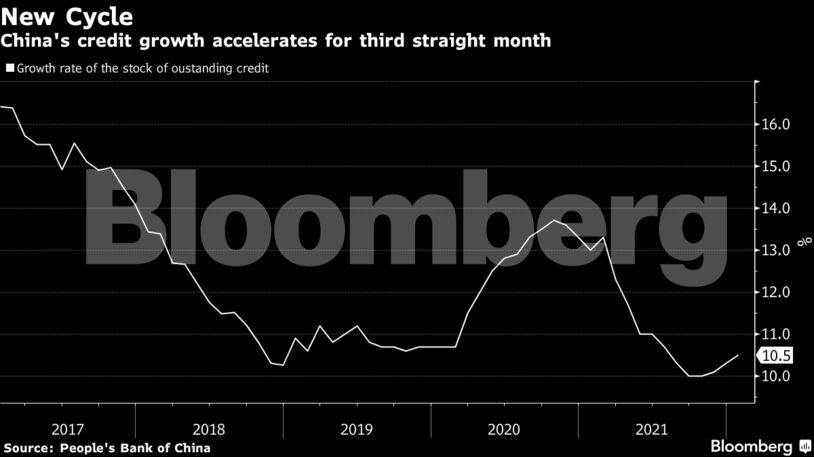
While the PBOC no longer sets an annual loan quota for banks, lenders still need to report their loan extension target to the central bank, which can influence that target through so-called window guidance and macro-prudential assessments of banks, according to some economists.
Local governments’ bond sales in January were also stronger than last year, as unlike in 2021 they were allowed to sell new bonds before the quota is approved by lawmakers in March.