




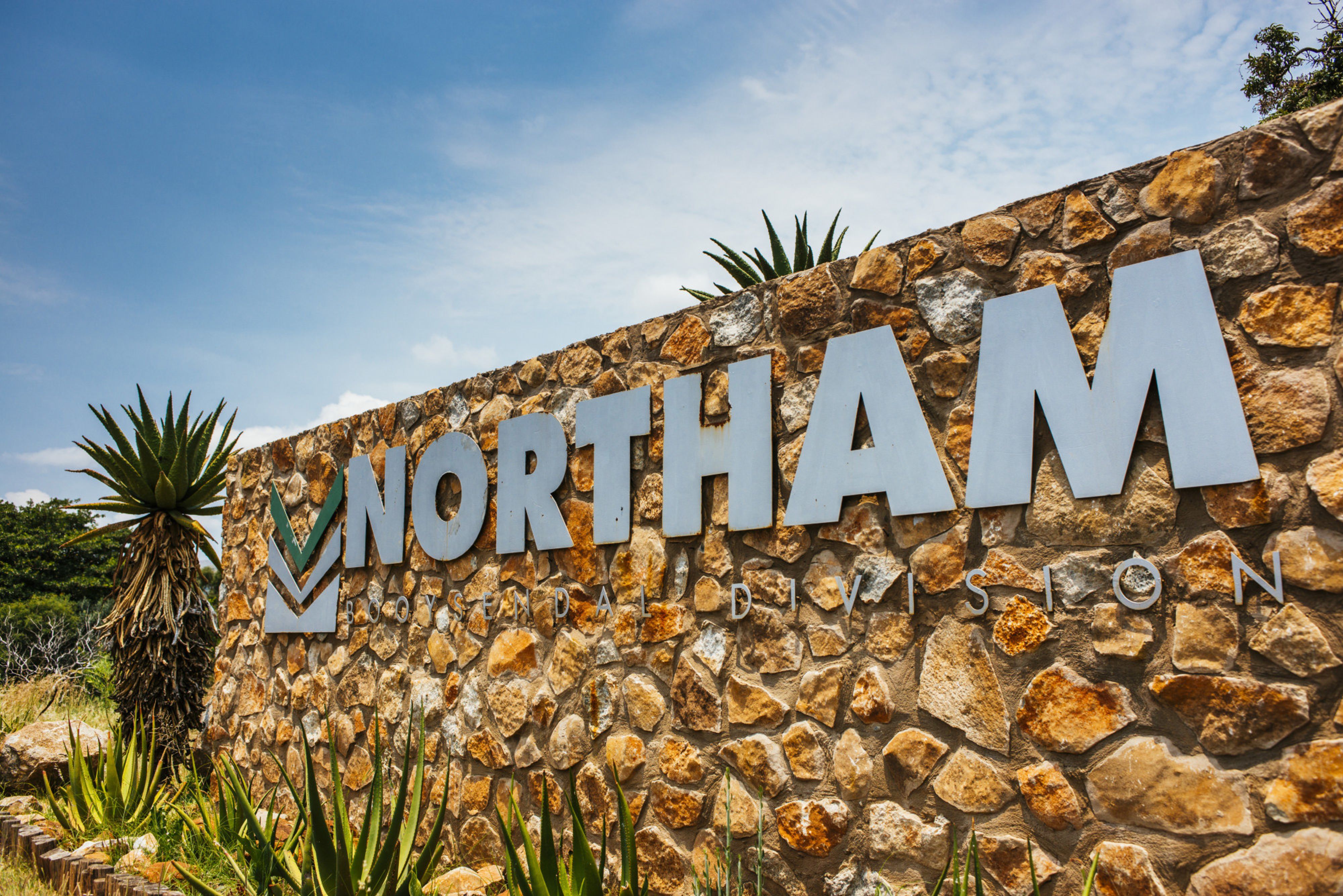
 A logo sits on a wall at the entrance of the Northam Platinum Ltd. Booysendal platinum mine outside the town of Lydenburg in Mpumalanga, South Africa, on Tuesday, Jan. 23, 2018. Booysendal will use a system developed by an Austrian company that builds ski lifts to transport the ore up a 30 degree incline out of a valley for processing, instead of the traditional conveyer used throughout South Africa or the more expensive option of trucking. Photographer: Waldo Swiegers/Bloomberg
“It’s going to be who comes up with the best offer,” said Rene Hochreiter, an analyst with Noah Capital Markets Ltd. “Northam is going to have to make it a cash offer because Implats is going to come up with a cash offer.”
RBPlat said Northam’s unsolicited approach includes no offer details, with the latter asking to undertake due diligence. Earlier talks with Northam over a possible bid ended after its board rejected a non-binding offer letter dated Oct. 11, RBPlat said.
On Nov. 29, Implats offered 150 rand in cash and shares to RBPlat shareholders, valuing the company at about 43.4 billion rand ($2.7 billion). That bid, supported by RBPlat’s board, came after Northam agreed to pay 180 rand a share for a 32.8% stake in RBPlat. Northam has since raised its holding in RBPlat to 34.95%, and said on Tuesday that it has options to increase that stake to 38.27%.
Takeover Rules
Northam would be required to pay 180 rand a share to other RBPlat investors if it makes a general offer within six months, according to RMB Morgan Stanley analysts. Under South African takeover rules, a mandatory offer to other shareholders would be triggered if its RBPlat holding rises to 35%.
South Africa’s Public Investment Corp., the continent’s largest money manager, is an interested observer. It holds about 10% of RBPlat, but also has stakes Implats and Northam, and said it would support “any transaction that can demonstrate benefits for its clients.”
The ball appears to be in Northam’s court as it weighs an offer, although operational considerations may also play a part. The potential synergies between RBPlat and Northam are less compelling than those with Implats, said Shane Watkins, chief investment officer at All Weather Capital Ltd.
“The risk is that Northam overpays given their lack of mining synergies with the Royal Bafokeng assets,” Watkins said.
Comments
Scroll down to load comments...