




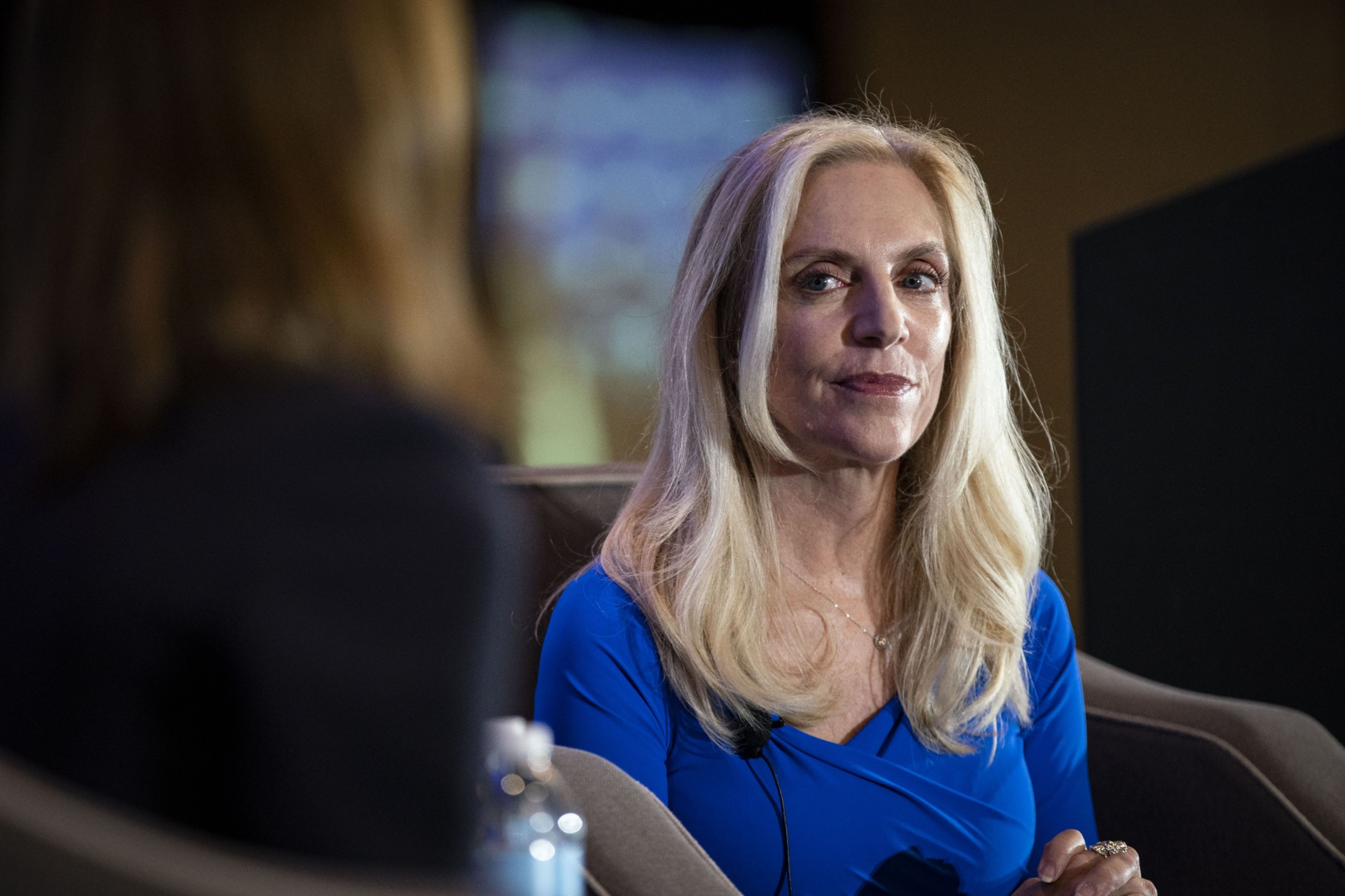
 Lael Brainard, governor of the U.S. Federal Reserve, during the National Association of Business Economics (NABE) annual meeting in Arlington, Virginia, U.S., on Monday, Sept. 27, 2021. Brainard said the labor market may soon meet her yardstick for scaling back asset purchases, while the Covid-19 delta variant could raise upside risks for inflation as supply constraints last longer.
Biden’s scope to reshape the leadership of the Fed widened further on Monday when Governor Randal Quarles announced he would step down before the end of the year. Quarles’ tenure as vice chair for supervision expired in October, but he could have stayed on as a governor until 2032 and his exit hands Biden another slot to fill.
In addition to the seat vacated by Quarles, Vice Chair Richard Clarida’s term as a governor expires at the end of January and there is an open position on the seven-seat board.
A large majority of economists polled by Bloomberg News expect Biden will renominate Powell.
But the White House has raised the possibility with some Senate Banking Committee members that Powell might not be reappointed, according to two people familiar with the matter.
Discussing the chairmanship with Brainard could signify that the Biden team is weighing how a break with Powell might help advance their goals for the central bank. Brainard and Powell work closely together on multiple issues and are viewed as holding similar views on monetary policy, but she’s favored a tougher stance on big banks.
Earlier: Wall Street Wonders About a Fed Without Powell as Wait Goes On
Appointed by President Barack Obama in 2014, Brainard is currently the only Democrat serving on the Fed Board, and as a governor she leads some of the Fed’s most critical initiatives. She is governor overseeing financial stability surveillance at the Fed, and payments -- an area where the central bank is now innovating with the development of an instant transaction system and consideration of a digital currency.
With a Ph.D. from Harvard University, Brainard is viewed as a highly competent and experienced macroeconomist. She also co-authored new language on the Fed’s longer-run strategy that redefined the full employment mandate to a broad and inclusive goal.
Comments
Scroll down to load comments...