




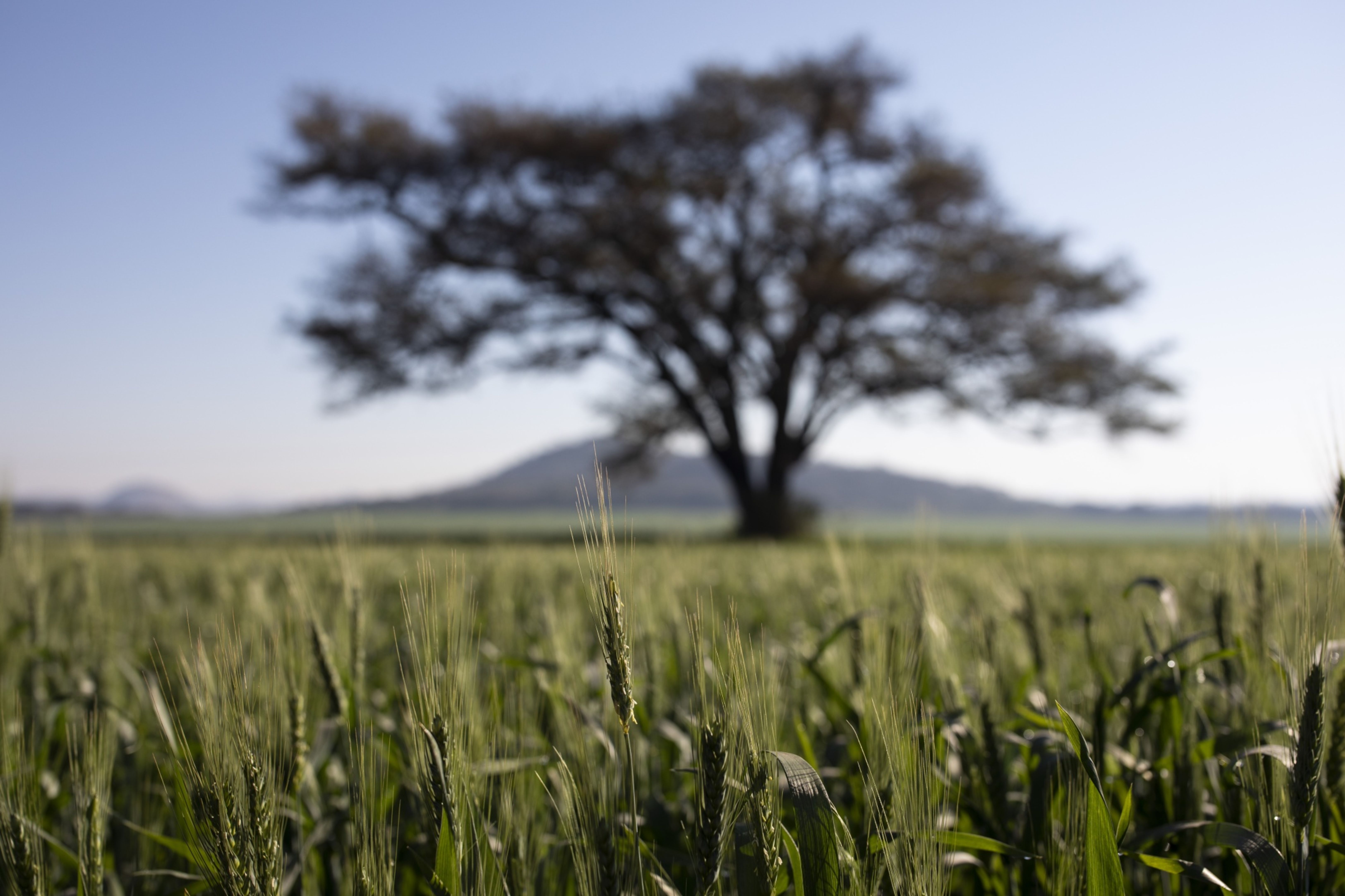
 HARARE, ZIMBABWE - AUGUST 01: Wheat grows in fields at Ivordale Farm on August 1, 2018 outside Harare, Zimbabwe. Commercial farmer Andrew Pascoe runs the 330-hectare farm east of Harare. His father started the business in the 1950s. The farm grows wheat mostly, maize and Soya Beans, with a dairy herd of 170 cows, a further 280 for beef, plus a piggery with 1200 animals. Before the land reform initiative, Mr Pascoe owned 1725 Hectares but was left with only 224, only 60 of which that was arable. He currently runs the 60 hectares of his own land, with the rest falling under a joint venture program. In 2000 the then President of Zimbabwe, Robert Mugabe, ran a land reform program that aimed to redistribute the farm land mostly owned by white Zimbabweans, to black subsistence farmers. The policy was seen as a disaster, with around 4000 white farmers forcibly removed from their farms, often violently. The policy crippled the agricultural sector and subsequently contributed to the collapse of the economy as those that took over the land lacked the knowledge to run the businesses. (Photo by Dan Kitwood/Getty Images)
 If money is raised from private investors, a special-purpose vehicle could be set up offshore and a portion of the country’s tax or royalty earnings from mineral exports could be diverted into it to repay them over a number of years with interest, the person said. The SPV could also be used as a guarantee to bolster the confidence of potential lenders, they said.
Zimbabwe’s main exports include platinum-group metals, gold and tobacco.
Finance Minister Mthuli Ncube and his Permanent Secretary George Guvamatanga didn’t respond to calls and text messages seeking comment.
Read More:
- Two Decades After Land Grab, Zimbabwe Starts Paying Farmers
- Zimbabwe to Pick Adviser by Christmas to Help Raise $3.5 Billion
- Zimbabwe Gives Land Back to White Farmers After Wrecking Economy
--With assistance from Godfrey Marawanyika and Ray Ndlovu.