




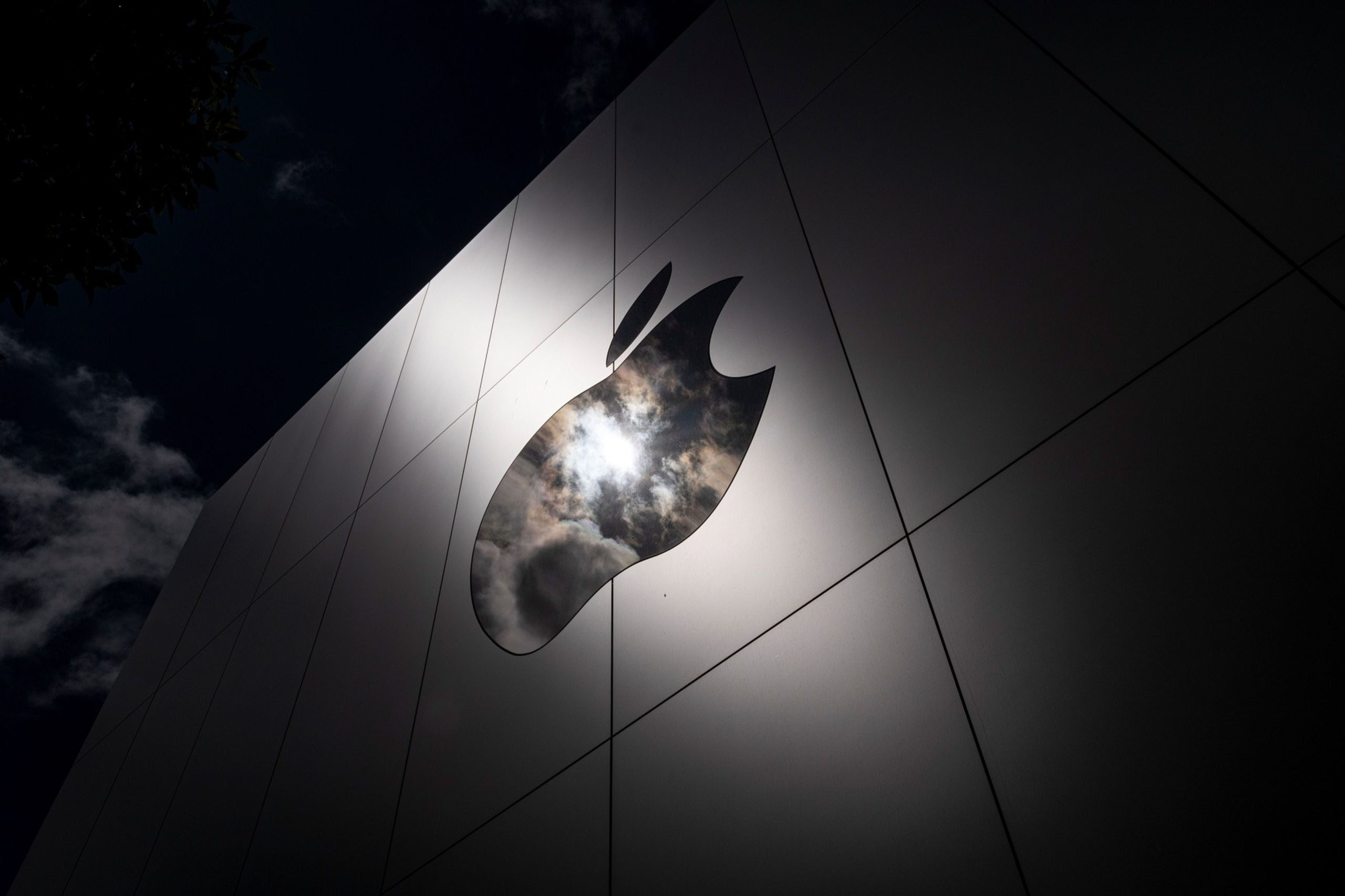
 The Apple logo on a store in San Francisco, California, U.S., on Monday, April 26, 2021. Apple Inc. is increasing its U.S. investments by 20% over the next five years, allocating $430 billion to develop next-generation silicon and spur 5G wireless innovation across nine U.S. states, after outstripping its growth expectations during the pandemic. Photographer: David Paul Morris/Bloomberg
 The new phones will include a faster A15 chip and a smaller notch, also known as the display cutout, in addition to new screen technology that could enable a faster refresh rate for smoother scrolling.
The Cupertino, California-based company typically unveils its new iPhones in September, but last year’s launch was delayed until October due to production complications stemming from Covid-19. With Apple now pushing back its office return by several weeks, the company’s next iPhone launch is likely to be virtual.
An Apple spokeswoman declined to comment. Apple shares rose about 1% in the first hour of trading Tuesday.
Apple first added Portrait mode to the iPhone 7 Plus in 2016, and it quickly become a fan favorite. The feature can put a person in sharp focus while blurring the background in what is known as a bokeh effect. For the new iPhones, Apple plans to add this same technique to video with a feature internally dubbed Cinematic Video. Like with still photos, the iPhone’s depth sensor will create the effect and allow users to change the amount of blur after recording.
Read more: Apple plans to increase its iPhone output by 20%
A new ProRes video-recording feature will let iPhone users capture clips in a higher-quality format that gives editors more control during post-production.
The format is used by professional video editors in the film industry and isn’t normally intended for the mass market in part because of its large file sizes. ProRes will record in either HD and 4K resolutions on the next iPhones.
The ProRes feature would follow last year’s addition of ProRAW, a higher-quality still photo file format that gives professional editors more control. Like with ProRAW, the ProRes video recording may be exclusive to the pricier Pro models.
Another feature will let users better control the look of colors and highlights in their pictures. Users will be able to choose from several styles to apply to their photos, including one for showing colors at either a warmer or cooler temperature while keeping whites neutral. Another option will add a more dramatic look with deeper shadows and more contrast, and the company is planning a more balanced style for showing shadows and true-to-life colors with a brighter appearance.
The feature will differ from standard filters, available in the iPhone’s Camera app since 2013, by precisely applying changes to objects and people across the photos using artificial intelligence, rather than applying a single filter across the entire picture.
Apple’s new iPhones, codenamed D16, D17, D63 and D64, are just a few of the new devices poised to launch in the coming months. The company is also working on revamped MacBook Pros with in-house chips likely to be dubbed M1X, a redesigned iPad mini and an entry-level iPad geared at students. It’s also preparing new Apple Watches and entry-level AirPods.
Comments
Scroll down to load comments...