




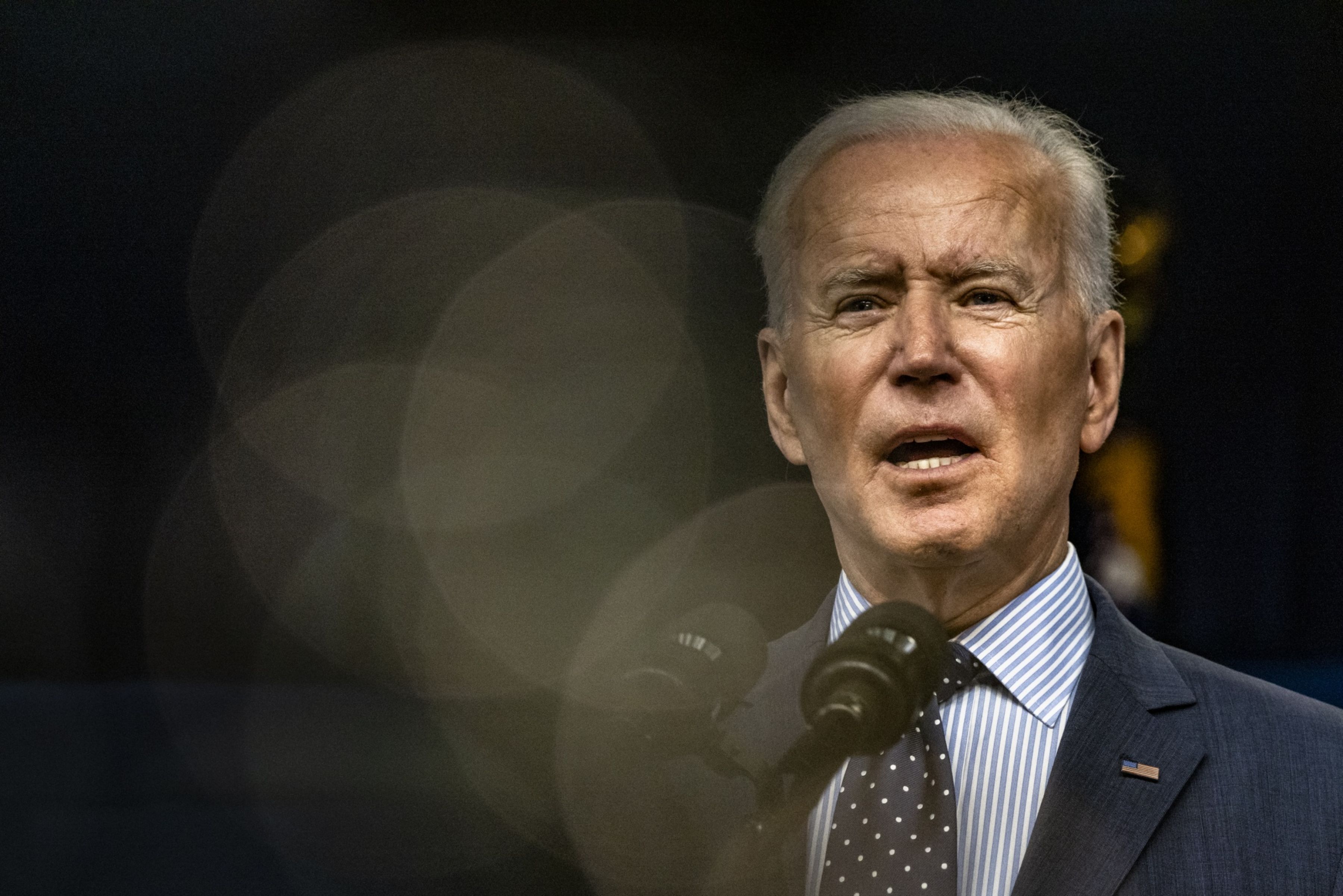
 U.S. President Joe Biden speaks in the Eisenhower Executive Office Building in Washington, D.C., U.S., on Wednesday, June 2, 2021. Biden announced a plan to work with churches, colleges, businesses and celebrities to boost coronavirus vaccinations in the U.S., where demand for the shots has faltered. Photographer: Samuel Corum/Bloomberg
The amended order, which Biden is expected to sign later this week, will change the criteria for blacklisting entities to capture those that operate in the defence or surveillance technology sectors. The Trump order targeted companies owned, controlled or otherwise affiliated with the Chinese military.
The Biden administration is set to keep a large number of previously listed entities and Treasury’s Office of Foreign Assets Control will add new entities as part of the order, one of the people said. Treasury would consult the State and Defense departments in the listing process.
Spokespeople for the White House and the Treasury Department didn’t respond to requests for comment.
Read more: Biden Team Likely to Proceed With Trump China Investment Ban
Some stocks related to China’s defense industry dropped on Thursday, led by AVIC Jonhon Optronic Technology Co. and AECC Aviation Power Co., while already-blacklisted Advanced Micro-Fabrication Equipment Inc. fell as much as 2.9%. Xiaomi Corp., which was dropped from the list last month after challenging the Trump administration order in a lawsuit, advanced 2.2% in Hong Kong.
After two Chinese companies successfully challenged the order, Biden’s team said a revision of the policy was necessary to ensure it was legally sound and sustainable in the long-term. By shifting responsibility to Treasury, the Biden team aims to solidify the legal standing for the penalties, one of the people said.
The administration’s review of the ban has been closely watched on Capitol Hill, where lawmakers are eager for a tougher stance on Beijing.
Senator Tom Cotton, an Arkansas Republican, said in a statement on Wednesday that “it’s imperative the U.S. government continue to expand this list of Chinese military companies - these firms shouldn’t have access to U.S. technology and capital markets. We are arming and funding our leading competitor.”
In a letter this week to Defense Secretary Lloyd Austin, a bipartisan group of lawmakers -- including Florida Republican Senator Marco Rubio, Arizona Democratic Senator Mark Kelly and Representative Liz Cheney, a Wyoming Republican -- demanded the publication of a new list of Chinese military-affiliated entities. The list was due April 15 and is mandated by last year’s defense authorization bill.
“The U.S. government must continue to act boldly in blocking the Chinese Communist Party’s economic predation against our industrial base,” they said in the letter. “We must not allow China to erode America’s military primacy.”
Read more: Biden Delays Revamp of Trump Blacklist for China Investments
Biden’s position has been just as scrutinized on Wall Street, where Trump’s order caused confusion over whether the investment ban applied to an array of companies that might be connected -- either as a subsidiary or by carrying a similar name -- to those on the blacklist.
Amid the confusion, the administration last month pushed back a deadline to halt investments in subsidiaries, even though a ban on the listed parent companies has been in place since November.
The White House and Treasury will also clarify that the prohibitions apply to subsidiaries of listed companies only if that subsidiary is itself listed by Treasury, the people said. The previous administration aimed to also capture those companies whose names closely match the listed entities.
“Providing Treasury with authority over which Chinese military companies are subject to capital markets sanctions would tend to help Wall Street maintain the status quo to the extent possible,” said Roger Robinson Jr., former chairman of the Congressional U.S.-China Economic and Security Review Commission.
Comments
Scroll down to load comments...