




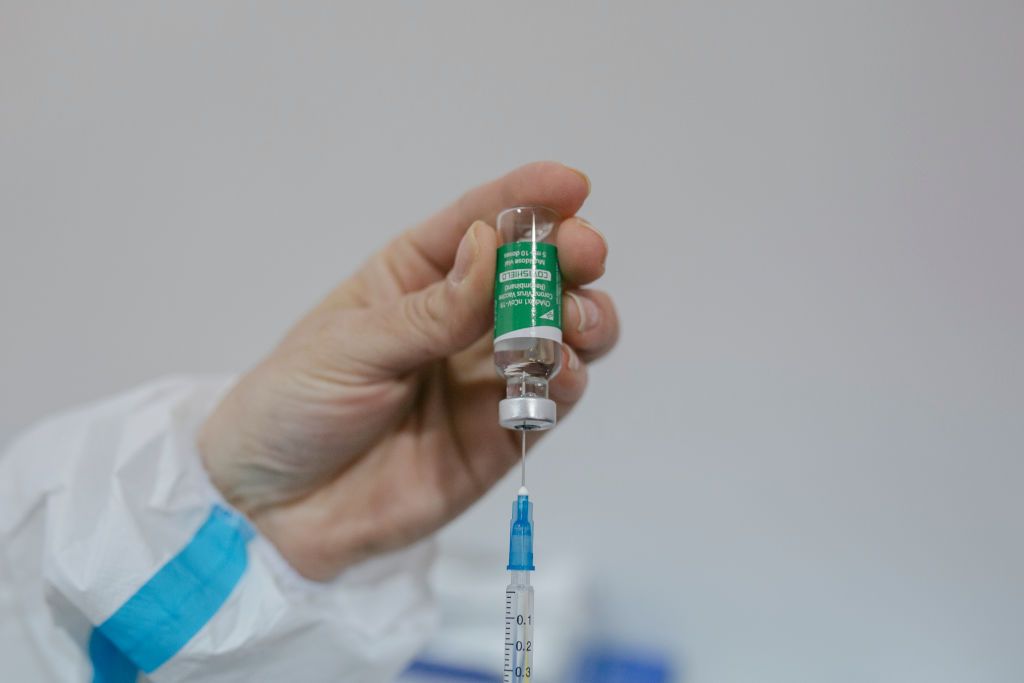
 BELGRADE, SERBIA - MARCH 20: This picture shows a vial of the Oxford-AstraZeneca anti-Covid-19 vaccine (India's Covishield) on March 20, 2021 in Belgrade, Serbia. Turn out for vaccination appointments was low on this day, however, Serbia has now vaccinated almost 15% of the county's 6.9 million inhabitants, coming in second after Britain in the world's quickest vaccine rollout. Serbs have the choice of five different vaccines and inoculations are free of charge. (Photo by Vladimir Zivojinovic/Getty Images) Photographer: Vladimir Zivojinovic/Getty Images Europe
By Krishna N. Das and Neha Arora
The world's second most-populous nation has struggled with a catastrophic outbreak of COVID-19 since last month which is only now starting to abate after killing tens of thousands of people.
Government officials and experts say the only way India can avoid a third wave of infections is by having most of its 1.3 billion population inoculated.
The Serum Institute of India, the world's biggest manufacturer of vaccines, will make 90 million doses of AstraZeneca in June from about 65 million a month now, a company spokesman told Reuters.
Most of the shots administered in India are AstraZeneca, but local firm Bharat Biotech also plans to ramp up production of its Covaxin vaccine to 23 million in June from about 10 million in April, a government official said.
"There will be a gradual buildup of vaccines," said the official, who is involved in the approval of vaccines.
Only about 3% of India's population is fully vaccinated and about 12% have got the first shot and are waiting for the second. State governments, including in the capital Delhi, have reported an acute shortage of vaccines and some are inoculating only the elderly and frontline workers.
Prime Minister Narendra Modi has faced criticism for donating vaccines to neighbouring countries and further afield early this year as part of a diplomatic initiative.
"The very possibility of a second wave was not considered serious enough, and all aspects of the pandemic response bore the brunt, including vaccination," the New Delhi-based Observer Research Foundation said in a report on the vaccine rollout on Monday.
India reported its lowest daily rise in new coronavirus infections since April 11 on Monday at 152,734 cases over the past 24 hours, while deaths rose by 3,128.
The South Asian nation's tally of infections now stands at 28 million, while the death toll has reached 329,100, health ministry data showed.
Most experts believe the coronavirus infections and deaths are considerably undercounted. The New York Times said the most conservative estimate of deaths was 600,000 and the worst case scenario several times that number. The government has dismissed the assessments as absolutely false.
Dr. Randeep Guleria, the head of the premier All India Institute of Medical Sciences based in New Delhi, said the pandemic was slowing in large parts of the country but it was not contained.
"We seem to be past the peak, but there is a certain level of concern about the south and north eastern states," he said, stressing on the need for increased vaccinations.
Russia's Sputnik V vaccine will also be launched in the Indian market next month, its local partner Dr Reddy's Laboratories said. (Additional reporting by Shilpa Jamkhandikar in Mumbai, Nallur Sethuraman in Bengaluru, Kannaki Deka in Guwahati; Writing by Sanjeev Miglani; Editing)
Information pertaining to Covid-19, vaccines, how to control the spread of the virus and potential treatments is ever-changing. Under the South African Disaster Management Act Regulation 11(5)(c) it is prohibited to publish information through any medium with the intention to deceive people on government measures to address COVID-19. We are therefore disabling the comment section on this article in order to protect both the commenting member and ourselves from potential liability. Should you have additional information that you think we should know, please email letters@dailymaverick.co.za
Comments
Scroll down to load comments...