




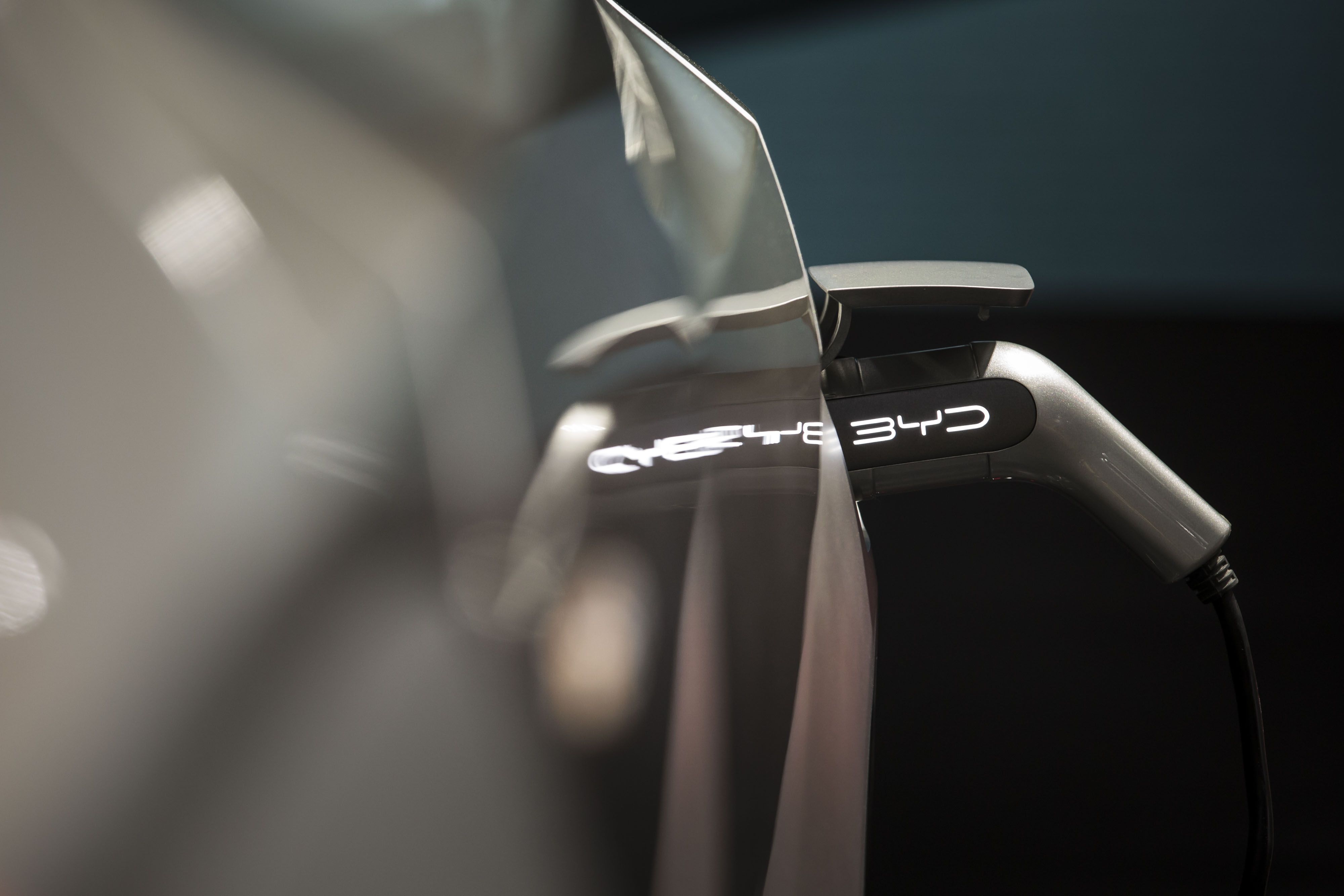
 A BYD Co. E-SEED electric concept vehicle stands plugged in to a charging station at the Beijing International Automotive Exhibition in Beijing, China, on Thursday, April 26, 2018. Photographer: Qilai Shen/Bloomberg
 The profit guidance was lower than market expectations, Citigroup Inc. said, adding that it was rational given low seasonal demand for new energy vehicles in the first quarter. BYD fell 4.6% as of 10:15 a.m. Tuesday in Hong Kong.
Founded in 1995 by billionaire Wang Chuanfu, BYD is one of China’s EV pioneers and has been riding a wave of demand since last April, when the nation’s auto market started to emerge from a two-year downturn. Momentum has been aided by government incentives for buyers and the country’s rebound from the worst of the coronavirus pandemic. Total EV sales in China reached 1.37 million units last year, according to China Association of Automobile Manufacturers.
| More on EVs in China: |
|---|
| China’s $4,230 Electric Cars Tap Huge Market Tesla Can’t Reach |
| Elon Musk Loves China, and China Loves Him Back — for Now |
With demand rising, the EV market has become increasingly competitive. Global leader Tesla Inc. is vying with local manufacturers including BYD, Nio Inc. and Xpeng Inc., while older local companies including Zhejiang Geely Holding Group Co. and SAIC Motor Corp. are moving into the space, too. BYD introduced its Han model in July and sold 40,556 units by the end of the year. It also launched its Song Plus, Tang, e2 and e3 models in the second half of 2020.
BYD expects net income of 200 million yuan to 300 million yuan in the first quarter, up from 112.6 million yuan in the year-earlier period. The company cited China’s economic recovery as well as strong sales of the Han model.
Covid-19 provided BYD an opportunity to branch out into a new, high-demand area last year: face masks. The company said last March that it had become the world’s biggest manufacturer of the protective gear within two months of the virus emerging in Wuhan. Its other businesses include batteries, handset components, energy storage and urban rail transit systems.
| Also: |
|---|
| SAIC and Haier Said to Unite in Latest Push Into Smart Cars |
| China’s Geely Plans New Electric-Car Brand to Take On Tesla |
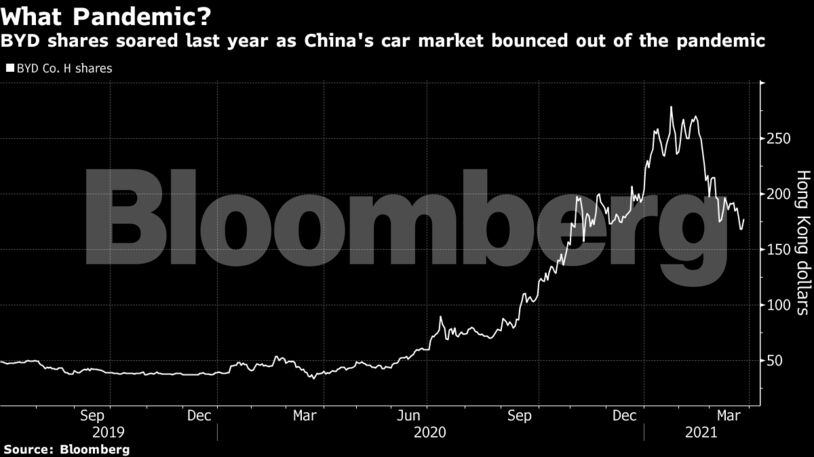
BYD’s Hong Kong-listed shares more than quadrupled in value last year, though they’ve since fallen almost 40% from a Jan. 25 high. In Shanghai, the company’s stock climbed 308% in 2020 before slipping 13% so far this year.
Stay on top of the electric car revolution by signing up to our Hyperdrive newsletter here
More than half of Chinese consumers planning to buy a car would prefer a new energy vehicle over one powered by an internal combustion engine, according to a survey of 1,600 people by CLSA. That’s up from a third in 2018, thanks to lower prices, better quality vehicles, easier access to license plates and government subsidies, CLSA said.