




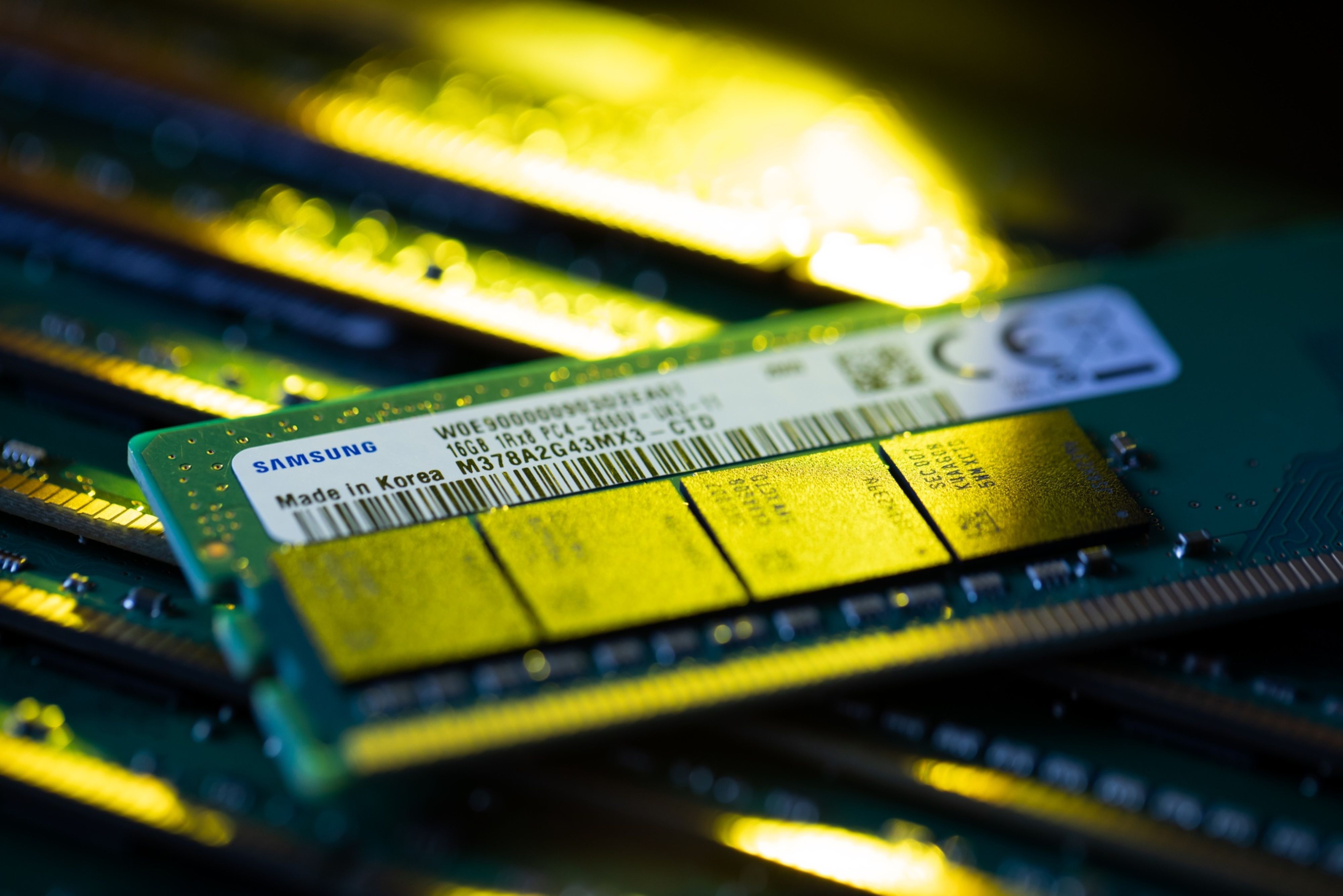
 A Samsung Electronics Co. 16GB Double-Data-Rate (DDR) 4 memory module, top, and other DDR modules are arranged for a photograph in Seoul, South Korea, on Tuesday, July 28, 2020. Samsung is schedule to announce first-quarter earning figures on July 30. Photographer: SeongJoon Cho/Bloomberg
Samsung expects the transition to DDR5 to begin in the second half of this year. The chip industry has been anticipating the adoption of the new memory standard and support for it will arrive with Intel Corp.’s upcoming Xeon Scalable processors, codenamed Sapphire Rapids. In addition to partnering with the two major CPU suppliers, Intel and Advanced Micro Devices Inc., Samsung has sent samples of its new memory out to developers of data center platforms, the company told Bloomberg News.
Read more: Amazon Is Designing Its Own Chips in Yet Another Blow to Intel
Analysts estimate DDR5 chips will be about 20% larger than DDR4 parts, leading to increased pressure on semiconductor supply chains. Samsung intends to begin shipments this year and gradually evolve both its fabrication processes -- expanding the use of extreme ultraviolet lithography -- and pricing, which will include a premium for the early period. The crossover between DDR4 and DDR5 will happen in the second half of 2023, the Suwon-based company said.
“As the penetration rate of DDR5 gradually rises, the shortage of DRAM is expected to persist in 2022,” said Avril Wu, Vice President at TrendForce Research. “We also expect a 30-40% price hike to take place initially.”
Comments
Scroll down to load comments...