




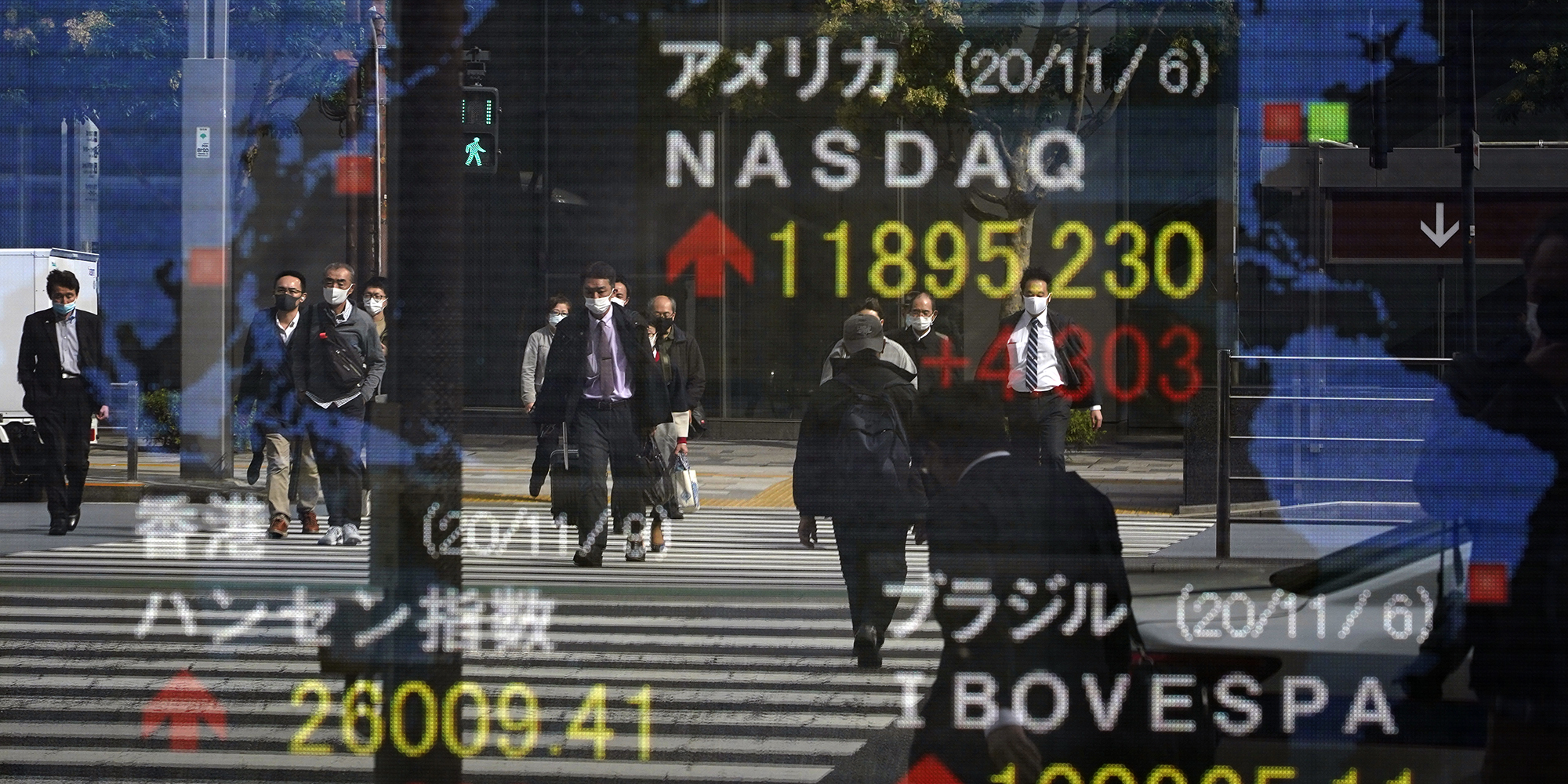
 Passersby are reflected in a stock market indicator board in Tokyo, Japan, 09 November 2020. (Photo: EPA-EFE/FRANCK ROBICHON)
Since those days, Agari has amassed $50 million in his investing career, and is no stranger to new trends -- he shares his investing secrets with his nearly 100,000-strong Twitter following. While he sees similarities between today and the bubble era in the floods of money in search of an outlet, he doesn’t expect a repeat of the collapse with less wealth packed in to the market versus the 80s.
“Japan’s market value is small these days compared to globally,” Agari says, pointing to the order-of-magnitude difference between Japan’s biggest stocks, Toyota Motor Corp. and SoftBank Group Corp., and the likes of Apple Inc. and Amazon.com Inc. Unlike the speculative fever of the 1980s that saw builders surge along with land prices -- some like Kumagai Gumi Co. are still down 99% from their peak -- investing is more sensible these days, he says.
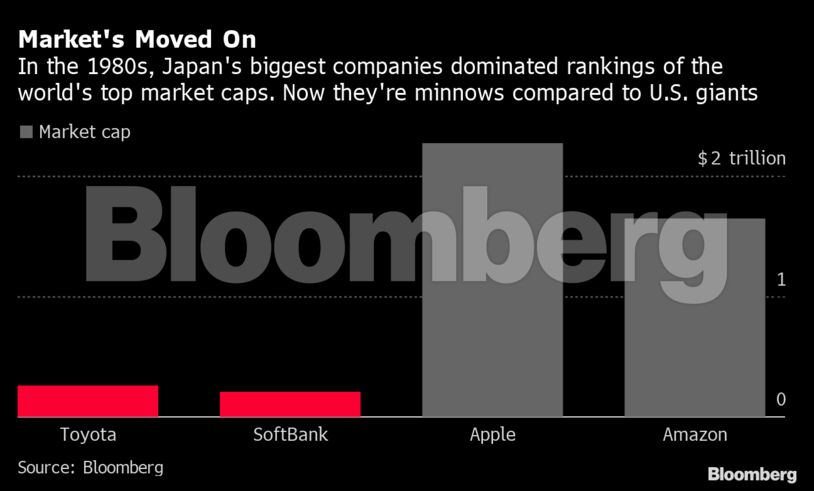
In the late 80s and early 90s, Japan’s largest companies were Nippon Telegraph & Telephone Corp. and the financial institutions that would eventually merge into today’s three megabanks.
While NTT is still there, and Sony Corp. is still among the best-known names, it’s often less-glamorous but more profitable firms that dominate, from industrial robot maker Keyence Corp. to motor manufacturer Nidec Corp. Casual clothing giant Fast Retailing Co., which has the biggest weighting of 12% in the Nikkei, is the country’s sixth-largest company. Fast Retailing and SoftBank Group Corp. have contributed to about a third of the Nikkei’s gains in since the end of March.
“These days, people are buying good Japan companies that generate profits,” Agari says, pointing to gains in Toyota and SoftBank after their impressive earnings.
The view that this time is different is also shared by other market veterans.
“It might look like the same path once taken when you look at it on a chart,” said Yoshihiro Ito, 77, chief strategist at Okasan Online Securities Co. and a veteran of Tokyo’s markets for almost 60 years. “But comparing then and now, the economy, the market and the sentiment, they’re all completely different.”
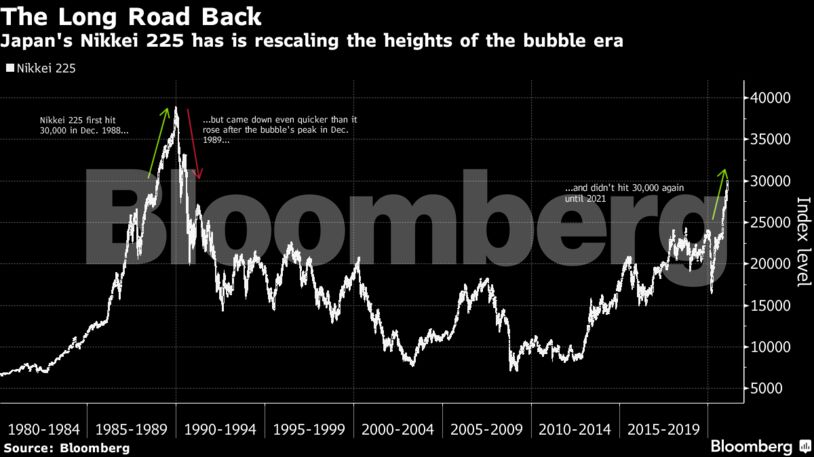
Ito says that unlike in the bubble era, when foreign investors pulled money out due to fear over rate hikes, overseas cash is this time helping to support the gains amid hopes that the economy will soon return to normal, even as earnings are improving. There are still similarities, he cautions.
Foreigners Eye Return to Japan Stocks After Years of Selling
“While the names are different, there are still a handful of stocks that are driving the index,” Ito said. “The whole thing could still plunge given just a little push.”
Yet confidence is rising, as Japan begins coronavirus vaccinations on Wednesday. And unlike the three interest rate hikes seen in 1989, the Bank of Japan this time remains as accommodative as possible while inflation’s being pushed ever further down the line.
“The impossible has been happening,” says Agari, who now has one eye on the Nikkei’s all-time high. “It won’t happen soon, but it wouldn’t be strange to see the Nikkei pass the record in two to three months.”
Comments
Scroll down to load comments...