




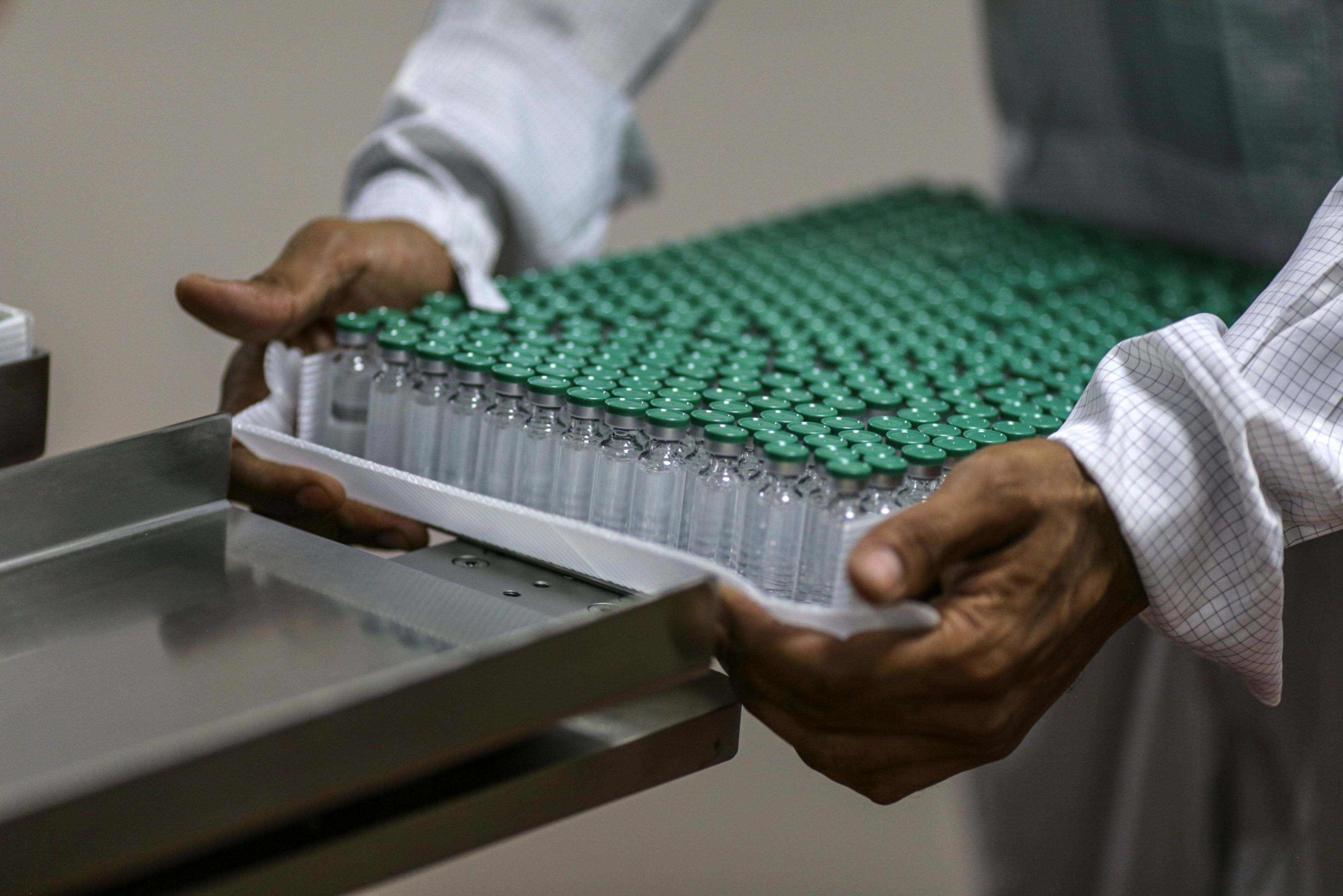
 An employee removes vials of Covishield, the local name for the Covid-19 vaccine developed by AstraZeneca Plc. and the University of Oxford, from a machine on the production line at the Serum Institute of India Ltd. Hadaspar plant in Pune, Maharashtra, India, on Friday, Jan. 22, 2021. Serum, which is the world's largest vaccine maker by volume, has an agreement with AstraZeneca to produce at least a billion doses. Photographer: Dhiraj Singh/Bloomberg
 There’s evidence the vaccine AstraZeneca developed with the University of Oxford could provide meaningful protection against severe disease caused by the highly infectious variant that emerged in South Africa, called B.1.351, according to Kate O’Brien, who heads the WHO’s vaccination division. The global health agency is preparing to decide on an emergency-use listing for Astra-Oxford shots made in India and South Korea.
“There was a very positive view about proceeding with the use of the vaccine, including in settings where variants are circulating,” O’Brien said at a briefing Monday.
South Africa said it would halt the shot’s rollout after a trial showed it had just 22% efficacy against the new variant that was identified in the country late last year. The country is instead accelerating its supply of vaccines from Johnson & Johnson, which has yet to gain authorization, and Pfizer Inc.
Read more: South Africa to Halt Use of Astra Shot Over Limited Efficacy
Data from a South African arm of a trial of the Astra vaccine found it had limited efficacy against mild and moderate illness, lead researcher Shabir Madhi said on Sunday. There was no conclusive data showing whether it protects against severe illness, mainly because of relatively young age among the 2,000 trial participants, he said.
The decision to halt use of AstraZeneca’s shots could slow South Africa’s vaccination rollout, said Salim Abdool Karim, co-chair of the nation’s Covid-19 ministerial advisory committee. The country may consider issuing the shot in stages until a clearer picture of its efficacy emerges, he said in the briefing.
It’s too early to dismiss the AstraZeneca vaccine, which is a very important part of the global response to the current pandemic, according to Richard Hatchett, chief executive officer of the Coalition for Epidemic Preparedness Innovations, an organization that’s worked to accelerate development of Covid vaccines.
“We probably need to find better vaccines against the variants that are emerging,” he said, adding that when supplies increase, it may make sense to deploy vaccines to certain geographies.
“We don’t have that luxury yet,” Hatchett said.