



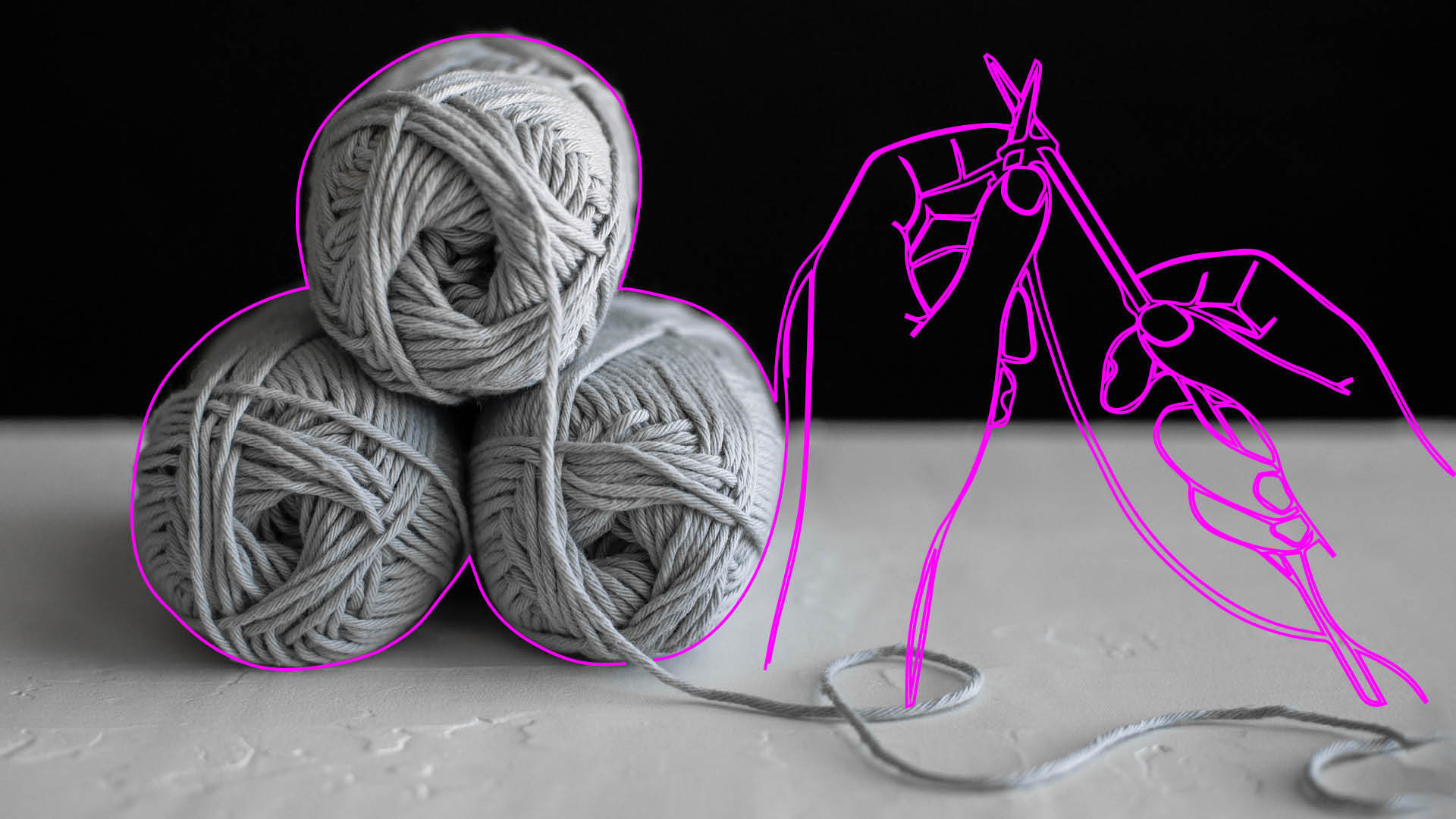
 Image Unsplash - design by Marushka Stipinovich
 Ros Ambler Lindley started crocheting in 2016 at the age of 63, by learning through online tutorials. When she was younger her (now late) grandmother and mother had both unsuccessfully tried to get her into knitting and crocheting. Says Lindley: “My generation – and of course I am old, a baby-boomer – always used to think that these knitting and crocheting larks were for ‘old’ people only.”
What eventually piqued her interest was watching her daughters – 32 and 36 years old in 2016 – and their friends stitching at their local park, while watching their toddlers play. “I was astounded, they were all sooooo young! So I thought, if they could do it, happily, in company, and in broad daylight, so should I.”
She asked one of her daughters to teach her. “She popped open my laptop and replied, ‘Madam Google, mum.’ Since then I have not stopped, not until Covid-19. I’d started a truly magnificent king size bed throw, stitched out of naturally dyed and locally manufactured cottons, for my youngest living in Italy. It was a gift for their new home in Tuscany, and nowhere near completion. Then, Covid!”
As Lindley tells it, “The throw became my obsession during lockdown.” And then when she was nearly done, she got carpal tunnel syndrome on both her thumbs, and had to take a break for two months.
“This was definitely a cosmic plot, but after two months of abstinence, the throw is now finally finished and even more beautiful, awaiting a time when this proud grandmama and mother can safely visit them in Italy again.”
In various places around the world, an increase in sales of yarn, knitting needles and crochet hooks has been reported. The Madrid-based 32-year-old founders of We are Knitters, an online wool and knitting gear retailer that also focuses on building a global community around knitting and crocheting, told Forbes.com back in March that “their global sales [had] been increasing more than 75% weekly”, since the onset of the pandemic.
Forbes also notes an increase in the company’s social media following: “Even more impressive is the spike on Instagram, where their half a million plus followers are connecting with the brand and showing off their creations. Since March 12, their Instagram reach has increased by more than 50 percent, reaching an all-time high of three million unique accounts, and their Stories have had more than two and a half million views.”
Similar reports abound on various websites reporting in their respective countries, from the UK to Melbourne, Australia. Closer to home, some retailers report a similar trend.
“I would estimate that the number of new knitters that have shopped from us since we were allowed to courier has doubled in comparison to pre-pandemic numbers,” says Brenda Grobler, owner of Jaarn, an online store as well as a physical shop in Paarl.
“And there’s definitely an increase in younger customers in their 20s and 30s. There were also many more people buying starter packs, and a lot of those same customers are now coming in looking for new things to try,” she adds.
Jennifer Botha, 36, the Pretoria-based owner and founder of the Yarn Room, reports a similar pattern. She opened her shop in October 2018, and followed later with an online shop which went live in February 2019.
“My store is fairly new and I had hardly any sales online before the pandemic. I was lucky if I had two sales a month on the online store. But then when I was able to get a permit to trade during lockdown, those online sales went up 3,000%. It was really incredible.”
As the owner of a small shop, she deals with all the customer enquiries herself, and based on the customer interactions, be it through phone calls or emails, she noticed a shift in the customer base.
Says Botha: “A large portion of that new customer base were people who had time on their hands and decided to learn how to knit or crochet, or people who had learnt as children, looking to get back into it. I also received a lot of inquiries from people who specifically wanted to know what they needed to get started.”
When lockdown restrictions moved from Level 3 to Level 2, Botha says that she noticed a significant reduction in enquiries from novice knitters.
“The intensity with which new knitters and crocheters approached the store became a lot less, but we’ve got a whole new body of crocheters and knitters who’ve been bitten by the bug, and it’s something incredible!”
Considering the currently available body of research into the mental benefits of knitting as a hobby, it is perhaps not altogether surprising to hear such reports. One such study, based on a survey of 3,545 knitters worldwide, and published by the British Journal of Occupational Therapy, titled “The Benefits of Knitting for Personal and Social Wellbeing in Adulthood: Findings from an International Survey”, concluded that, “The results show a significant relationship between knitting frequency and feeling calm and happy. More frequent knitters also reported higher cognitive functioning. Knitting in a group impacted significantly on perceived happiness, improved social contact and communication with others… Knitting has significant psychological and social benefits, which can contribute to wellbeing and quality of life. As a skilled and creative occupation, it has therapeutic potential — an area requiring further research.”
Beyond knitting as a solo exercise, many knitters, be they novices or experienced hobbyists, found solace and ways to connect with each other during lockdown in their hobby. Some through virtual knitting sessions with friends and strangers; and for others, knitting and crocheting connected them to the people on the receiving end of their labour, whether they be distant family, such as in Lindley’s case, or as a charitable cause benefiting families they might never meet.
For Snoeks Desmond, a response to an advert from King Dinuzulu Hospital in KwaZulu-Natal eight years ago, to help with clothing and toiletry donations for some of the babies born at the hospital led to the formation of an informal knitting group, Beanies and Blankets for Babies, of which she is the coordinator.
“I saw the ad and I thought, ‘This won’t take up much time’, so I asked a few friends to knit, and they told other friends. The group grew over the years and last year we handed out 3,302 gifts, covering approximately 66% of babies born in that hospital,” says Desmond.
Theirs is not a formal group, and many connect with each other and the work through a Facebook page.
“We’re not a registered NGO; it’s a very loose formation. In fact, there are a lot of people who are part of the group that I don’t really know. They drop their knitting off at one of four local wool shops. Not everyone knits for babies, so larger items go to NGOs in Creighton, Greytown and the Valley of a Thousand Hills.
“During lockdown, knitting was our lifesaver! There were a lot of people looking for something to do who got in touch with us. When we got to Level 3 and people could send things, I nearly fainted. We got loads of stuff, bags were streaming in,” says Desmond.
“Has it taken a lot of time? Yes. Worth it? Yes! Every stitch, every row, and every smiling mom and warm baby,” says Desmond. DM/ML
Comments
Scroll down to load comments...