




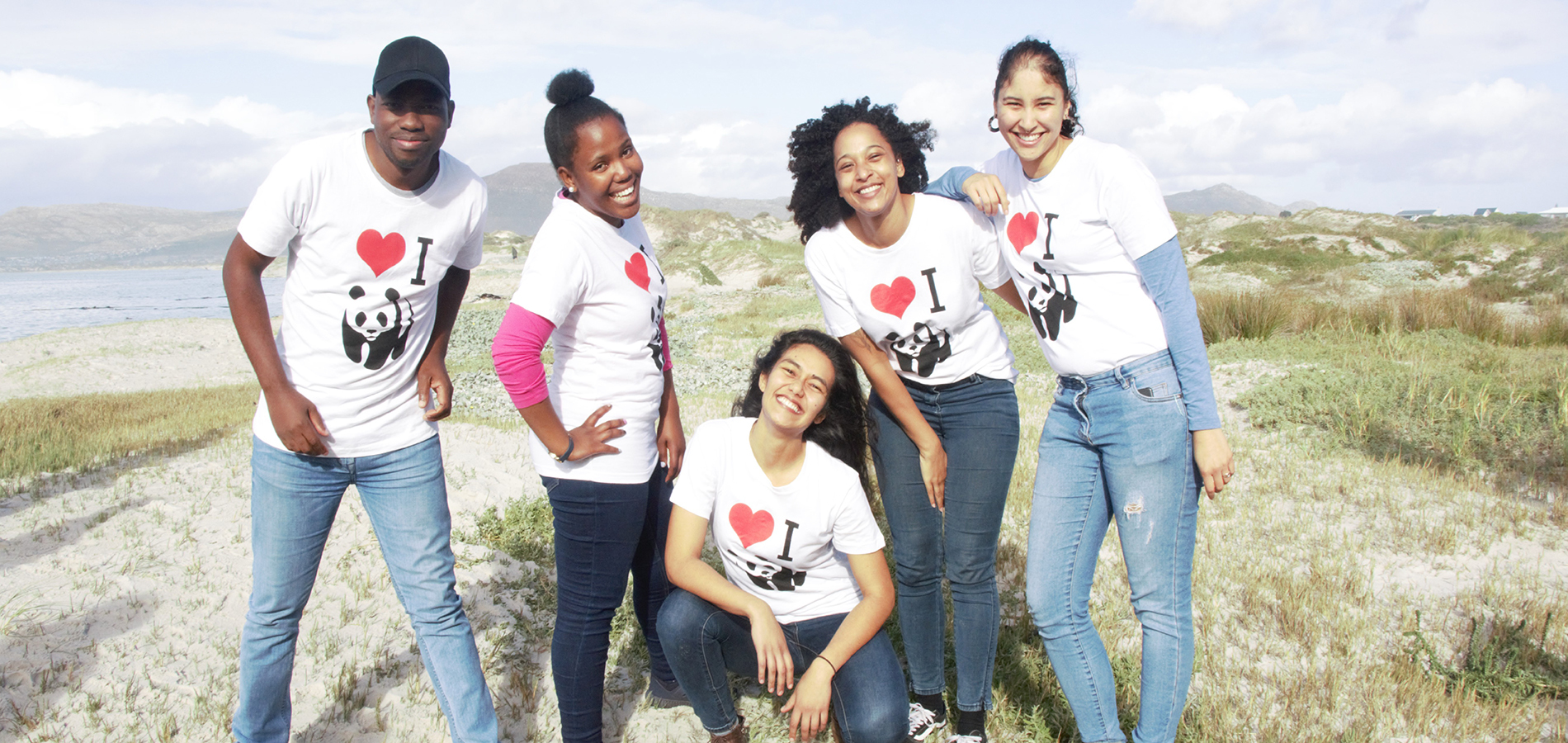
"Through the Environmental Leaders Programme, graduates from across various disciplines are placed in a work-based learning internship for 12 months. Trained and dedicated mentors support their development towards their envisioned environmental career. Our vision is to see these environmental leaders step up and make a difference in creating better career opportunities for young graduates through improved environmental management and conservation. Through the support of the WWF Nedbank Green Trust, we support the development of young environmental leaders and contribute to green jobs in South Africa," said Glenda Raven, Environmental Leaders Programme Senior Manager at WWF South Africa.
According to Raven, 82% of the interns start working before the end, or within three months, of completing the internship, reflecting their employability in a country where graduate employment continues to be a challenge. The interns are placed in environmental management and conservation organisations associated with the WWF’s work, and are ultimately employed in these organisations. All of this contributes to the transition of South Africa’s green economy.
Meet three of the WWF Nedbank Green Trust environmental leaders who are making key contributions to environmental management and conservation in South Africa.
Megan van der Bank

Van der Bank joined the programme as an intern with the WWF in 2011 after obtaining a Master’s degree in Biodiversity and Conservation Ecology from the University of the Western Cape.
"I currently work as a Marine Programme Coordinator at the South African National Biodiversity Institute, where I manage a range of projects that contribute to building knowledge for advancing biodiversity assessments and determining the state of biodiversity in South Africa. I believe that it is important to guide and prioritise efforts and resources for managing and conserving biodiversity. An area of work that is close to my heart is understanding the relationship between people and the environment and how this informs decision-making for marine protected area expansion, management and governance," she said.
Megan also emphasised on the importance of creating green employment in South Africa, "There is great opportunity to contribute to meeting some of the country’s development challenges such as job creation and poverty alleviation through green employment. While these opportunities have been significantly used in the terrestrial environment through various environmental restoration and monitoring initiatives, they remain largely untapped in the marine environment."
Noxolo Kabane

Based as an intern at the Table Mountain Fund in Cape Town, Noxolo Kabane (33) was part of the Environmental Leaders Programme in 2013. Noxolo saw an opportunity to learn more about the environmental sector and gained practical skills in the workplace.
"I am currently involved in research and policy development within government while pursuing a qualification in monitoring and evaluation. I have decided to embark on this journey because we always hear about South Africa’s progressive policies and strategies, but when it comes to implementation, they fall short. I strongly believe that to contribute to a better world we need to have evidence, test or pilot ideas and fix or tweak what is not working. Having the experience in research and policy development, together with monitoring and evaluation skills, I will be in a good position to strengthen and improve how government coordinates and implements its policies."
Luyanda Luthuli

Luyanda Luthuli (32) joined the Environmental Leaders Programme as an intern in 2017, based in the Baviaanskloof in the Eastern Cape. With an Honours degree in Agricultural Extension from the University of Fort Hare, Luyanda had a strong interest in conservation agriculture. "I'm pursuing a career that contributes to promoting environmentally friendly and profitable farming practices by integrating regenerative agricultural practices, sustainable land use principles and modern technology. By improving agricultural soil through carbon sinking and water-absorbing plants that will reduce CO2 in the atmosphere, we are helping to reduce the cost of food production and food prices for consumers, and improving the environment," he said.
When asked how he plans to encourage participation in developing an equal, inclusive and sustainable world, Luyanda said: "The proverb ‘give a man a fish and you feed him for a day; teach him how to fish and you feed him for life' comes to mind. Education is key to any development goal; formal and informal education is required to raise awareness and change people's behaviour towards the environment. My plan is to bridge the information gap between different stakeholders in communities."
Celebrating 30 years of supporting improved environmental management and conservation, the WWF Nedbank Green Trust has helped raise R300 million for initiatives in land, water, marine, climate, species and leader development. With the help of many South Africans, the WWF Nedbank Green Trust has been able to support various programmes, such as the WWF Environmental Leaders Graduate Internship Programme.
While the development of young environmental leaders continues through the work of Green Trust, South Africans are urged to play their part in contributing to a healthier environment. Through the Nedbank Green Affinity Programme, Nedbank has opened the doors of conservation and made it easy for everyone to support nature conservation at no cost to them. DM
To get involved in supporting the WWF Nedbank Green Trust, visit nedbankgreen.co.za or call Nedbank on 0860 555 111 for more information.