




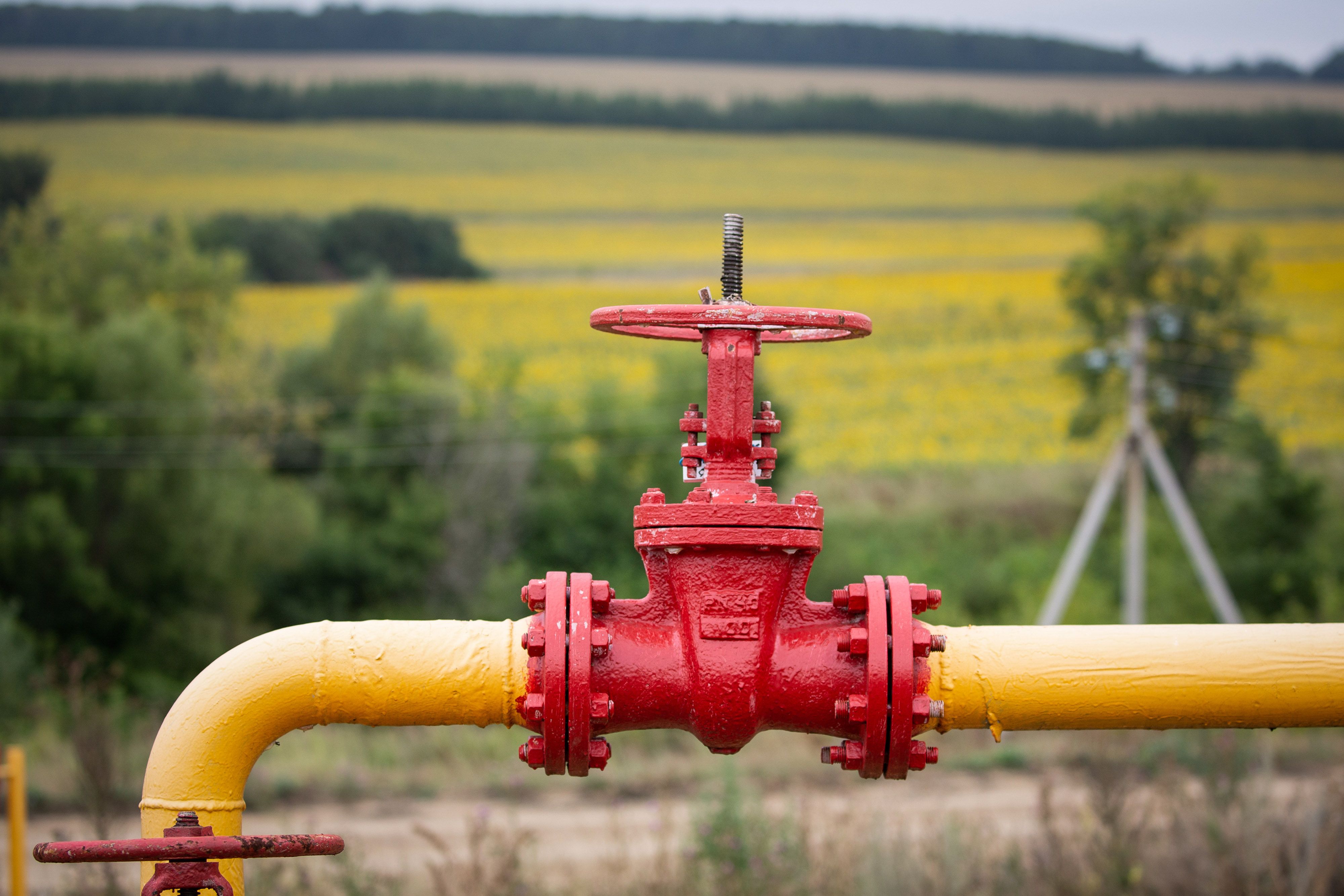
 A valve wheel sits attached to crude oil pipework in an oilfield near Almetyevsk, Russia, on Sunday, Aug. 16, 2020. Oil fell below $42 a barrel in New York at the start of a week that will see OPEC+ gather to assess its supply deal as countries struggle to contain the virus thats hurt economies and fuel demand globally. Photographer: Andrey Rudakov/Bloomberg
 “The Federal Reserve has been extremely dovish in all their previous meetings,” said Phil Streible, chief market strategist at Blue Line Futures LLC in Chicago. “They’re going to do whatever they can do to kick start the economy and keep the economy going.”
Further adding support, the United Arab Emirates signaled earlier that it will make up for pumping too much oil in the past two months. Abu Dhabi National Oil Co., which produces almost all the UAE’s crude, has indicated to refiners and traders that reductions in oil shipments for October will continue through November.
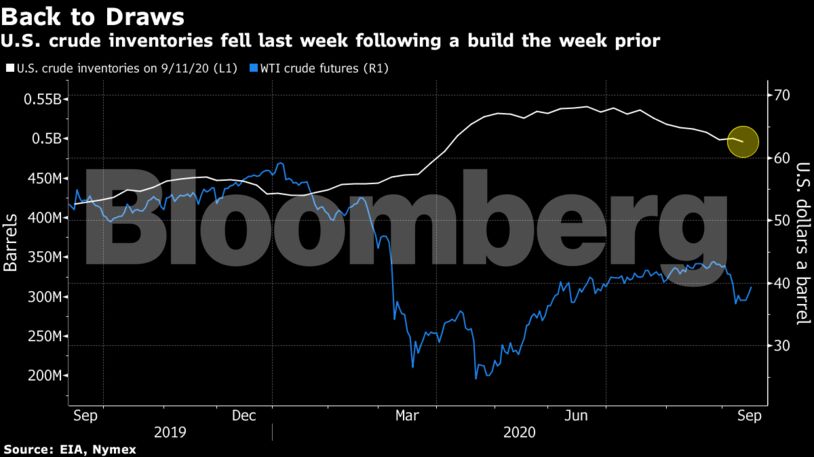
Oil’s recovery from April’s price rout paused in the beginning of September amid a persistent pandemic that crippled demand. But prices are recouping some of those losses, with futures in New York set to erase last week’s drop. Steps the Organization of Petroleum Exporting Countries and its allies take to mitigate supply concerns could drive the momentum. A committee made up of some ministers from OPEC+ alliance will meet on Thursday to discuss if the group’s production curbs are enough to prevent a glut.
The decline in U.S. oil inventories, “along with rising demand suggests that the market is putting to rest much of the concern that demand is going in reverse,” Bart Melek, head of global commodity strategy at TD Securities, said in a note.
| Prices |
|---|
|
Still, despite the headline crude draws in the EIA data, total stocks for crude and products combined rose by 2.17 million barrels, which is the first increase since July. Meanwhile, a build in distillate supplies comes as stockpiles remain stubbornly at their highest seasonal level in decades.
| Other oil-market drivers |
|---|
|