


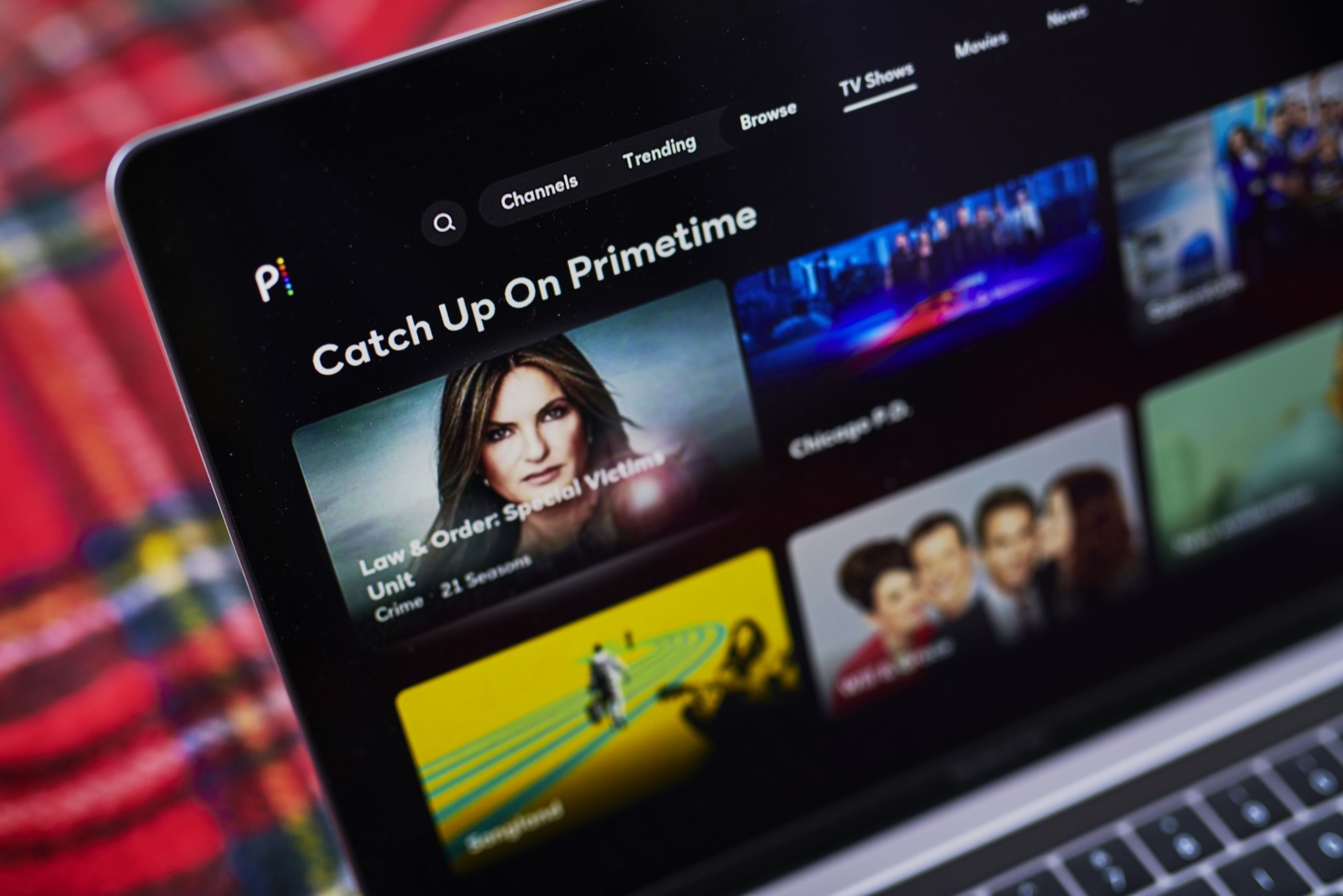
 Peacock, a streaming service by NBCUniversal, is displayed on an Apple Inc. laptop computer in an arranged photograph taken in the Brooklyn Borough of New York, U.S., on Monday, April 20, 2020. Photographer: Gabby Jones/Bloomberg
As many as a half-dozen services are bidding for the rights, which would let streaming companies show the movies about nine months after the films have appeared in theaters. The winning platforms may have the exclusive rights for 18 months and then regain them for a second window of time, several years later. But the companies are discussing many options, especially since the biggest media giants now have their own streaming services to feed.
Another wrinkle to these negotiations: Some streaming services have inquired whether studios would be interested in producing original movies just for them, one of the people said.
It’s a fresh sign of how streaming is changing the way Hollywood operates, with online services snapping up more of the industry’s top-quality product — rather than settling for reruns and B-movies.
Currently, AT&T Inc.’s HBO has the exclusive rights to new movies from Universal, a collection that includes the latest installments in the “Jurassic World” and “Fast & Furious” franchises. Starz, which is owned by Lions Gate Entertainment Corp., holds the exclusive rights to movies from Sony, including the latest “Jumanji” and “Spider-Man” sequels.
Both HBO and Starz are trying to renew their current deals, which are set to expire at the end of next year. But they’re facing competition from deep-pocketed streaming services — Netflix, Amazon and Hulu — and find themselves negotiating with studios owned by companies that also have streaming services.
While the importance of original programming continues to grow for streaming services and pay-TV networks, big-budget movies fresh off of theatrical releases remain a major draw in home entertainment. How the current round of negotiations plays out could signal a fundamental shift in who gets the newest movies for home viewing.
“It’s potentially undergoing major change right now,” said Tim Nollen, an analyst with Macquarie Bank.
Streaming services are scrambling to lock down more bingeable content, especially as coronavirus-spurred production problems delay the arrival of new movies and shows. Fox Corp.’s Tubi, an ad-supported, free platform, said Tuesday that it has acquired all four “Hunger Games” films for streaming.
Netflix was the first streaming service to land movies from a major studio when it got the rights to Disney titles released from 2016 to 2018, including “Moana,” “Avengers: Infinity War” and “Incredibles 2.” Disney eventually declined to renew the deal, preferring instead to stock its own newly created streaming service. Disney movies now appear on Disney+.
Netflix still has the rights to movies from Illumination, the Universal-affiliated animation studio behind “Despicable Me,” as well as animated productions from Sony. Both Universal and Sony will have to decide whether to continue to license their animated movies separately, or to bundle everything together.
Either way, the influx of new bidders is likely to produce a huge windfall for Sony Corp., Comcast Corp. and other owners of movie studios.
But a company like Comcast will have to decide whether the deals fit with its strategy. It owns Universal and recently launched its own streaming service, Peacock. Does it keep its popular titles for itself — or sell them to rival services? Universal is also planning to rent out its new movies on a pay-per-view basis just weeks after they leave theaters, which could affect the downstream value of those films.
It’s suddenly a very different calculation, Nollen said. “The way buyers and sellers are going to be thinking about it has completely changed.”
Comments
Scroll down to load comments...