




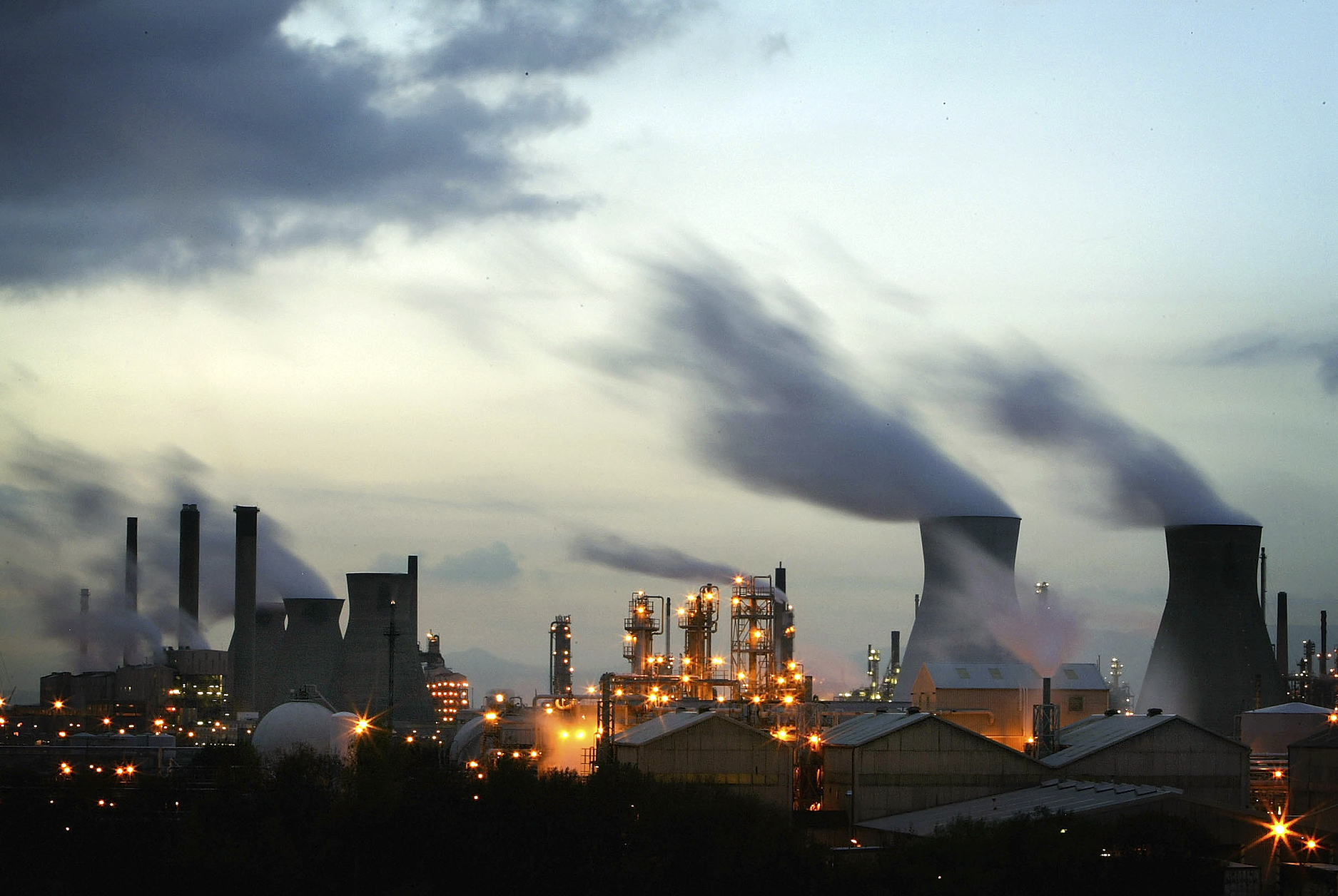
 GRANGEMOUTH, SCOTLAND - NOVEMBER 1: BP's Huge oil refinery complex continues it's 24 hour production of petroleum and gas, November 1, 2004 at Grangemouth in central Scotland. Continuing instability in the Middle East is propping the price of crude oil at close to $50 a barrel, impacting in turn on global economies. (Photo: Christopher Furlong/Getty Images)
The French energy giant is following its peers BP Plc and Royal Dutch Shell Plc, which already warned that they could write down almost $40 billion between them in the second quarter. The size of the impairments shows how the global health crisis, combined with the push to slow climate change, is shaking the industry’s foundations.
Most major European oil companies had valued their assets using long-term crude prices of $60 to $80 a barrel. That’s close to where international benchmark Brent was trading before the pandemic struck, but is now considered unrealistic in the post-Covid economy. Total expects Brent to average $35 this year.
“Beyond 2030, given technological developments, particularly in the transportation sector, Total anticipates oil demand will have reached its peak and Brent prices should tend toward the long-term price of $50 a barrel,” the company said in a statement on Wednesday.
America’s biggest oil producers are coming under increasing pressure to disclose their long-term forecasts. Exxon Mobil Corp. and Chevron Corp. don’t publish such estimates, meaning shareholders are less able to scrutinize how their investment plans square with market realities.
Total and Shell report earnings on Thursday, and Exxon and Chevron follow on Friday. All are expected to report big losses for the second quarter.
Comments
Scroll down to load comments...