




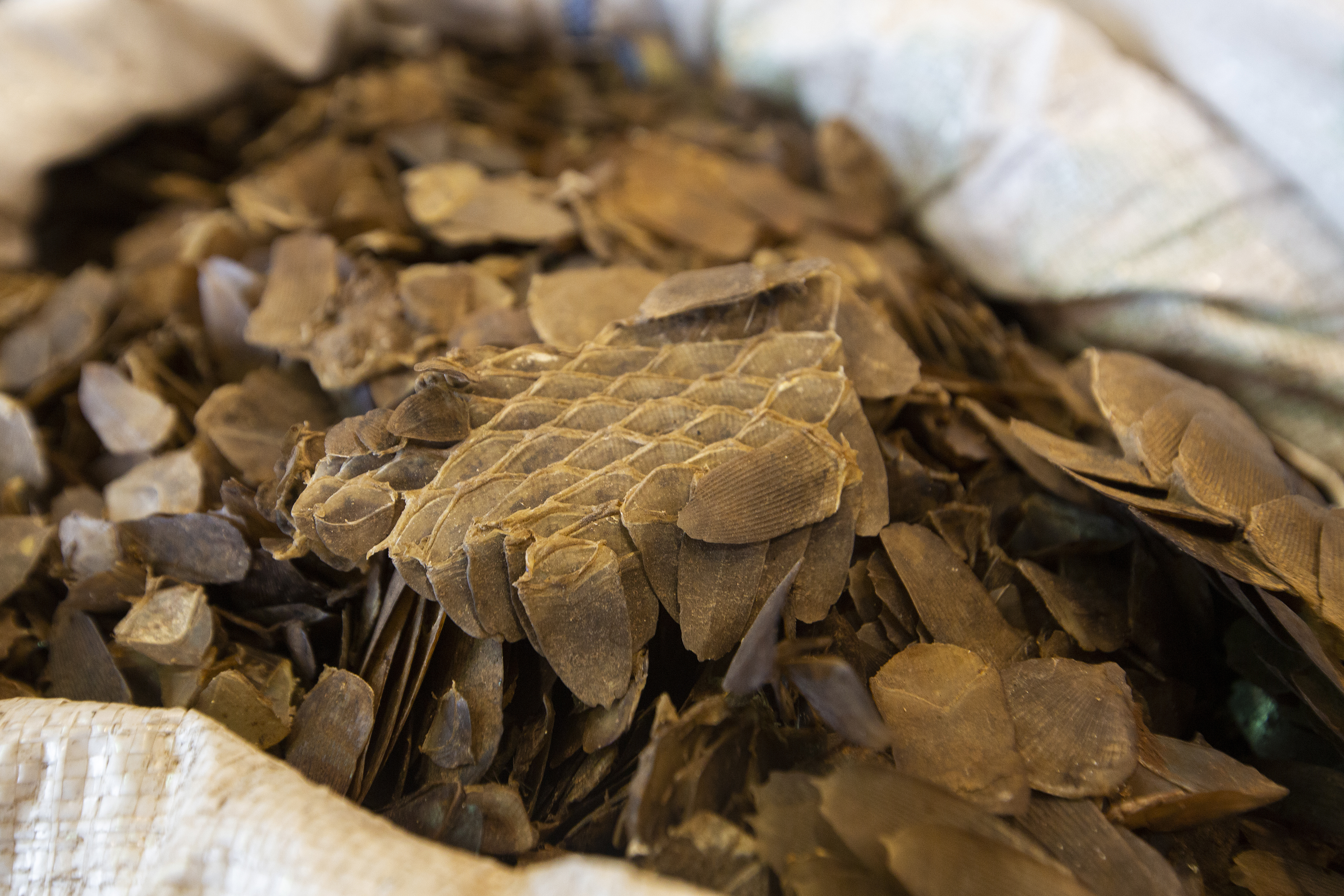
 epa07335066 Some of the over eight metric tons of pangolin scales are displayed along with elephant tusks weighing more than two metric tonswith at a Hong Kong Customs press briefing at Kwai Chung Customhouse Cargo Examination Compound in Kowloon, Hong Kong, China, 01 February 2019. According to Hong Kong Customs, illegal wildlife products were seized inside a consignment of frozen meat whilst in transit from Nigeria to Vietnam. It is the city's largest ever pangolin scale seizure and third largest ivory seizure. Scientists estimate the haul to represent the deaths of around 500 African elephants and up to 13,833 African pangolins. EPA-EFE/ALEX HOFFORD
 Vietnam is an important destination in the Asian region for illegal wildlife products such as pangolin scales and elephant ivory. There have also been seizures of rhino horns, which is believed to have medicinal value.
While the directive is likely to be welcomed by conservation organisations, one group said it did not go far enough.
"The wildlife consumption ban mentioned in the directive is insufficient as some uses of wildlife such as medicinal use or wild animals being kept as pets are not covered," said Nguyen Van Thai, director of Save Vietnam's Wildlife.
"It would be better to have a clear and detailed list of the various uses of wildlife that are prohibited."
In February, 14 conservation organisations in Vietnam sent a joint letter urging the government to "identify and close markets and other locations where illegal wildlife is on sale".
The Southeast Asian country is reported to have many wildlife markets and also a booming online trade in animals, with existing laws often poorly enforced.
Neighbouring China has also pledged to ban the trade and consumption of wild animals in the wake of the coronavirus outbreak.
Scientists suspect the virus passed to humans from animals and some of the earliest infections were found in people who had exposure to a wildlife market in Hubei's provincial capital Wuhan, where bats, snakes, civets and other animals were sold (Reporting by Phuong Nguyen Editing by Ed Davies)