




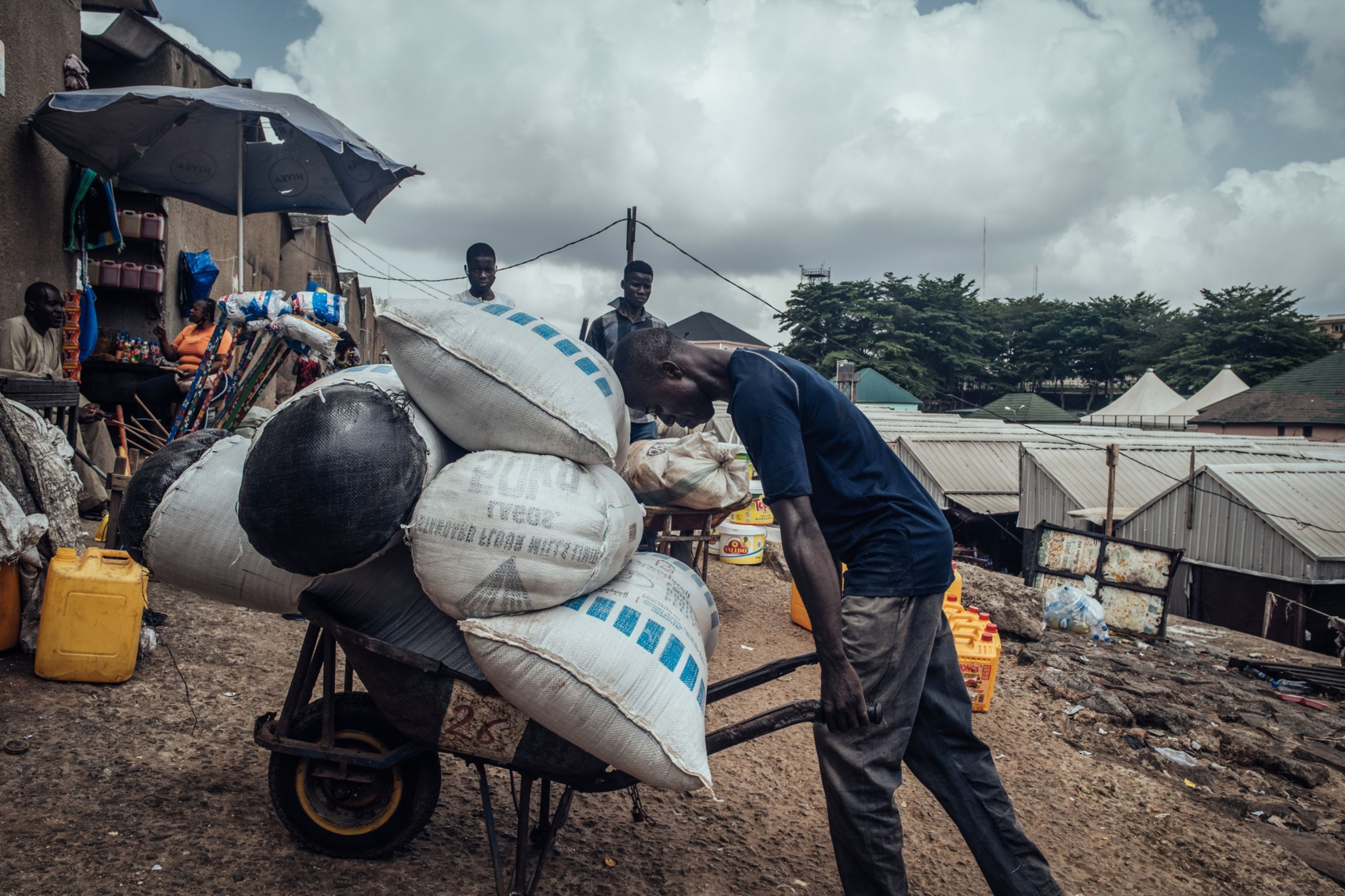
 A worker pushes a cart containing sacks of grain at Garki Model market in Abuja, Nigeria, on Wednesday, June 3, 2020. The government of Nigeria, whose revenue could be slashed by more than half this year due to the oil-price slump, finalized plans for a revised budget that keeps spending almost intact, and that will mean more borrowing. Photographer: KC Nwakalor/Bloomberg
 “We have at least three countries that are interested but we’re trying to bring them together to form a group,” Vera Songwe, the executive secretary of the UN Economic Commission for Africa, said in an interview. The framework for the deal, a special-purpose vehicle, is being designed by the UNECA, African Union and African finance ministers.
Songwe declined to name the G-20 member central banks with talks still ongoing, but said there was hope for progress on the matter in the next few weeks.
Why There’s a Looming Debt Crisis in Emerging Markets: QuickTake
The potential debt exchange is similar to the 1980s Brady plan that converted bank loans mostly owed by Latin American countries into new securities backed by U.S. Treasuries.
The proposal has been put forward as a way to allow private creditors to join a debt-relief plan for low-income countries that have been pushed to the brink of insolvency in the pandemic. The G-20 group of nations has already pledged to suspend payments on official loans this year.
In addition to accessing liquidity for debt-service payments, countries are also discussing how to rebuild their economies and where liquidity for that would come from, Songwe said.