




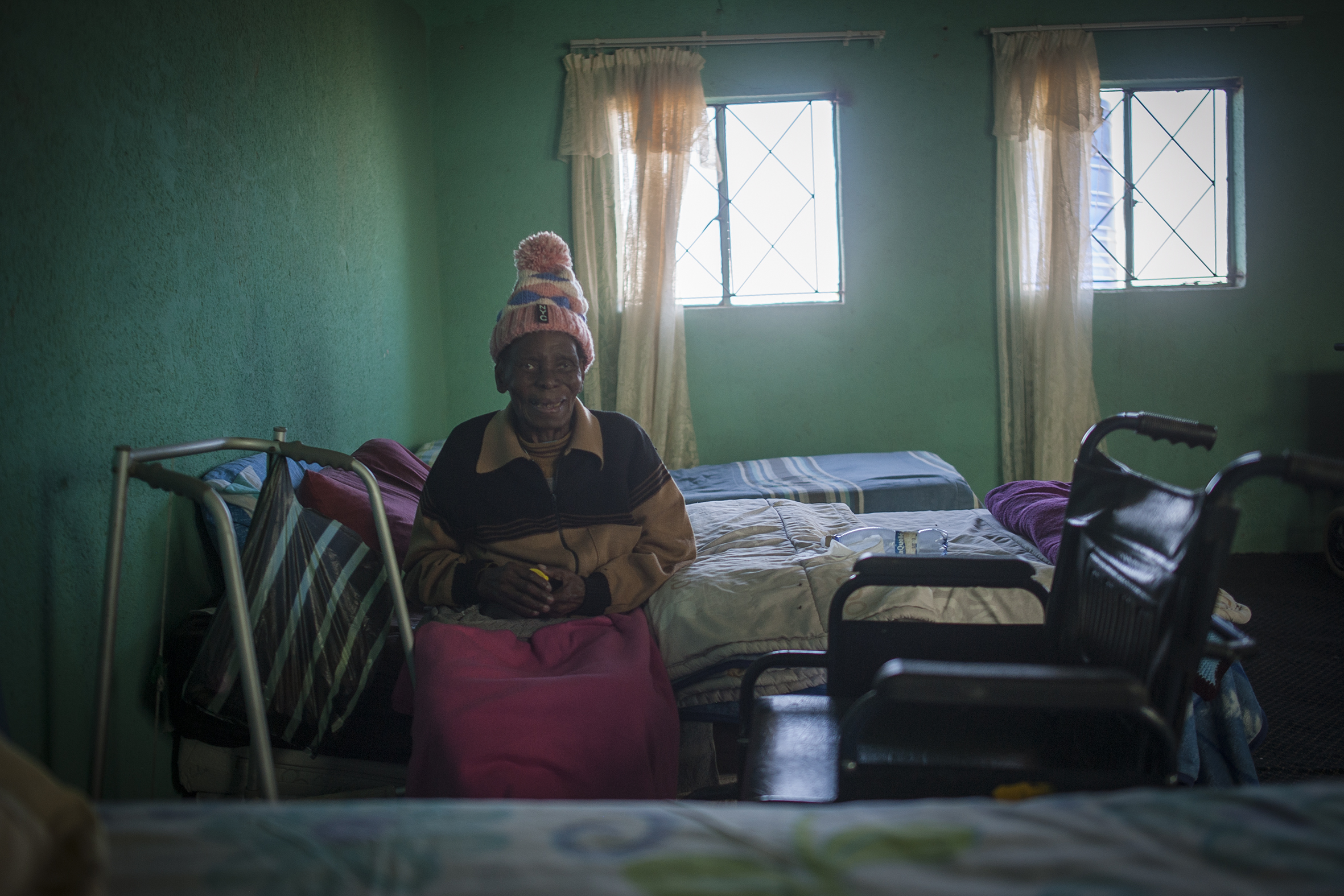
 Grace Sindane, 89, sits in her room. Older people don't have strong immune systems thus making them more vulnerable to infectious diseases. (Photo: Shiraaz Mohamed)
 As the Covid-19 case count increases daily, staff members at the Tshelo Ke Lesedi Old Age Home in Hammanskraal, north of Pretoria, are taking extra care to ensure the safety of the aged under their care. A combination of age and underlying health problems makes the residents at the home more susceptible to the virus.
/file/dailymaverick/wp-content/uploads/mohamed-home-aging_inset_1.jpg "A man sits in a wheelchair outside his room. While coming to grips with the lockdown, it is important for high levels of socialisation in senior citizens to help increase longevity. (Photo: Shiraaz Mohamed)")
With stringent measures put into place for their safety, some of the elderly don’t seem to understand what is going on. Their social visits from their children and family members were stopped and some of them found have found it hard adapting to life without tobacco products.
/file/dailymaverick/wp-content/uploads/mohamed-home-aging_inset_2.jpg "Two senior citizens sit outside, enjoying the afternoon sun. Socialisation helps senior citizens maintain their self-esteem and sense of worth. (Photo: Shiraaz Mohamed)")
Grace Sindane, 89, who has been using snuff since she was young, sat on her bed in her room and complained to caregivers that her snuff was about to run out. When told she could not get more, she became angry but seemed to calm down after caregivers explained why.
/file/dailymaverick/wp-content/uploads/mohamed-home-aging_inset_3.jpg "A caregiver makes a bed, one of her daily duties. (Photo: Shiraaz Mohamed)")
Catherine Sepato, founder of Tshelo Ke Lesedi Old Age Home, said: “Before the lockdown they [the elderly] were in good spirits because they were able to receive visits from the family and friends. But with the lockdown their mood changed, they became withdrawn. We had to make them understand what lockdown is and the impact it has on their lives. We explained it thoroughly because we did not want to scare them or make them think that they were being punished or alienated.”
/file/dailymaverick/wp-content/uploads/mohamed-home-aging_inset_4.jpg "An old woman stands in the doorway of her room. (Photo: Shiraaz Mohamed)")
In an effort to take better care of the elderly, caregivers have increased their social activity at the home. They spend more time with the elderly in the form of one-on-one sessions. The elderly are encouraged to talk about their feelings. They also take part in Bible classes and have a dedicated time daily for a light exercise session.
/file/dailymaverick/wp-content/uploads/mohamed-home-aging_inset_5.jpg "Rosemary Hosia, right, and Maria Malete, left, in the kitchen as they perform their daily duties. (Photo: Shiraaz Mohamed)")
Clinical psychologist Shaheda Khota said: “One of the most important factors for an elderly person to maintain mental health is socialisation. During lockdown, the decrease in socialisation is likely to impact their mood, eating, sleeping, and result in an increase in anxiety, especially since they are unable to see their families.
/file/dailymaverick/wp-content/uploads/mohamed-home-aging_inset_6.jpg "A caregiver performs administrative work. (Photo: Shiraaz Mohamed)")
/file/dailymaverick/wp-content/uploads/mohamed-home-aging_inset_7.jpg "An old man sits on his bed. (Photo: Shiraaz Mohamed)")
/file/dailymaverick/wp-content/uploads/mohamed-home-aging_inset_8.jpg "An old woman sits in her wheelchair enjoying the sun. Social isolation can have adverse health effects, including dementia. (Photo: Shiraaz Mohamed)")
/file/dailymaverick/wp-content/uploads/mohamed-home-aging_inset_9.jpg "A man has his hair shaved as he sits outside. In an effort to take better care of the elderly, caregivers have increased their social activities. (Photo: Shiraaz Mohamed)")
/file/dailymaverick/wp-content/uploads/mohamed-home-aging_inset_10.jpg "A caregiver pushes a woman in a wheelchair back into her room. Photo: Shiraaz Mohamed)")
“Many elderly people may not be mobile and rely on others to take them places, to assist them in getting their weekly shopping done, to be taken for walks. A decrease in these activities, the decrease in social stimulation, and exercise is bound to have a negative effect on their ability to cope.
“We are likely to start seeing an increased risk of depression, anxiety and similar disorders presenting in this population.” DM