




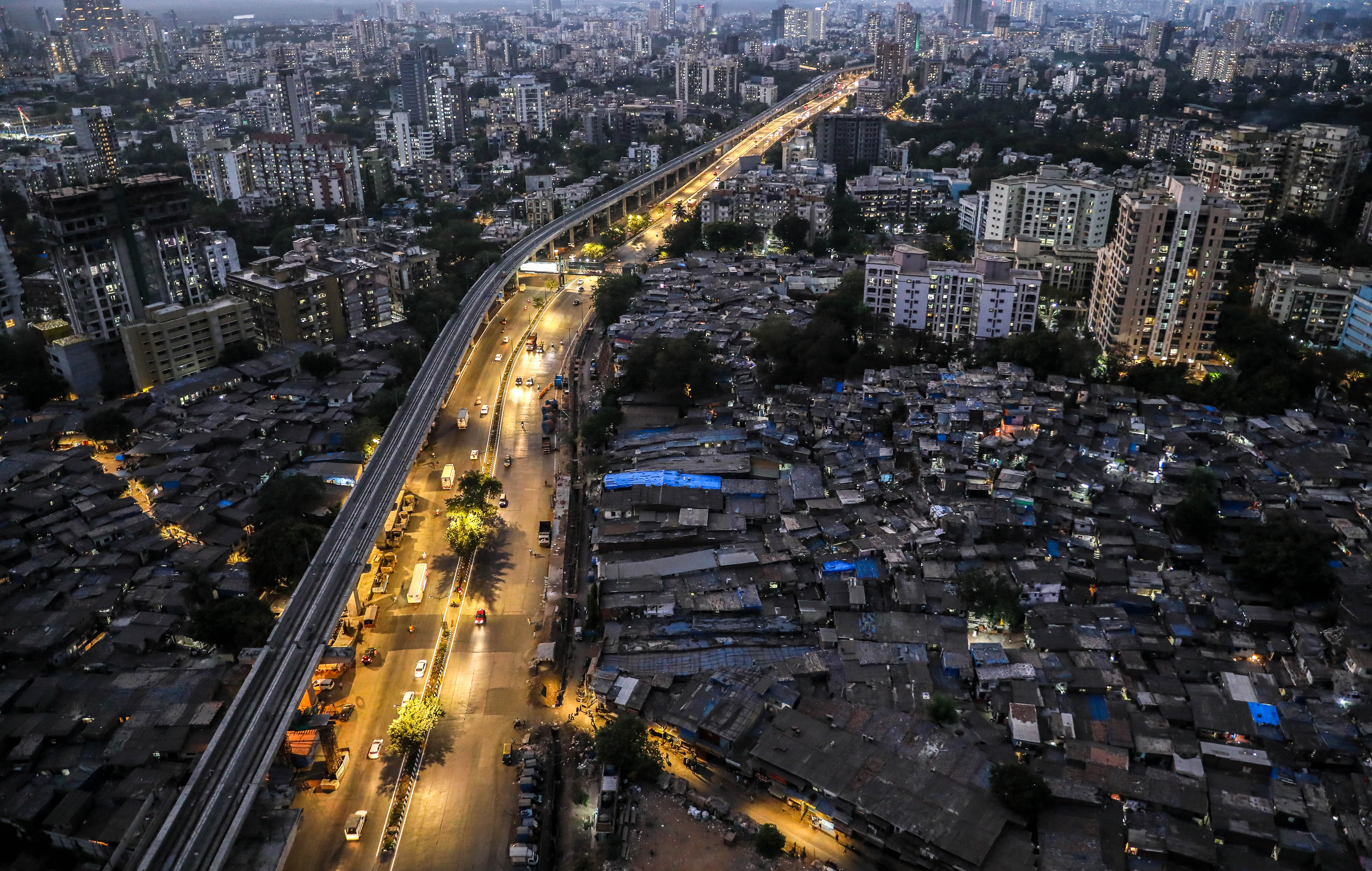
 epa08452624 An aerial view of a residential area near the slums in Devipada area, one of the COVID-19 hotspots in Mumbai, India, 29 May 2020. According to media reports, the Maharashtra state government extended a lockdown implemented to stem the spread of the SARS-CoV-2 coronavirus that causes the COVID-19 disease until 31 May 2020, with new guidelines. EPA-EFE/DIVYAKANT SOLANKI
 Prime Minister Narendra Modi's government has extended lockdown until June 30 in so-called containment zones that should remain under lockdown because they continue to report a high number of infections.
But restaurants, malls and religious buildings are permitted to reopen elsewhere from June 8 as India loosens the world's longest lockdown to curb the spread of the spread of the pandemic.
India has reported 182,000 confirmed COVID-19 cases, with 5,164 deaths.
In Uttar Pradesh, the country's most populous state, a health official said 1,111 containment zones has been identified, while authorities in the western Gujarat state said that more than 400,000 houses were marked as high-risk zones.
Officials in the western state of Maharastra said all markets, except malls and congested spaces, will be allowed to function in a staggered manner.
The eastern state of West Bengal identified 285 containment zones in its capital, Kolkata.
In a radio address to the nation on Sunday, Prime Minister Narendra Modi warned citizens to remain vigilant.
"The fight against the coronavirus is intense, we cannot drop our guard," he said.
The number of cases reached a daily record high in the past 48 hours, two months after the federal government enforced a rigid lockdown to stop the pandemic from spreading in a country of more than 1.3 billion people.
Critics said Modi had now left states with the responsibility of establishing rules to contain the virus. (Reporting by Zeba Siddiqui in New Delhi, Sumit Khanna in Ahmedabad and Saurabh Sharma in Lucknow Editing by Rupam Jain and David Goodman)
Comments
Scroll down to load comments...