




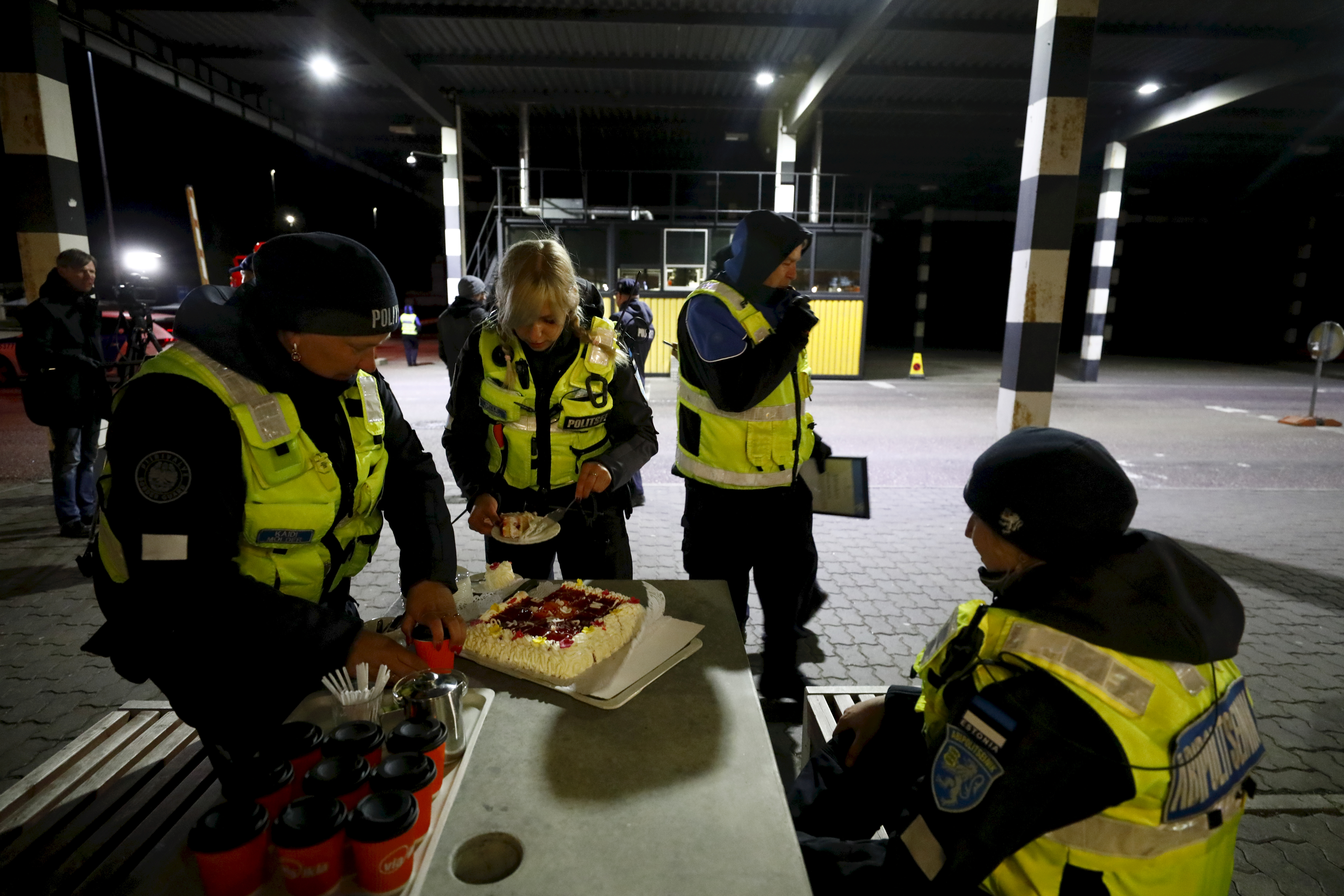
 epa08422989 Estonian border guard and police officers enjoy a cake to celebrate with colleagues the end of their duties at the Ikla border crossing point, Estonia, 15 May 2020. Estonia had reintroduced border controls from 17 March and foreign travelers were not allowed to enter Estonia in order to contain the spread of the SARS-CoV-2 coronavirus which causes the COVID-19 disease. Lithuania, Estonia and Latvia opened their borders for citizens who can now again move freely between the three countries as of 15 May morning, that have so far avoided the worst of the COVID-19 pandemic. EPA-EFE/TOMS KALNINS
 A digital immunity passport collects testing data and enables people to share their immunity status with a third party, like an employer, using a temporary QR-code generated after digital authentication.
"Digital immunity passport aims to diminish fears and stimulate societies all over the globe to move on with their lives amidst the pandemic," said Taavet Hinrikus, founder of Transferwise and a member of Back to Work, the non-governmental organisation developing the passport.
Many countries and businesses are rushing to develop apps for contact-tracing.
In addition to technology entrepreneurs, Back to Work includes local medical experts and state officials. Radisson hotels and food producer PRFoods are among the first companies that have started to test the passport.
"We are seeking every solution to have our employees back to work and clients sleeping in our hotels again," said Kaido Ojaperv, CEO of Radisson Blu Sky Hotel at Tallinn.
Estonia, which has so far recorded 64 deaths due to COVID-19 and 1,791 infections, has started to ease the lockdown measures this month, and opened last week with Lithuania and Latvia the first "travel bubble" within the European Union.
(Reporting by Tarmo Virki; Editing by Lisa Shumaker)