




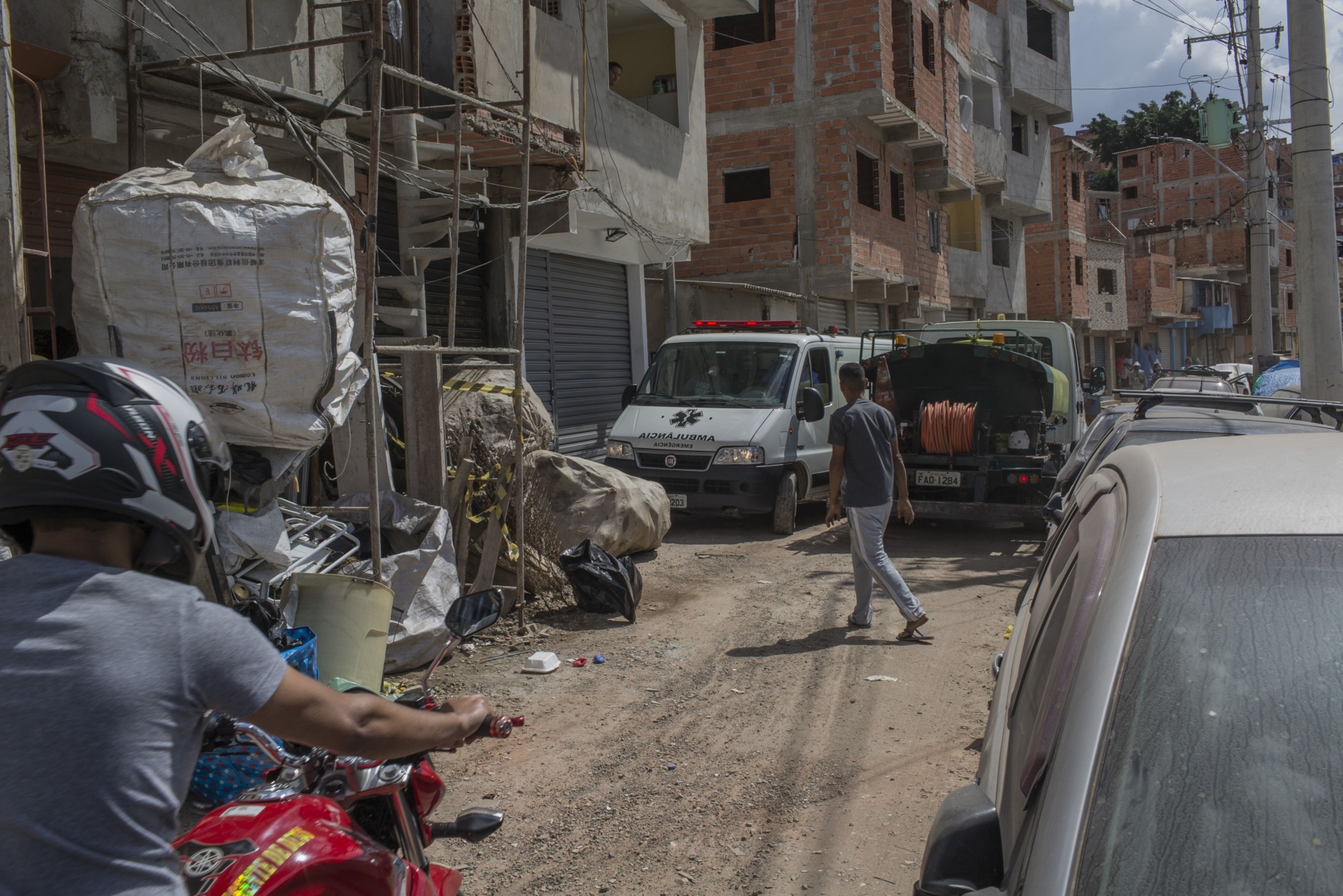
 An ambulance transports medical workers while responding to an emergency scene in the Paraisópolis favela of Sao Paulo, Brazil, on Wednesday, April 15, 2020. The Union of Residents and Tradesmen of Paraisopolis, the second-largest favela in Brazil, have hired an emergency medical response team, as well as organized mask production and meal distribution available to the nearly 100,000 inhabitants of the favela.
 On Tuesday, International Monetary Fund Managing Director Kristalina Georgieva said that the economic forecasts may be further downgraded next month based on weak data since the mid-April IMF report.
“The pandemic will likely cause an estimated 34.3 million people to fall below the extreme poverty line in 2020, with 56% of this increase occurring in African countries,” according to the UN report. “An additional 130 million people may join the ranks of people living in extreme poverty by 2030, dealing a huge blow to global efforts for eradicating extreme poverty and hunger.”
The pandemic may accelerate digitalization and automation, which could eliminate many existing jobs, the study said. The net wage and employment effects could be negative, further aggravating income inequality.
Powell Warns of Broad Virus Danger, Bats Down Negative Rates (1)
“The lesson we learnt from the last crisis is that fiscal and monetary stimulus measures do not necessarily boost productive investments,” said Hamid Rashid, lead author of the report. He said governments must protect jobs and prevent a further rise in income inequality because the pandemic will disproportionately hurt those holding low-skilled, low-wage jobs, while leaving higher-skilled jobs less affected.
Global growth is expected to rebound by 3.4% in 2021, according to the UN study.
Comments
Scroll down to load comments...