




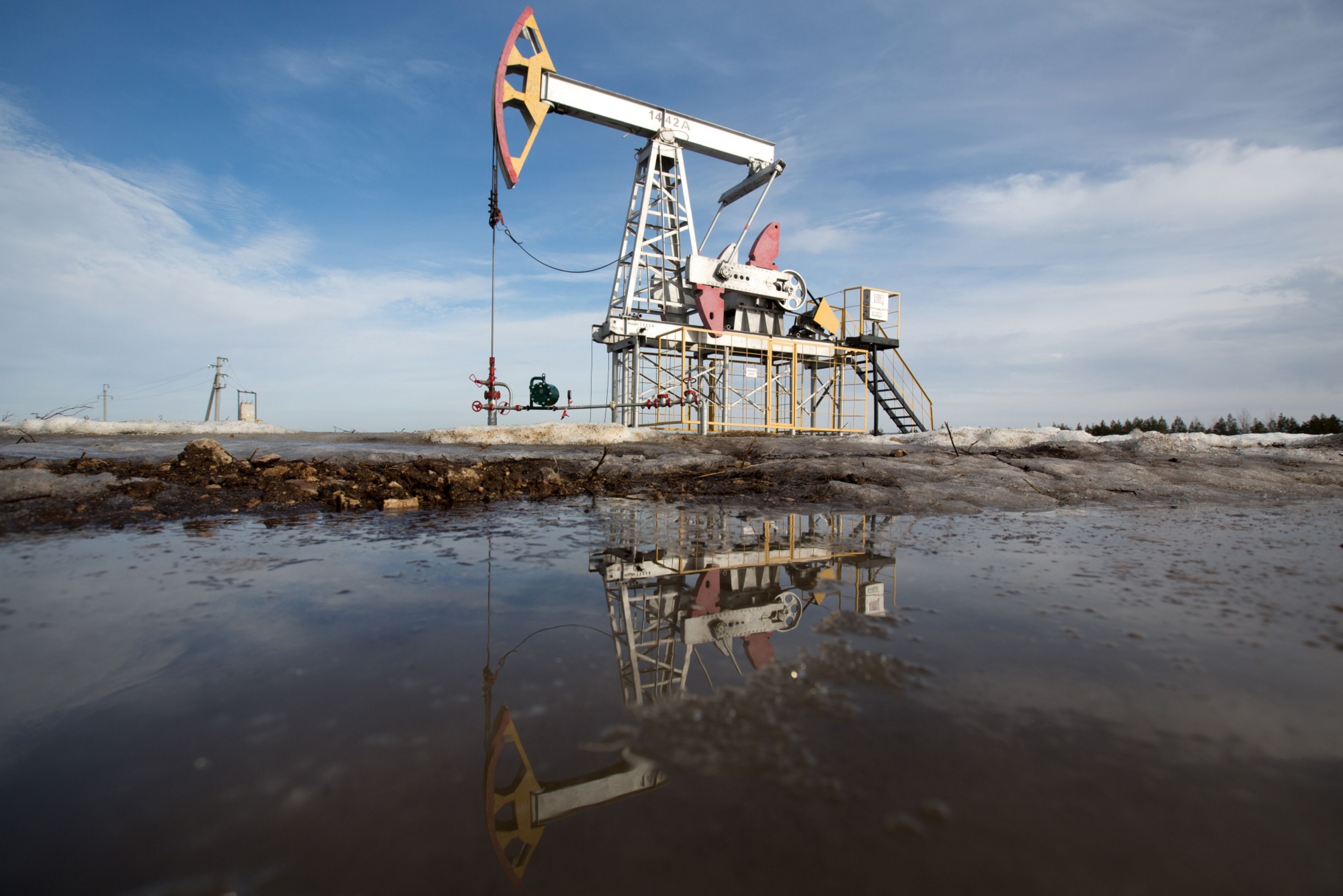
 An oil pumping jack, also known as "nodding donkey", stands in an oilfield near Almetyevsk, Tatarstan, Russia, on Wednesday, March 11, 2020. Saudi Aramco plans to boost its oil-output capacity for the first time in a decade as the worlds biggest exporter raises the stakes in a price and supply war with Russia and U.S. shale producers. Photographer: Andrey Rudakov/Bloomberg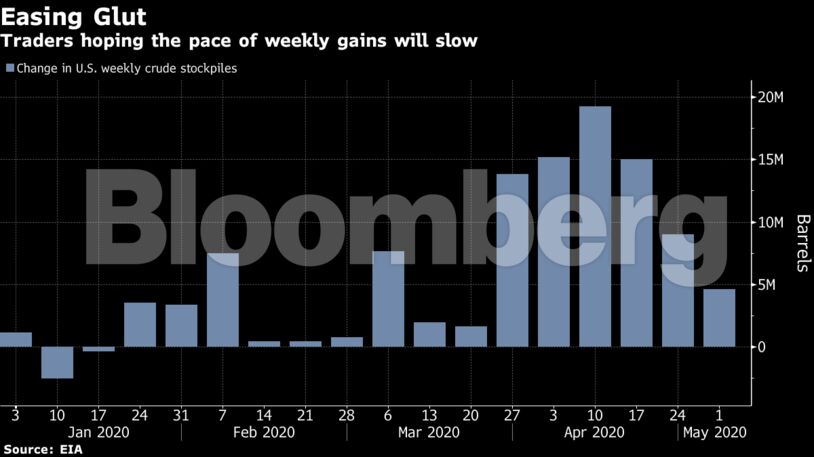
The OPEC+ coalition that includes Saudi Arabia and Russia started implementing daily output cuts of almost 10 million barrels a day on May 1, while in the U.S. -- the world’s biggest producer -- prominent shale explorers and companies such as Chevron Corp. have flagged supply curbs. While there are signs of returning demand, most analysts don’t see a rebound to pre-virus levels for at least a year, with some questioning if that will ever happen.
In American states that have loosened coronavirus lockdowns, fuel demand is picking up, with parts of Florida reporting gasoline consumption is down just 25-30%, from 50% previously. Refiner Delek U.S. Holdings Inc. said Wednesday it’s seeing demand improve in rural areas of Texas and Arkansas.
Read: In a Gloomy Oil Market, India Pump Prices Echo $100-Plus Crude
“The market has become bipolar, caught between optimism and pessimism over the supply-demand gap narrowing,” said Vandana Hari, founder of Vanda Insights. “I would expect continuing volatility in the coming days.”
| Prices |
|---|
|
U.S. crude stockpiles expanded by 4.59 million barrels last week, according to Energy Information Administration data on Wednesday. Inventories at Cushing, Oklahoma, the delivery-point for WTI, rose by 2.07 million barrels to 65.4 million. Gasoline supplies fell for a second week.
Saudi Aramco delayed the release of its key monthly pricing for June crude exports for a second time, according to people with knowledge of the matter. The state oil producer had already delayed the announcement to Wednesday from Tuesday.
| Other oil-market news |
|---|
|