




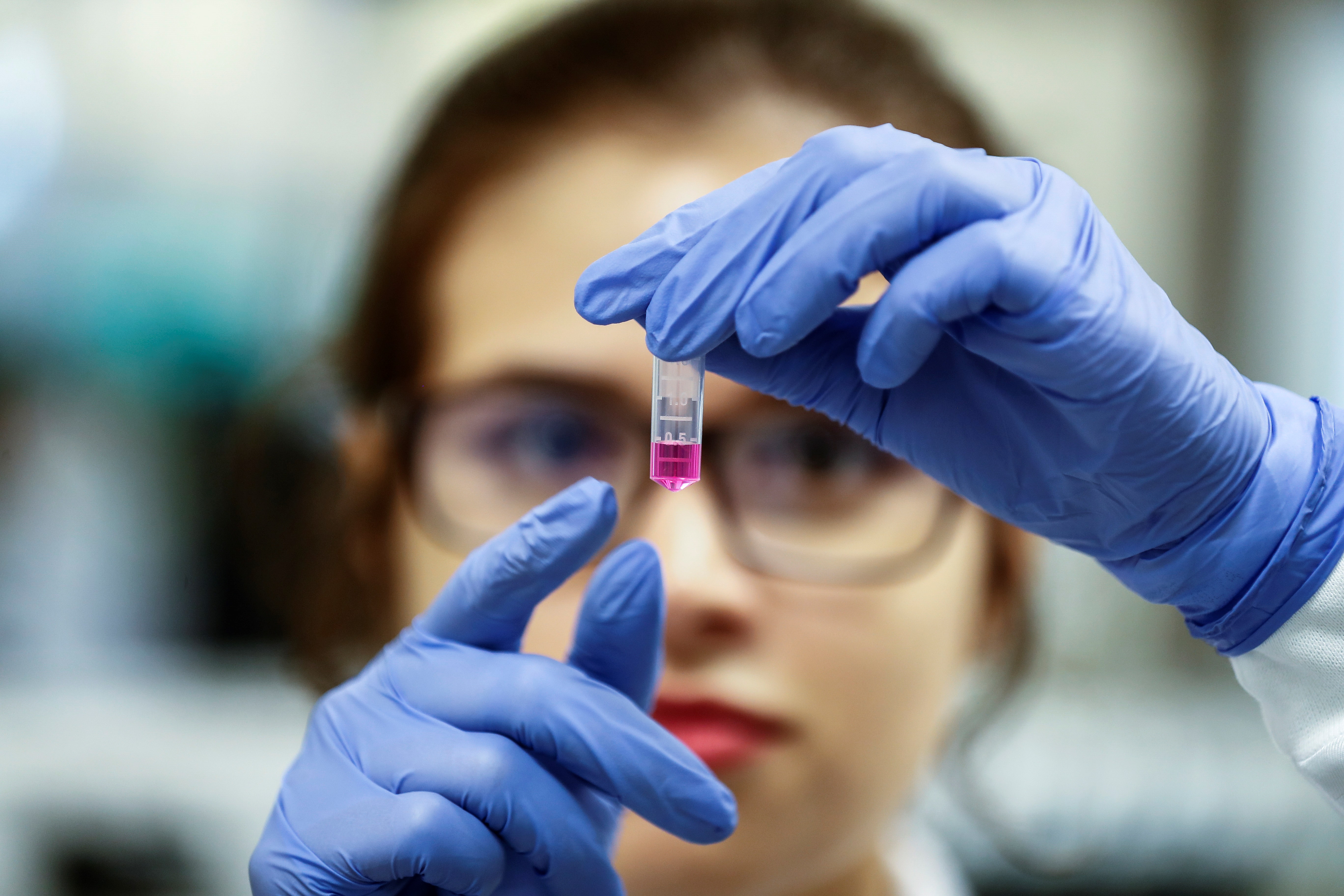
 epa08303750 Brazilian scientist in the Immunology laboratory of the Heart Institute (Incor) of the Faculty of Medicine of the University of Sao Paulo, in Sao Paulo, Brazil, 17 March 2020 (issued 18 March 2020). Brazilian scientists develop a coronavirus vaccine with a different method than those used so far by the pharmaceutical industry and groups of researchers from other countries, who expect it to be tested on animals in the coming months. It is the current great challenge of the international scientific community and Brazil, as a power in Latin America, has joined this agonizing race to discover an effective immune response against the virus that has paralyzed half the world, although it has done so with a different approach. Meanwhile, Brazilians remain skeptical about the extent of this global pandemic in the country, where there are about 300 confirmed cases and at least one death from COVID-19. EPA-EFE/Sebastiao Moreira
The Geneva-based agency, in a brief statement issued late on Thursday, said the initiative with partners aims to make technologies against the disease caused by the novel coronavirus "accessible to everyone who needs them, worldwide", but gave no details.
The GAVI vaccine alliance, Gates Foundation and Global Fund are among traditional large donors to the U.N. agency, in addition to its 194 member states.
WHO director-general Tedros Adhanom Ghebreyesus said on April 6 that he planned to announce an initiative to accelerate the research, development and production of vaccines and also design mechanisms for equitable distribution.
"WHO is committed to ensuring that as medicines and vaccines are developed they're shared equitably with all countries and people," Tedros said at the time.
"While we're looking for vaccines, unless we break the barriers to equitable distribution of the products, whether it's vaccines or therapeutics, we will have a problem, so we need to address the problem ahead of time," he said.
"There should not be a divide between the haves and the have-nots."
Tedros also praised Costa Rica's President Carlos Alvadaro for a proposal to create a voluntary pool of rights to tests, drugs and vaccines with free access or licensing on "reasonable and affordable terms for all countries."
"Tedros supports equitable access," a European diplomat told Reuters on Thursday. "The big challenge, apparently, will not be the development of a vaccine but then how to ensure broad roll-out for everybody."
The initiative is expected to include a stockpile for use in poor countries, such as the WHO currently has for influenza vaccines should a flu virus evolve into a pandemic.
During the H1N1 swine flu pandemic in 2009, there were bottlenecks in regulatory processes and vaccine yields were lower than expected, a subsequent WHO review found. There was criticism that distribution of vaccines was not equitable as wealthier countries were able to purchase more.
Gilead Sciences Inc's experimental coronavirus drug failed its first randomized clinical trial, the Financial Times reported on Thursday, but the drugmaker said the results from the study in China was inconclusive as it was terminated early. (Reporting by Stephanie Nebehay; Editing by Chris Reese and Alex Richardson)
Comments
Scroll down to load comments...