




Asian processing may slump 9%, according to four estimates. The region led expansion in grinding before the virus outbreak as companies set up facilities in countries including Malaysia to satisfy the growing demand for chocolate.
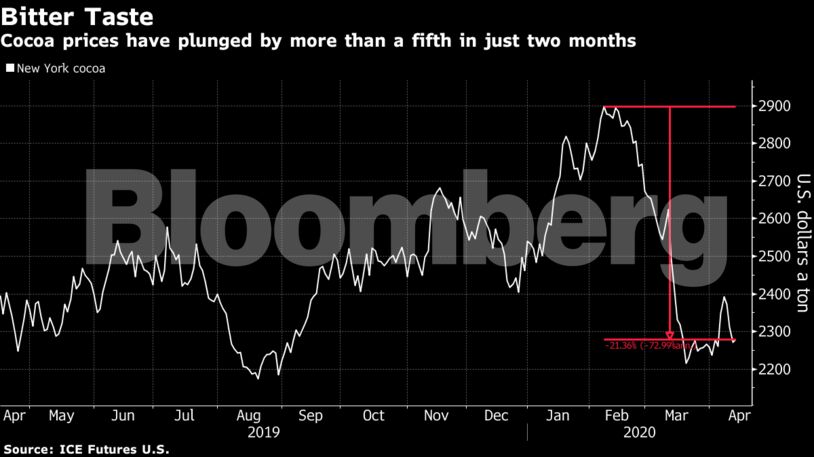
Ivory Coast, the top bean producer, and Ghana, the second-biggest, imposed a premium of $400 a metric ton for a so-called living income differential for the 2020-21 cocoa crop, boosting costs for processors. Futures in New York have dropped 9.9% this year.
“Chocolate demand will fall as a direct result of rising prices and a sharp contraction in economic growth,” said Eric Bergman, a vice president at JSG Commodities in Norwalk, Connecticut. On top of the West African premium, “the pandemic is now accelerating the decline in consumption, as disposable income for luxury goods continues to decline,” he said.
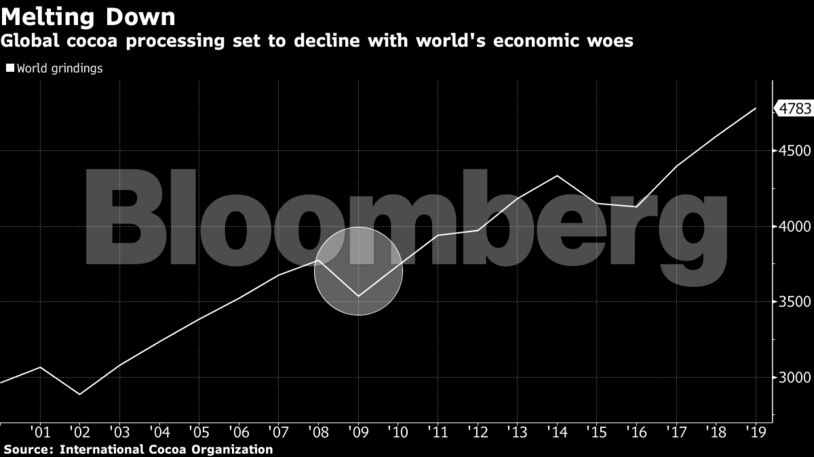
The International Monetary Fund estimated on Tuesday that global gross domestic product will shrink 3% this year. During the peak of the Great Recession, global cocoa grindings fell 6.3% in 2008-09.
The impact of the economic slowdown will be stronger in the second quarter to reflect the “lost retail sales, no going for dessert, no wedding season of massive buffets laden with chocolate desserts, no airport duty free chocolate,” Judy Ganes, president of J. Ganes Consulting, said in an email.
The European Cocoa Association is scheduled to release first-quarter data on April 22. Figures from the U.S. National Confectioners Association are expected on April 16, the same day Barry Callebaut, the biggest bulk chocolate processor, reports quarterly chocolate sales.
READ MORE: Coronavirus Scares Easter Bunny Away as Chocolate Sales Wilt
Comments
Scroll down to load comments...