




 Chinese one-hundred yuan banknotes are arranged for a photograph in Hong Kong, China on Monday April 15, 2019. Photographer: Paul Yeung/Bloomberg
 The company, one of the largest stocks in the Hang Seng Index, is projected to see its fastest pace of revenue growth since 2018 after picking up millions of new gamers who stayed home during the coronavirus outbreak. Investors will be looking for signs that the pace of revenue expansion can continue.
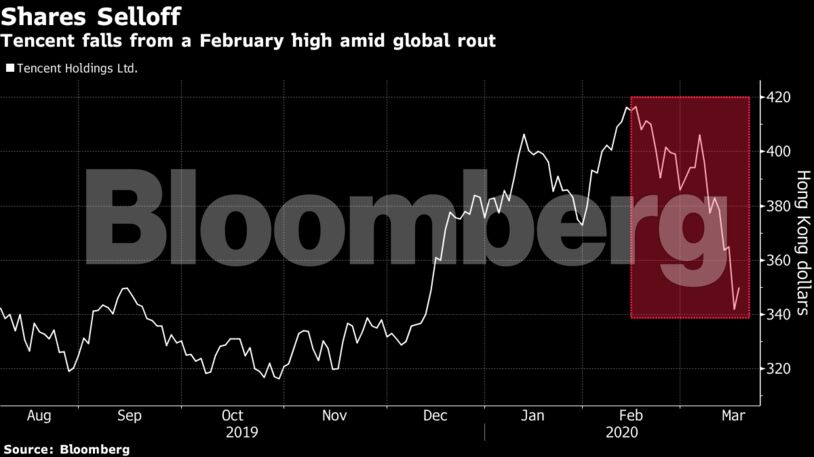
Tencent’s shares have lost 16% in the past month, dragged lower by a rout in Hong Kong equities that tipped the Hang Seng Index into its second bear market in two years. The 50-member gauge this week trades at 99% of book value, a level only seen twice before in data compiled by Bloomberg going back to 1993. That means traders are pricing firms’ assets at less than their stated worth.
Mainland investors have stayed bullish on Tencent, boosting their holdings by 24% since the start of the year. They own about 2.3% of Tencent’s listed shares, the highest proportion in at least three years, according to data compiled by Bloomberg.