





 Planning
- Look at what food you’re throwing away the most and think about why. Awareness is a good starting point for making you more realistic about the waste that goes on in your kitchen.
- Pick a day of the week to plan the following week’s food. The day before grocery shopping is a good day for planning.
- Look at what’s in the grocery cupboard (half packets of noodles? One can of mielies?) then look at what’s in the fridge (three tomatoes, mushrooms that are starting to look a little limp, a block of Cheddar?), then in the freezer (frozen peas, two chicken breasts?).
- Now figure out what main meals you can prepare with these things. If you can’t work anything out, type the ingredients into your search engine with the word “recipe”. You’ll be surprised at how many things you can bring together in one dish.
- Make a list now of the extra things you will need for those recipes that you don’t already have in your cupboard.
- Think about which recipes you can double-up on so you can freeze half for other times.
- Work out whether any of these meals are likely to have leftovers you can use for lunchboxes the next day.
- Now work out what is required in the cupboards, the fridge, fruit bowl and bread bin for the school and work lunches. Add these things to the shopping list.
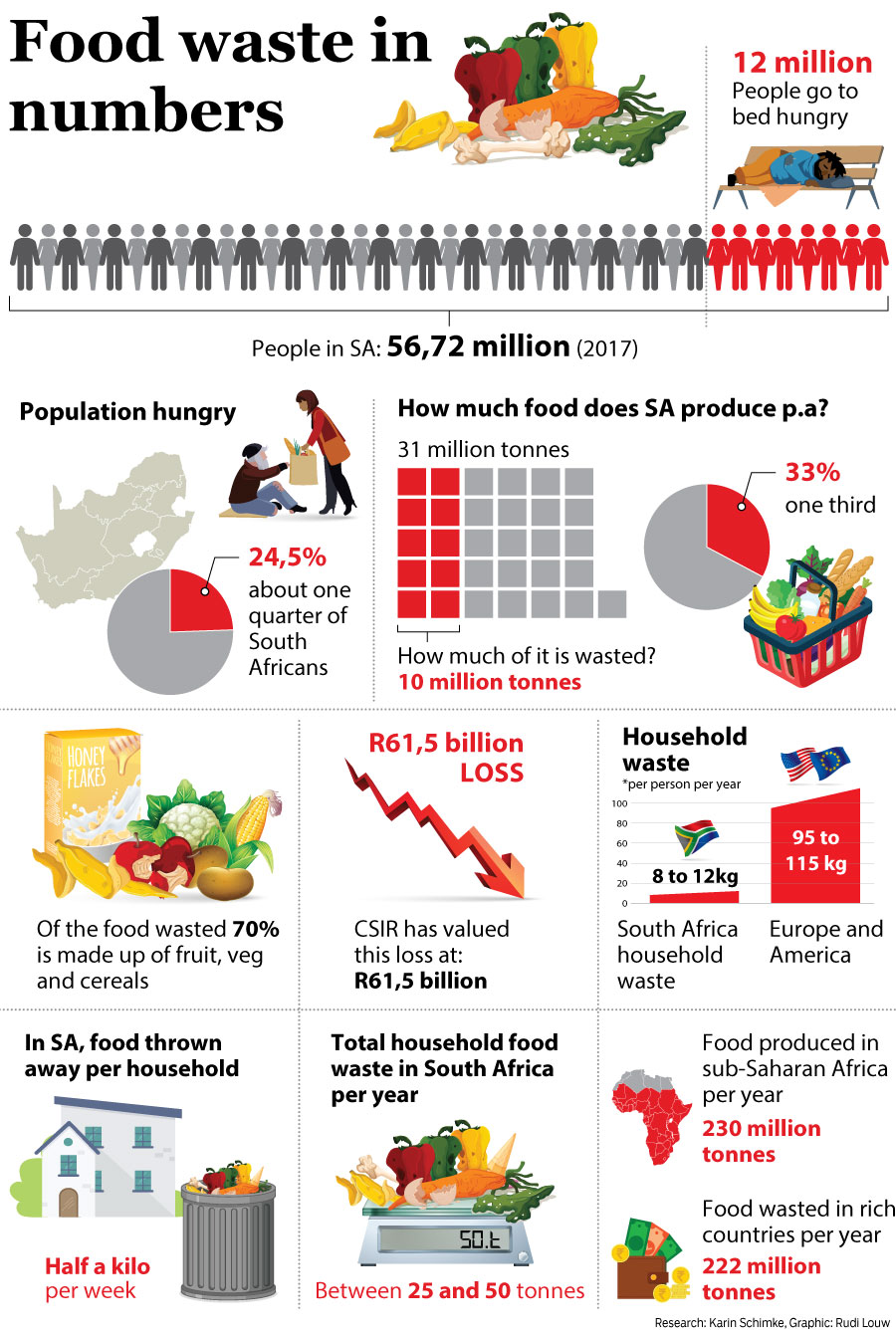
This planning requires about half an hour and some hard thinking once a week, so it is not without effort. But you might find yourself taking longer and longer to fill your black bin bag. And the fewer of those you throw away each month, the more you’re contributing to bringing down the country’s big food waste problem.
Shopping and storing
Before you go shopping:
- Take with you to the shops: shopping list (don’t rely on your memory), your reusable plastic or cotton shopping bags and an ice-brick or two if you’re buying dairy and might be on the road for a while. If you’re also serious about using less plastic, take along plastic containers for the things you buy at the deli or cheese counters, or at the butchery or fishmonger. Also, use light net bags or old plastic bags to put loose fruit and vegetables into to be weighed.
At the shops:
- Shop at a retail outlet that seems to you like it cares about how its food is stored. Check whether the fridges and freezers have thermometers and that they’re not overloaded so that the chilled air circulation is restricted.
- Leave the cold and frozen foods for the last part of your shopping.
After you’ve left the check-out counter:
- Once you have done your shopping, try to get home and get the cold stuff into the fridge and freezer as soon as possible.
- Don’t leave the groceries lying around in the car. If you don’t have an ice brick and you’re going to be walking or driving around for a while, you can wrap your dairy in wet newspapers to keep it cold for longer. According to the Food Advisory Consumer Service website, once a prescribed low temperature has been reached, this temperature should be maintained as long as possible until the product is used. Chilling food prolongs its life and maintains its freshness, but it also keeps the food safe. Bacteria grows more rapidly on food at higher temperatures. Keeping the food cold retards bacterial growth.
Don’t let raw food come into contact with cooked or ready-to-eat foods during transportation. In other words, keep the fresh fruit and vegetables separate from the meat, fish and chicken.
/file/dailymaverick/wp-content/uploads/MC-FoodWaste_3.jpg "(Photo: Joyrene Kramer)")
At home:
- The ideal fridge temperature is below 5℃. It must not be more than eight degrees.
- The freezer section should be less than -15℃.
- Packing your fridge properly will help the food last longer.
- In the salad drawer go the fruit, vegetables and salad things. The best way to store them is in paper with air holes. This prevents contamination. Salads and herbs can be wrapped in a damp paper towel before storing to prevent them drying out.
- Bottom shelf: raw meat, poultry and fish in sealed containers. Don’t let them touch or drip on other foods. Spoiled meat is identified by the colour and odour. If it looks greyish or smells funny, it’s on its way out.
- Top and middle shelves: ready-to-eat food like dairy products, ready meals and packaged foods, prepared salads, leftovers and cooked meats. They are kept as far as possible from the raw foods so that harmful bacteria doesn’t transfer between the two.
- Root vegetables don’t have to go in the fridge. Potatoes, onions and garlic should be kept in cool, dark, dry places.
- Don’t put tomatoes in the fridge. It makes their insides watery and they don’t last as long.
- Fresh bread can be stored in paper bags on the counter, where it will be good for three to five days. Don’t store it on the counter in plastic. If you store bread in the fridge, you can extend its life span to a week or two. It’s possible to freeze bread.
- Once you’ve opened something like soy sauce or pickles, which are otherwise stored in a cupboard, they have to go into the fridge.
- Same goes for tinned foods: keep them in the fridge once they’ve been opened. You can store the can itself or you can transfer the contents to a sealed plastic container.
- Leftovers must be cooled before you put them in the fridge. They must be properly covered in the fridge.
- All cooked meat must be eaten within three to four days. If you can’t get through leftovers fast enough, freeze what’s left and use it later.
- Label and date everything you put in the freezer. Raw and cooked meat can be stored in the freezer for six months to a year, though it will become drier and less palatable in the second six months.
Disposing
- Any and all vegetable scraps, including peels and leaves, can be frozen to make vegetable stocks and soups.
- Meat bones and chicken carcasses can be frozen and boiled together with vegetable scraps to make meat stocks and soups.
- Coffee grinds, eggshells and vegetable scraps can be saved for composting.
- If you don’t have a compost heap, you can save your composting scraps in the fridge and take them to a community garden or to friends and neighbours who have compost heaps.
If you are planning to compost food, be aware that it is a process. Read up about how to do it properly so that the food waste you throw out today can properly nourish the ground for the food that needs to grow in the future. DM
There are hundreds of sites that give tips on how to save money and food. The Food Advisory Consumer Service runs an excellent website with all kinds of helpful information for South Africans.