



Turning this vision into reality is no easy feat given the intense competition from other emerging countries and the downward trend the country experienced in investment since the global recession in 2008.
There is a strong commitment from government to change our economic trajectory through greater investment and build on the many attributes that make us an acclaimed and attractive investment destination.
In this regard, our country has already instituted a number of reforms and initiatives to create a more investor-friendly environment to attract R1.2 trillion in new investment over five years.
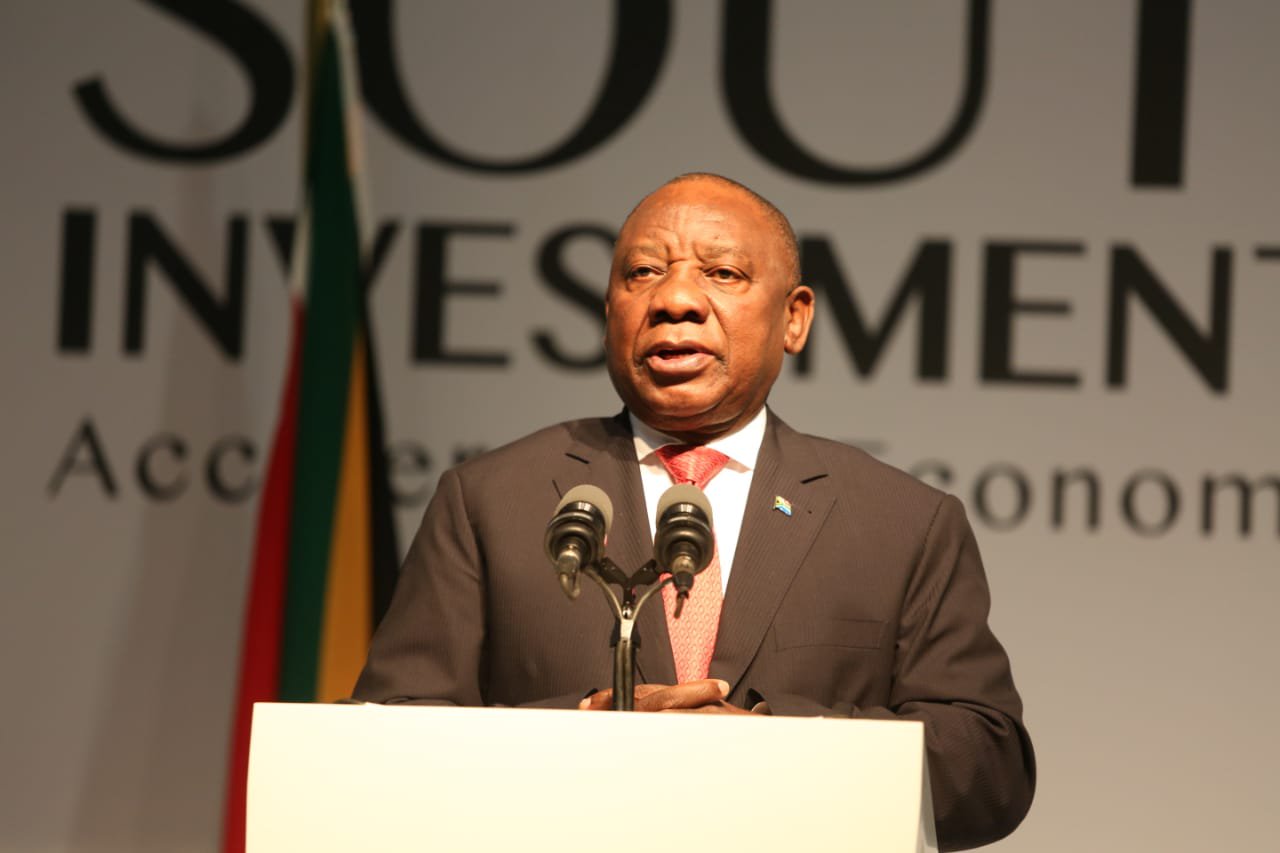
It includes the second South Africa Investment Conference which will be hosted from 5 to 7 November at the Sandton Convention Centre, under the theme “Accelerating Economic Growth by Building Partnerships”. On the 7 November, the conference will proceed at the University of Johannesburg Soweto Campus, with a focus on entrepreneurship, innovation and growing small and medium businesses.
The conference allows potential investors to directly engage with government and business representatives on new investment opportunities. It is also an opportunity to share progress on our work around the ease of doing business in the country.
While some critics bemoan the conference as simply being another talk shop, we are confident that it will help restore our investment credibility, send a clear message that South Africa is open for business and is beginning to yield tangible investments.
The second South Africa Investment Conference follows on the last year’s inaugural event that received R300 billion of investment commitments from domestic and international firms. These included amongst other international e-commerce giant Amazon establishing a cloud-computing hub in South Africa; global mining company Vedanta Resources investing in a local smelter; Rwanda-based technology company, Mara Corporation, to make high-tech smartphones and pharmaceutical company Aspen Pharmacare investing in the manufacture of sterile anaesthetics.
Over the year we have seen these investment commitments move beyond pledges to implementation. For example, the Mara Group announced plans to manufacture affordable smartphones in South Africa. Within a year the company opened Mara Phone Manufacturing Plant which is housed at the Dube Trade Port. Mara manufactures two smartphones developed in partnership with Google, as part of the Android One Programme.
It is these investments that significantly contribute to our national goals of socio-economic development as we create sustainable jobs, reduce poverty and drive back inequality. The impact of the new Mara plant is the employment of 200 youth, 67 per cent are women and 94 per cent of them were unemployed but skilled.
Throughout the year there have been various other investment projects completed with a number also currently in the implementation phase. The progressive growth in investment is reflected in an increase in inward direct investment from only R26.8 billion in 2017 to R70.7 billion in 2018.
This investment trajectory is expected to grow as the economic and structural reforms that we have put in place to stimulate the economy start gaining traction. Moreover, we are strengthening governance, cutting costs and improving revenue collection, and dealing with the challenges at Eskom.
We are heartened that our country has in a short space of time improved its ranking in the 2019 Global Competitiveness Report by climbing seven places since the previous year. The report assesses the drivers of productivity and long-term economic growth in 141 economies.
The country also ranks first in budget transparency, which is an illustration of the transparent political governance system of the country. Our macro-economic environment has proven resilient as have its institutions of governance, which continue to advance the interests of good governance and democracy.
Furthermore, in our work to provide the economy with the necessary impetus we are targeting growth in the core productive sectors of Manufacturing, Mining, Infrastructure; Technology, Media and Telecommunications; Agriculture and Aquaculture.
We are also developing plans for industries with high growth potential, such as automotive, clothing and textiles, gas, chemicals and plastics, renewable energy, oceans economy, agriculture and the high-tech industries.
The progress towards the finalisation of the Mining Charter opens the sector to greater investment. South Africa's total mineral reserves remain some of the world’s most valuable, with an estimated value of R20.3-trillion.
Our Integrated Resources Plan approved by Cabinet defines a tangible plan for energy security and secures the participation of Independent Power Producers. We have also laid the foundation for more investment into the digital and telecoms sectors by issuing a policy directive for the release of high demand spectrum.
Furthermore, the Department of Trade, Industry and Competition is convening various sectors to develop Industrial Strategy Masterplans. This complements the work done by the Public-Private Growth Initiative, which seeks to unlock significant investment from the private sector.
Government has also set aside R100 billion over ten years for a National Infrastructure Fund and will be working with private investors and international financial institutions to leverage further finance for infrastructure.
There is immense investment potential in economic and social infrastructure in the country and a pilot pipeline for the Investment Fund will be announced at the Investment Conference.
Government encourages investors to consider South Africa as their next destination. Our initiatives and reforms create opportunities for investors to flourish and provides South Africans with hope of a better tomorrow. BM
Comments
Scroll down to load comments...