




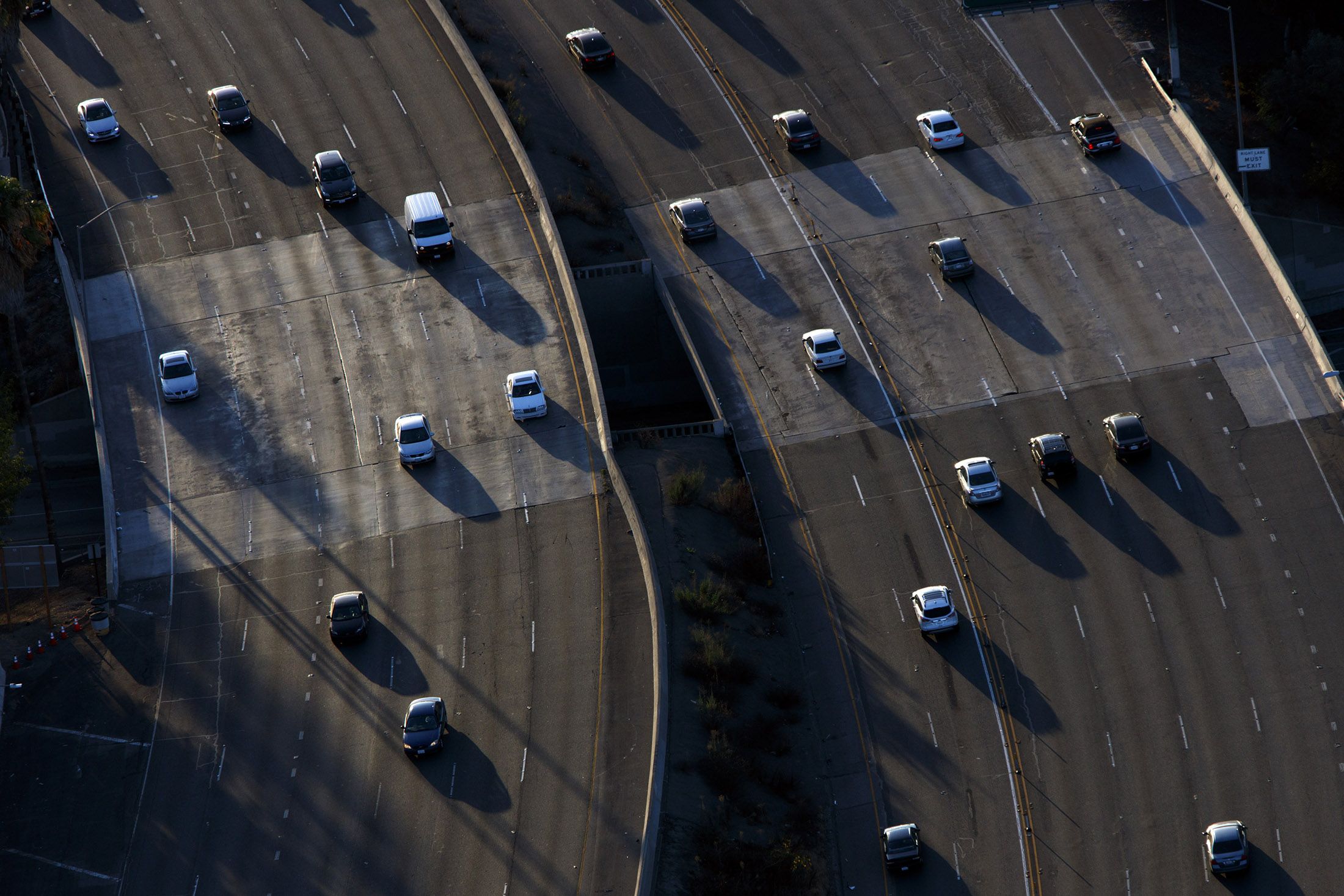
 Cars move along during rush hour traffic on the US 101 Freeway in this aerial photograph taken over the Sherman Oaks neighborhood of Los Angeles, California, U.S., on Friday, July 10, 2015. The greater Los Angeles region routinely tops the list for annual traffic statistics of metropolitan areas for such measures as total congestion delays and congestion delays per peak-period traveler. Photographer: Patrick T. Fallon/Bloomberg
 At issue is a proposal from the U.S. Environmental Protection Agency and Transportation Department to dramatically ease federal automobile greenhouse gas emission and fuel economy standards that had previously been coordinated with California.
Under the administration measure proposed last year, those requirements would have been frozen at a 37-mile-per-gallon fleetwide average after 2020, rather than increasing to roughly 50 miles per gallon by 2025, as under current regulations.
Administration officials now plan to require 1.5% annual increases in fleetwide efficiency of new autos. EPA Administrator Andrew Wheeler has telegraphed the shift, which was reported by the Wall Street Journal on Thursday evening, repeatedly saying the final plan will not look exactly like the original one advanced in August 2018.
Earlier: As Cars Reach Another Mileage Record, EPA Warns About Costs
Officials have considered a range of options as they prepare to finalize the rule later this year. The latest plan could still change before the final rule is published.
In a related move, the administration in September moved to strip California of its authority to limit greenhouse gas emissions from vehicles.
The Trump administration argued its original proposal would lower costs and save lives by encouraging motorists to replace older, less-safe vehicles with newer models. But the proposal drew fierce criticism from environmentalists and California officials, who said it would increase pollution. Some automakers objected to the proposed freeze and urged the White House to soften the measure.