




Hong Kong leader Carrie Lam’s biggest concession yet to protesters did little to stem scenes of violence that have become the norm on weekends in the Asian financial hub for the last three months. Small pockets of demonstrators on Sunday set fires, vandalized subway stations and set up barricades downtown after tens of thousands marched to the U.S. consulate to appeal for help from President Donald Trump. Riot police cleared roads and subway stations, fired tear gas and made arrests of black-clad protesters wearing masks and hardhats. Lam last week said she would formally withdraw a bill allowing extraditions to the mainland, which triggered the unrest in early June. But demonstrators now have a host of other demands, and Beijing has ruled out the biggest one: the right to elect a leader of their choosing. China’s exports unexpectedly contracted in August, with sales to the U.S. tumbling amid the escalating trade war between the two nations. Exports decreased 1% in dollar terms from a year earlier, while imports declined 5.6%, leaving a trade surplus of $34.84 billion, the customs administration said Sunday. Economists had forecast that exports would grow 2.2%, while imports would shrink by 6.4%. Shipments to the U.S. fell 16% from a year earlier. Meanwhile, China’s central bank said Friday it will cut the amount of cash banks must hold as reserves to the lowest level since 2007, injecting liquidity into an economy facing both a domestic slowdown and trade-war headwinds. Stocks in Asia looked set for a muted start to the week after the Federal Reserve did little to alter expectations for further rate cuts and amid mixed economic data from China. U.S. stocks and the 10-year Treasury yield were little changed Friday as Fed Chairman Jerome Powell’s last speech before next week’s policy meeting cemented views for another rate reduction. On the data docket, Japan’s GDP and current account are due Monday. China’s CPI is Tuesday. There is an European Central Bank decision on Thursday. U.S. CPI also out Thursday. British politics will continue to be in the spotlight as parliament may be suspended and a general election could be triggered. Nissan Motor Co. Chief Executive Officer Hiroto Saikawa said he’s ready to take responsibility for scandals involving former Chairman Carlos Ghosn and will exit the company as soon as a successor is found. He won’t, however, accept blame for allegations around excess compensation. Saikawa has been facing mounting pressure following reports last week that he and other executives were paid more than they were entitled to. It’s the latest blow to the CEO, who has spent the period since Ghosn’s shock arrest last November for financial crimes trying to right the carmaker as it grapples with decade-low profits, job cuts and the destabilization of losing a leader who loomed large over Nissan for two decades. U.K. Prime Minister Boris Johnson will press on with his plan to deliver Brexit by Oct. 31, senior ministers said, despite defeats in Parliament and the sudden resignation of Work and Pensions Secretary Amber Rudd with a furious attack on his leadership. Rudd’s resignation plunged Johnson’s six-week-old administration deeper into turmoil after a dramatic and disastrous week in which members of Parliament voted against a no-deal divorce then refused to grant him the emergency general election he wanted. This is what’s caught our eye over the weekend.Hong Kong Violence
Tariffs & Stimulus
Market Open
Nissan’s CEO Ready to Resign
Digging in His Heels
What We’ve Been Reading
This article is more than 6 years old
Business Maverick
Monday, September 9: Five Things You Need to Know to Start Your Day
Hong Kong’s violence continues despite concession, China’s exports tumble as tariffs bite, and Asian markets are set for a muted open Monday. Here’s what’s moving markets.
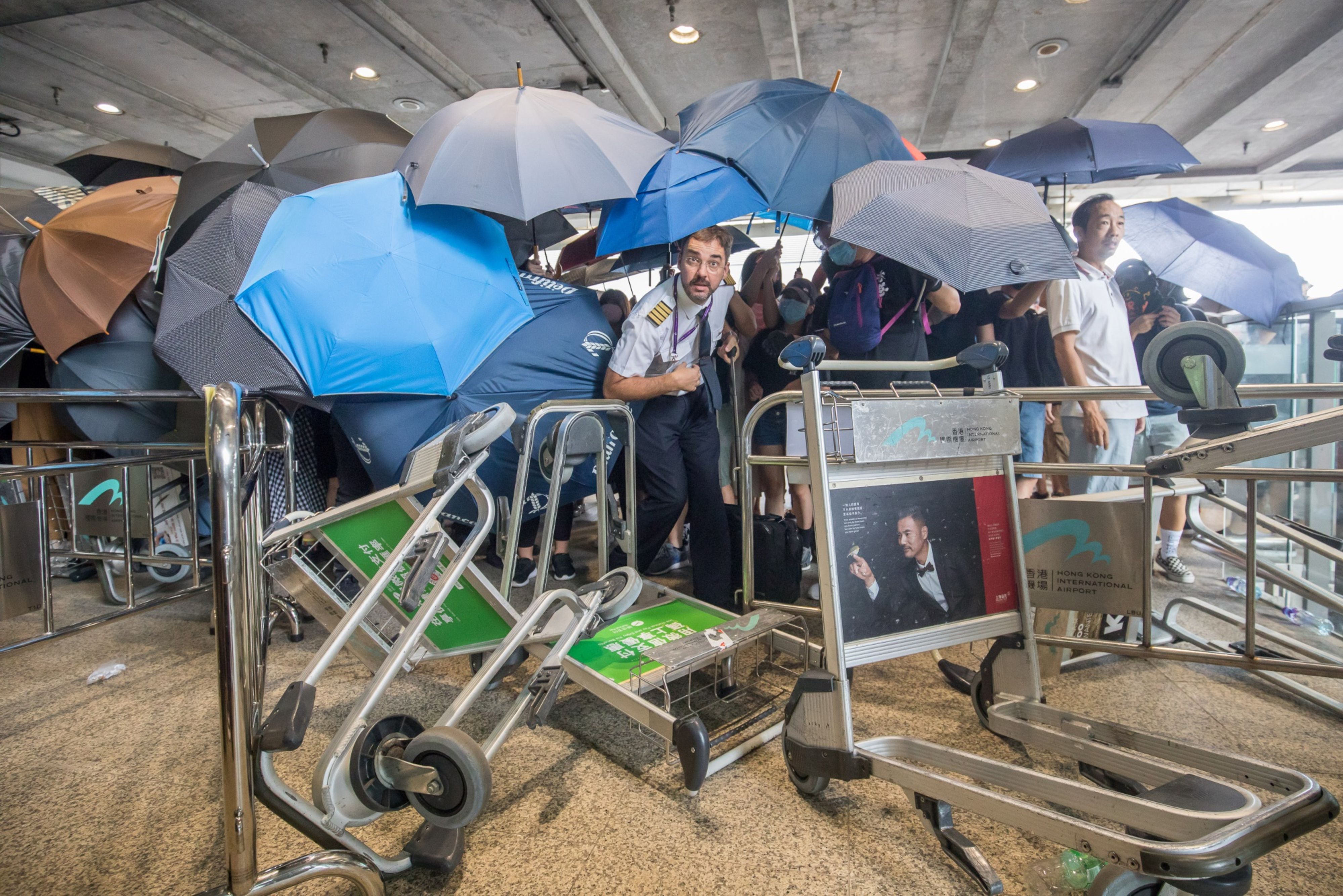 Demonstrators make road block at the Hong Kong International Airport during a protest in Hong Kong, China, on Sunday, Sept. 1, 2019. Hong Kong protesters caused major disruptions to the citys international airport Sunday, massing outside the building in attempt to paralyze transport to and from the facility. Photographer: Paul Yeung/Bloomberg