




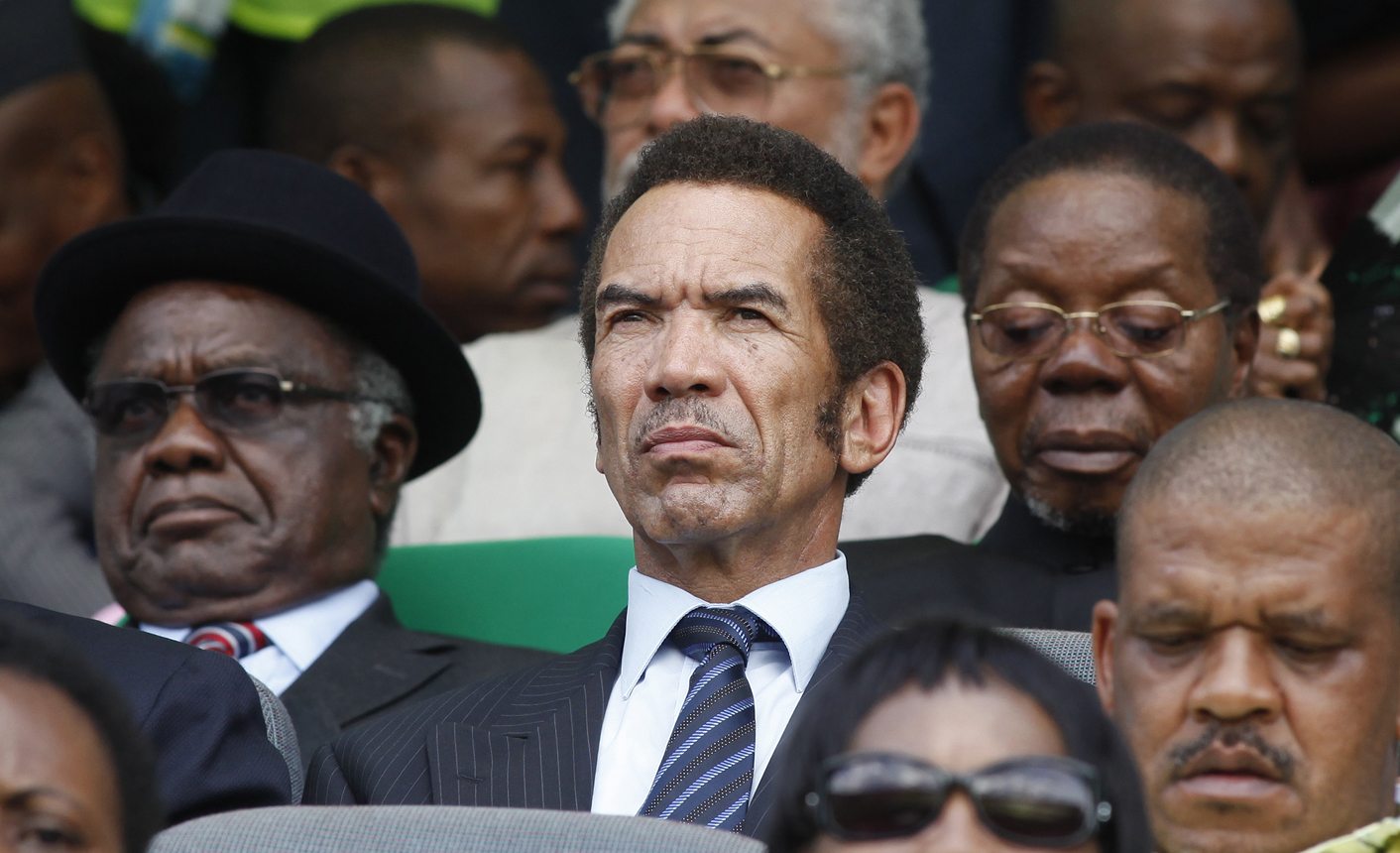
 Archive photo: Botswana's then President Ian Khama is flanked by Namibia's President Hifikepunye Pohamba ( L) and Malawi's former president, Bakili Muluzi (R, with glasses) during the ANC's centenary celebration in Bloemfontein January 8, 2012. REUTERS/Siphiwe Sibeko (POLITICS ANNIVERSARY) - RTR2W18F
 Nominations for parliament and municipal candidates is set for Sept. 26, the Independent Electoral Commission said in an emailed statement Monday. The Botswana Democratic Party has been in power for more than 50 years, but its popularity has declined and it secured a record low 47% of the vote in the last election in 2014.
President Mokgweetsi Masisi was chosen by his predecessor Ian Khama, but the two have since fallen out and the split risks sparking uncertainty in what has been one of the most stable African countries. Botswana has never experienced civil war or a coup and has the continent’s highest credit rating at Moody’s Investors Service.
The relationship between Masisi and Khama soured after the president took office in April last year. Khama accused his successor of freezing him out of decision-making, denying him benefits and of reversing some of his flagship policies, including a hunting ban on elephants and high levies on alcohol to curb consumption.
Read More
Botswana Ex-President Khama Splits Ruling Party With Exit
Elephants, Alcohol and Benefits Divide Botswana Ruling Party
Botswana’s New Leader Backs Asset Sales in Investment Drive
Khama is the son of the country’s first president, Seretse Khama, and still yields some influence in the nation of 2.3 million people.
The BDP will compete, among others, against the Khama-linked breakaway party that’s formed a loose alliance with the Umbrella for Democratic Change coalition.
To contact the reporter on this story:
Mbongeni Mguni in Botswana at mmguni@bloomberg.net
To contact the editors responsible for this story:
Gordon Bell at gbell16@bloomberg.net
Hilton Shone, Vernon Wessels