




 South Africa, once renowned for the sophistication and liquidity of its financial markets and the probity and transparency of its corporate sector is now trading at a heavy discount. (Image: Blur Chart, Energepic.com / Pexels)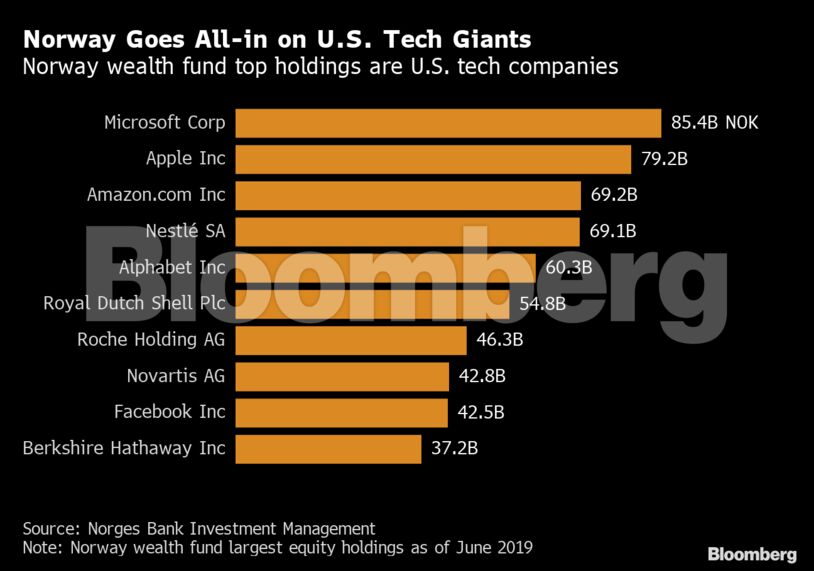
The fund is overweight Europe to better match Norway’s trade flows, but this has been questioned since it has missed out on the bigger returns in U.S. markets. A change could set off an investment spree in U.S. stocks, including in technology giants such as Microsoft Corp., Apple Inc. and Amazon.com Inc., which are already the fund’s largest holdings.
“We’re taking a close look at this issue, we’ve spent much time on this and made several analyzes,” Matsen said in an interview earlier this month.
The current setup gives European stocks a factor of 2.5 and a share of 33.8% of the portfolio. North American stocks only have a factor of 1, so despite being a bigger market only have a share of 41.2%. Asia and Oceania and emerging markets have a bigger factor of 1.5 and shares of 14.6% and 10.1%, respectively.
That composition was last remodeled in 2012, when geographical weights adjusted for free float were introduced. Back then, the bank recommended that the regional distribution of the equity investments should move in the direction of global markets, but that any transition should take place over a long time and in stages. “In 2012, we also said there were arguments to keep the adjustment factors we now have,” Matsen said.
A potential shift in geographical weights will be the latest in a string of big changes for the fund, which recently raised its equity holdings to 70%, decided to dump emerging market debt, scaled down plans for real estate and is working on starting to invest in renewable energy infrastructure.